culturephotography
Inside the Valley of the Kings
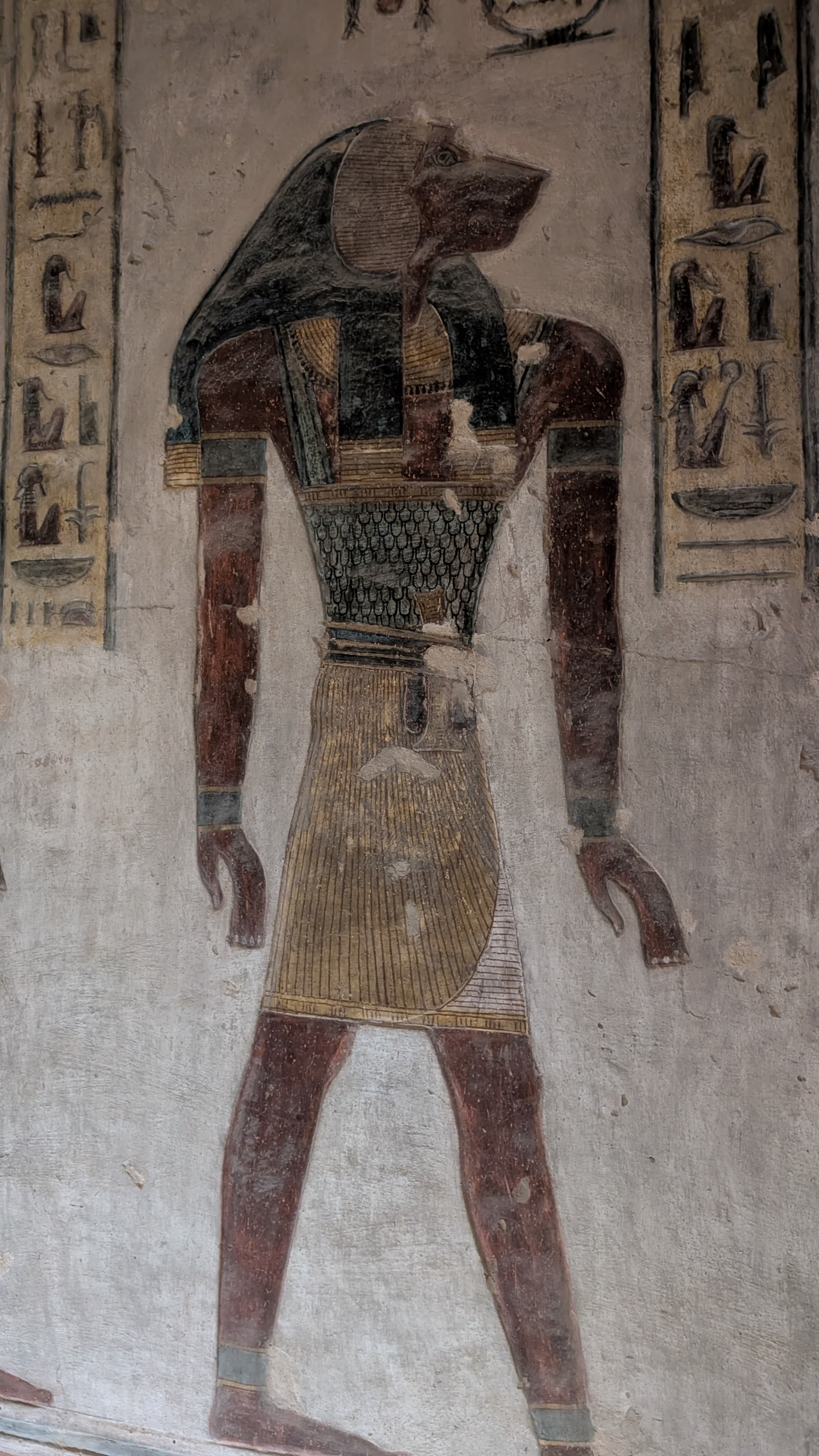
The Valley of the Kings isn't what I thought it would be. I expected ruins. What I found was colour — vivid, detailed, and completely intact.
January 10, 2026
The East Bank after sunset, the seated pharaohs, and 3,000 years of open sky
Luxor Temple is not outside the city. It doesn't require a taxi or a day trip or even much of a walk. It sits on the East Bank corniche — the riverside promenade — in the middle of Luxor, and if you're staying in the old town you'll probably walk past it on your first evening without fully processing what you're looking at. A row of ram-headed sphinxes. A pylon gate. Two seated colossi. All of it open to the sky, lit gold after dark, while the rest of the city goes about its evening.
I went at four in the afternoon, which turned out to be the right time. The light was changing from white to amber, the tour groups were thinning, and I had most of the inner courts to myself by five o'clock.
The Avenue of Sphinxes runs from Luxor Temple to Karnak, three kilometres north — a processional road lined on both sides with sphinx statues that once connected the two great temples. For most of modern history this avenue was buried under the city. Excavation began in earnest in the 1990s and continued for decades; the full stretch was only officially opened in 2021.
Walking it now is strange in a good way. The sphinxes emerge from the asphalt at regular intervals, each one roped off, each one slightly different — weathered faces, missing heads, the occasional one intact enough to make eye contact. The city is right there on both sides: shops, houses, people going about their day. The ancient and the present exist in the same frame and neither seems to notice the other.
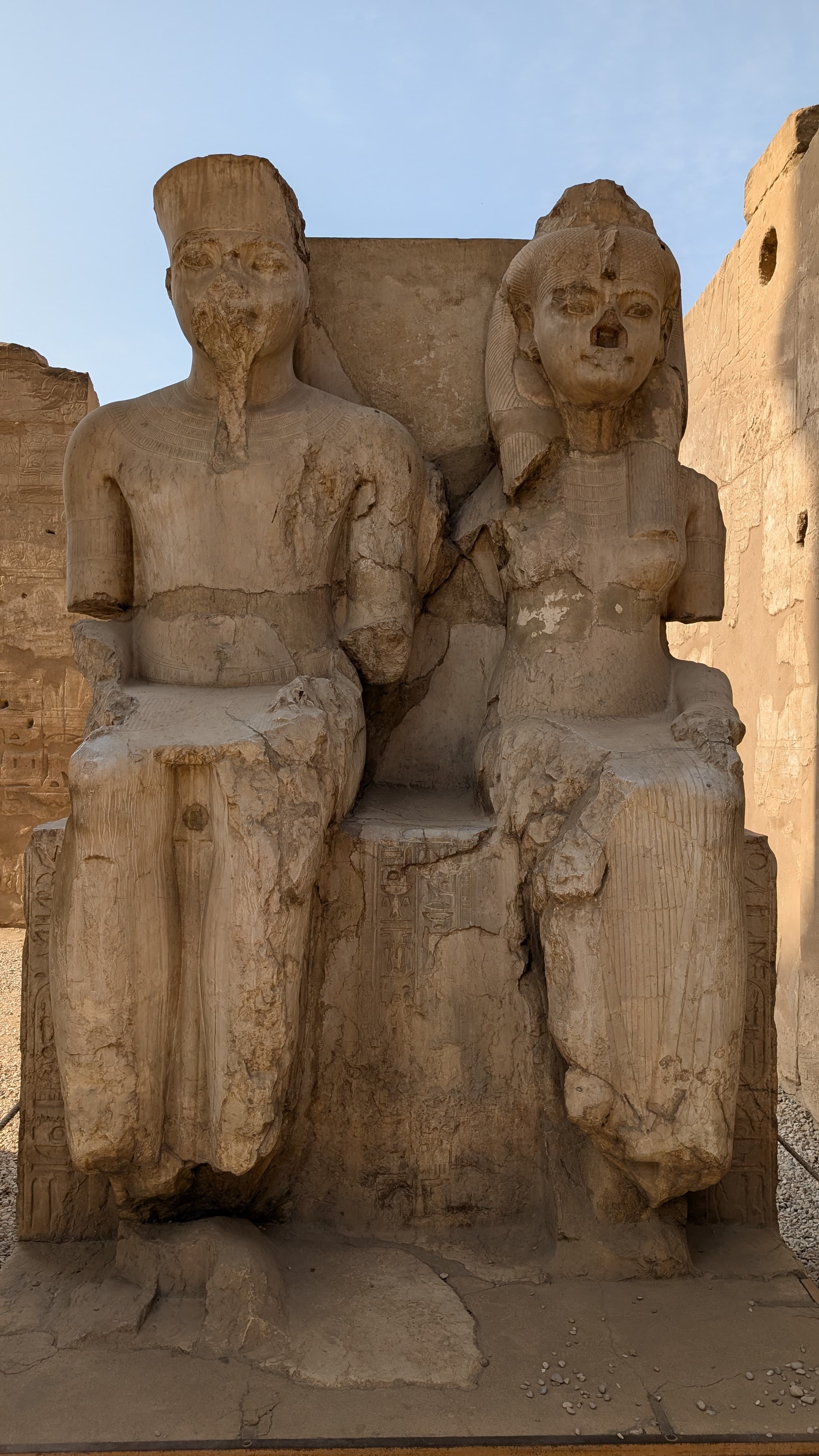
Inside the temple pylon, the first major space is the court of Ramesses II — a large open courtyard lined on three sides with double columns and, around the perimeter, a series of colossal seated statues. These are the pharaoh at rest, hands on knees, the double crown or the nemes headdress, faces worn smooth by three thousand years of weather and touch. They're big enough that you look up to see the faces.
In the late afternoon light the sandstone goes deep orange. The shadows from the columns fall in long parallel lines across the court. I walked the perimeter slowly, looking at the relief carvings on the outer walls — battle scenes, offering scenes, the cartouches of a dozen different rulers who added to the temple over the centuries — and found I didn't want to stop looking.
Luxor Temple was built and modified across a very long stretch of time — Amenhotep III in the fourteenth century BC, Ramesses II adding his court and pylon, later pharaohs and even Roman emperors leaving their marks. The result is walls covered in carvings from multiple eras, sometimes layered on top of each other, sometimes in conversation with each other in ways that take a moment to decode.
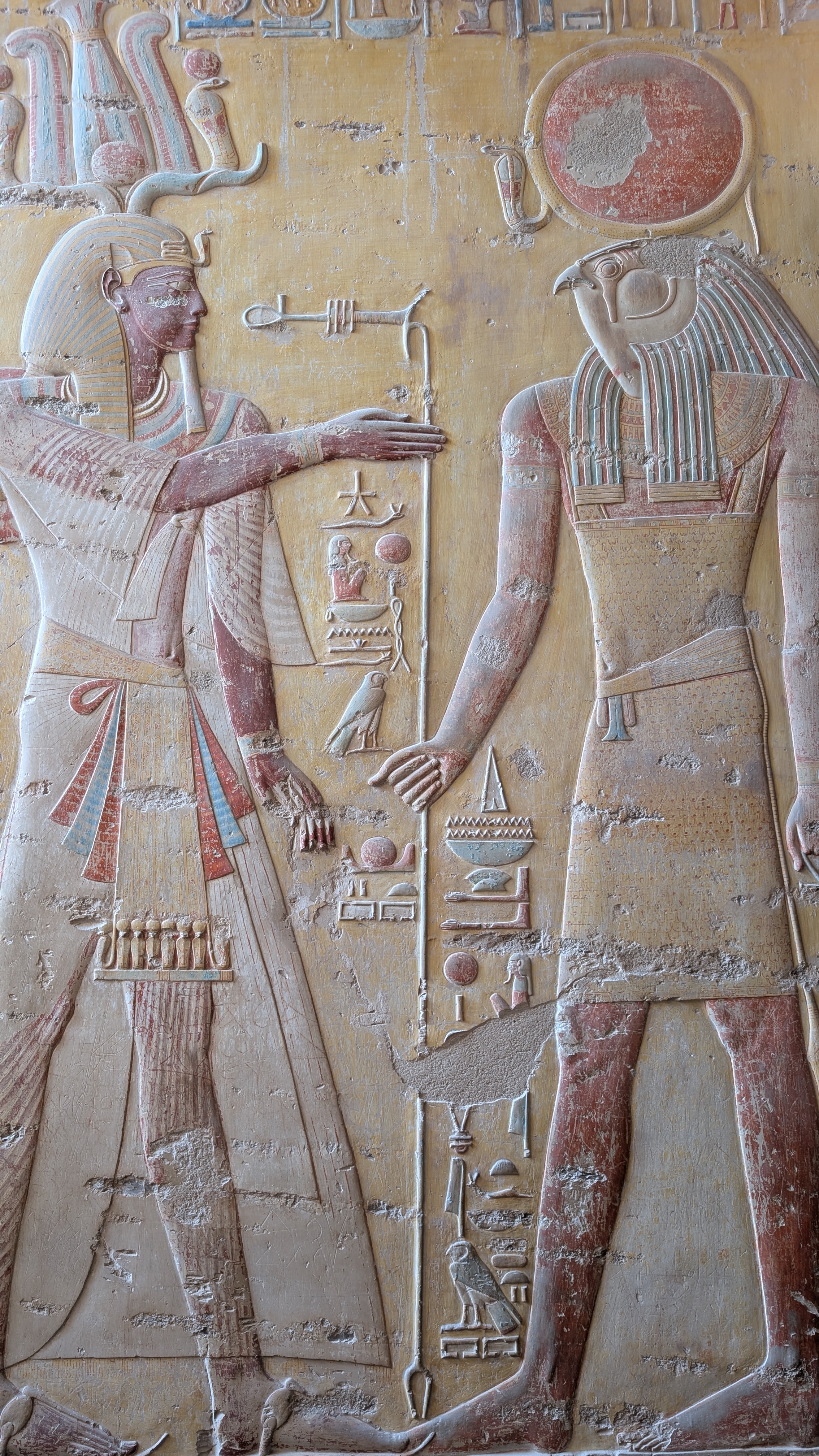
The carved reliefs on the inner walls of the sanctuary are among the finest I saw in Egypt. Pharaoh and gods in profile, the iconography precise and unhurried: the falcon head of Horus, the double crown, the was sceptre, the ankh. Traces of original colour still visible in the deeper-cut sections — yellow ochre, red, blue.
Luxor Temple stays open into the evening and the night visit is worth doing separately from the daytime one. The temple is lit — spotlit from below — and the effect is dramatic in a way that doesn't feel cheap. The colossi glow. The columns cast long shadows. The seated Ramesses looks even more permanent at night than he does in daylight, if that's possible.
I sat on a low wall in the inner court at about eight in the evening with most of the other visitors gone. The sky was fully dark. The stars were out. The obelisk — one of the original two; the other is in Paris, in the Place de la Concorde — rose twenty-five metres above me against the black sky, every surface covered in carved text. Somewhere behind me the city was going about its night. Here it was quiet and very old and completely still.