You walk into a hill and the walls are covered in colour that's 3,000 years old
Luxor, Egypt·January 10, 2026
You cross the Nile to get to the Valley of the Kings. That felt important to me, even just logistically: the Egyptians buried their dead on the west bank — where the sun sets — and the living stayed on the east. Three thousand years later you still cross the river to get there. Some things don't change.
The West Bank of Luxor is flat agricultural land for a few kilometres, then the cliffs rise abruptly: limestone hills, dry and pale, carved by millennia of wind. The Valley of the Kings is inside those hills. You park, walk through a visitor centre, and then you're in it — a narrow, rocky valley with tomb entrances cut into the hillsides at irregular intervals, each one marked by a small sign and a queue of people waiting to go in.
What It's Like Inside
Standard tickets include three tombs. I went into five, which requires an extra ticket for the special access tombs and is absolutely worth it.
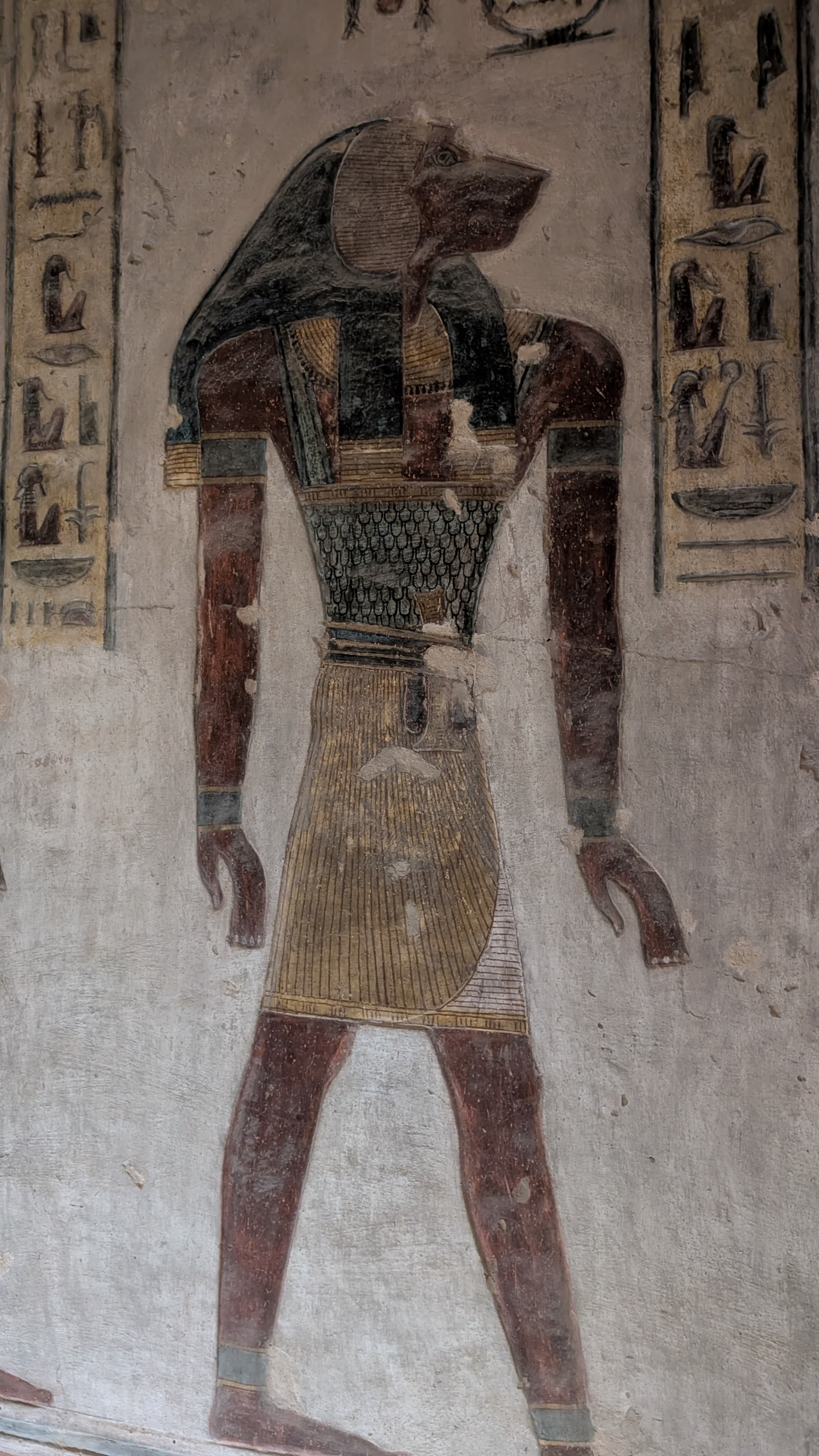
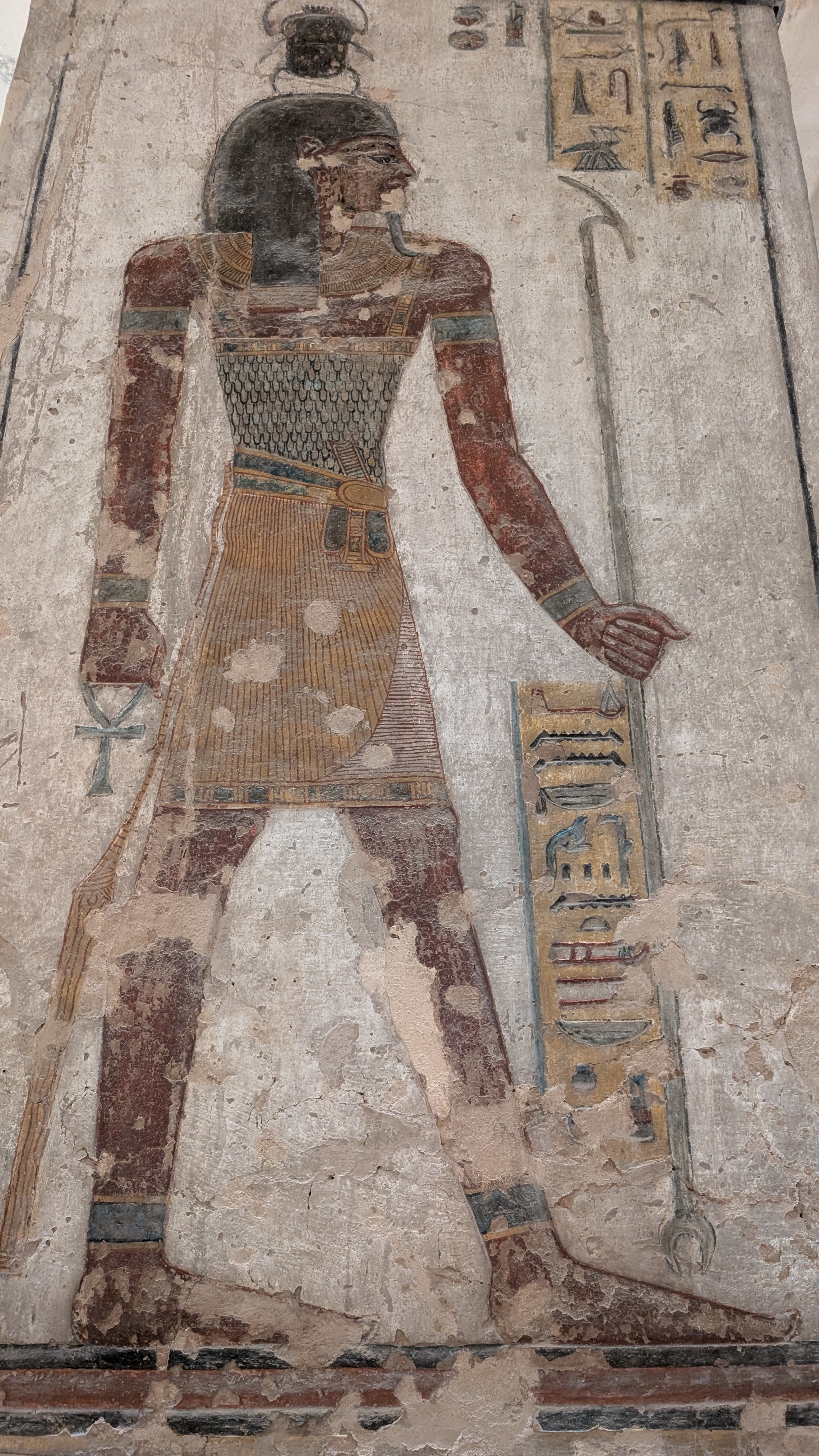
The experience is not what I expected. I anticipated dark corridors and faded fragments — the archaeological equivalent of ruins. What I found instead was colour. The tomb walls are covered in painted reliefs: scenes from the Book of the Dead, journey narratives showing the pharaoh's passage through the underworld, gods in profile with their characteristic attributes — the falcon head of Horus, Anubis in black with his jackal ears, the goddess in white with her arms raised. The colours are yellow, red, blue, green, white. In tombs that have been sealed from light for most of three millennia, they are still vivid.
Tomb KV11 — Ramesses III — is the longest I visited, over 125 metres deep into the hill. You follow a wide corridor down at a slight angle, the paintings continuous on both walls, the ceiling blue with stars. It gets quieter as you go deeper. By the time you reach the burial chamber, the tour groups are thin and the space is cool and the only sound is the shuffle of feet on stone.
The Darkness and the Colour
There's a specific quality of attention that comes over you inside the tombs. It's the combination of the darkness — your eyes adjusting, always slightly uncertain — and the fact that the paintings are right there, close enough to touch (you must not touch them). You find yourself looking at the face of a painted goddess, eyes outlined in black, holding an ankh, and you understand that a craftsman painted this face in darkness, working by oil lamp, in a room that was intended to be sealed forever. The painting was not made to be seen. It was made to accompany the dead.
The goddess stands in the wall. 3,000 years and the colour still holds.
That knowledge changes the experience. You're not a tourist in a gallery. You're an intrusion into something private — and the intimacy of that, the detail of the work, the fact that it survived — is quietly devastating.
Getting There
Hire a driver for the West Bank rather than joining a group tour. The freedom to linger, to skip back to a tomb you want to see again, to eat lunch at a local place in the village of Al-Qurna rather than a tourist restaurant — these things matter. A full day is the right amount of time. Arrive at opening and you'll beat the worst of the heat and the groups.
Bring water. The valley floor gets genuinely hot by mid-morning. The tombs themselves are cool and shaded; the walking between them is not.
Y
Written by
Yavuz
Travel writer and photographer obsessed with slow travel, local food, and the roads less taken. Based wherever the next flight lands.