I kept thinking I was done and then there was more
Luxor, Egypt·January 14, 2026
Karnak is not a temple. It's a complex of temples, chapels, pylons, obelisks, sacred lakes, and processional avenues — built, expanded, demolished, and rebuilt over a period of two thousand years by dozens of different pharaohs, each of whom apparently felt that the appropriate response to inheriting the world's largest religious complex was to make it larger.
The result covers roughly two square kilometres. I had read this before I arrived and it didn't mean anything. It starts meaning something about forty minutes in, when you realise you've been walking continuously and you're still inside the first section.
The Hypostyle Hall
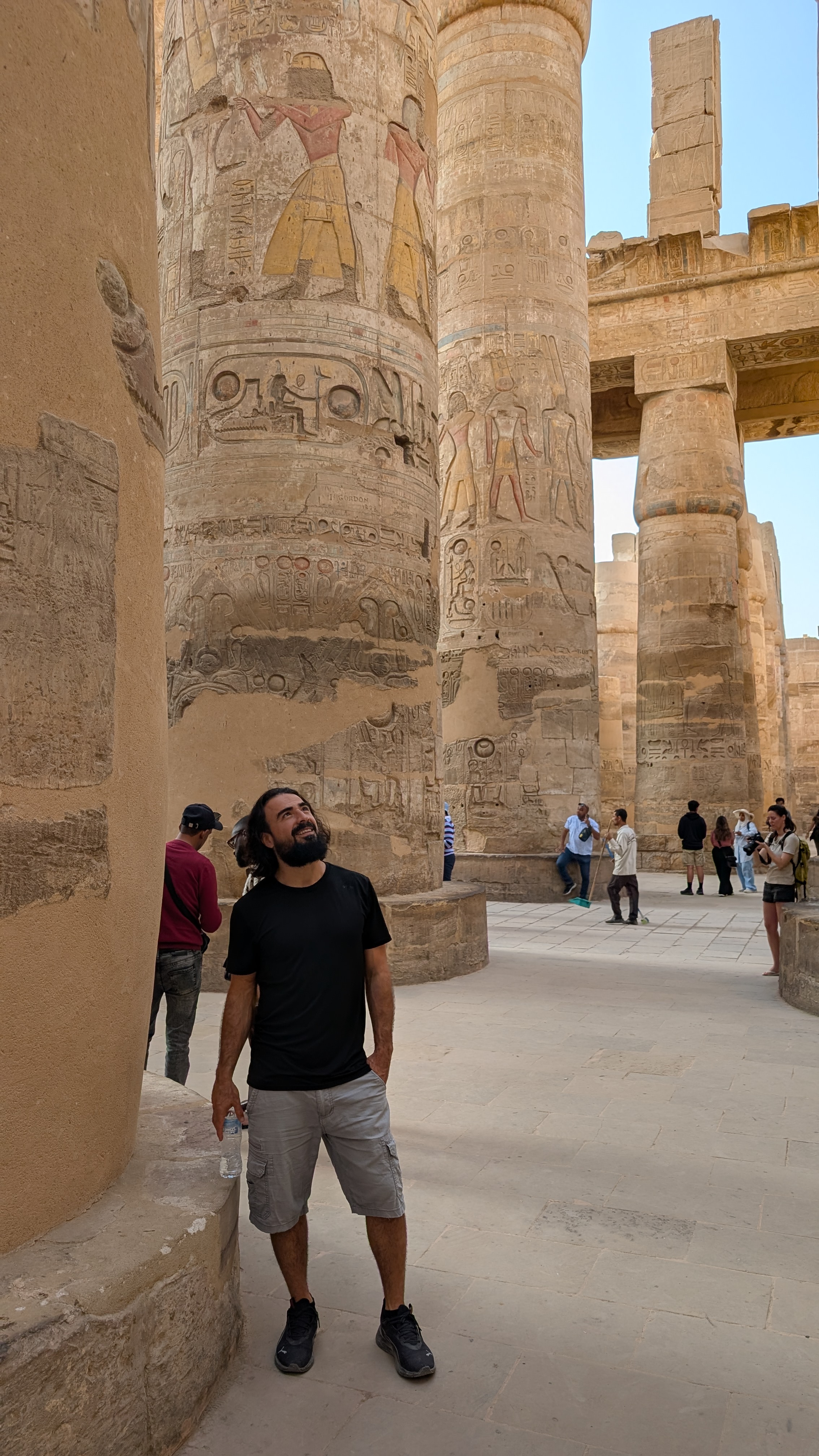
The Hypostyle Hall is the part that gets photographed. 134 columns, the tallest of them 21 metres high, covering an area of 5,000 square metres. The columns are covered — covered — in carved hieroglyphs and relief images, every centimetre of every surface, painted in colour when they were new, now the pale sandy gold of ancient limestone.
Walking into it is one of those moments where your brain takes a second to process scale. The columns are so large and so close together that the space feels like a forest — you lose sight of the far wall, the light filters in from above at angles, and everywhere you look there is more carving. I stood at the centre for a long time just turning slowly.
The photo I took of myself among the columns — tiny figure against stone that dwarfs everything — is the one image from this trip that captures the feeling most accurately. Not the grandeur, exactly. The proportion. How small a human being is in a space that was built by human beings.
134 columns. The tallest at 21 metres. Every centimetre carved.
The Rest of Karnak
Beyond the Hypostyle Hall there are more pylons, an obelisk of Hatshepsut still standing at 29 metres, the Festival Hall of Thutmose III, the sacred lake where priests performed ritual purification, and the Avenue of Sphinxes that once connected Karnak to Luxor Temple three kilometres away. Each section is another scale reset. Each one takes more time than you allocated.
I spent four hours and felt I'd seen maybe two-thirds of it properly. There were entire sections I walked through too quickly because the light was fading and I wanted to see the Nile before sunset.
The Nile at Dusk
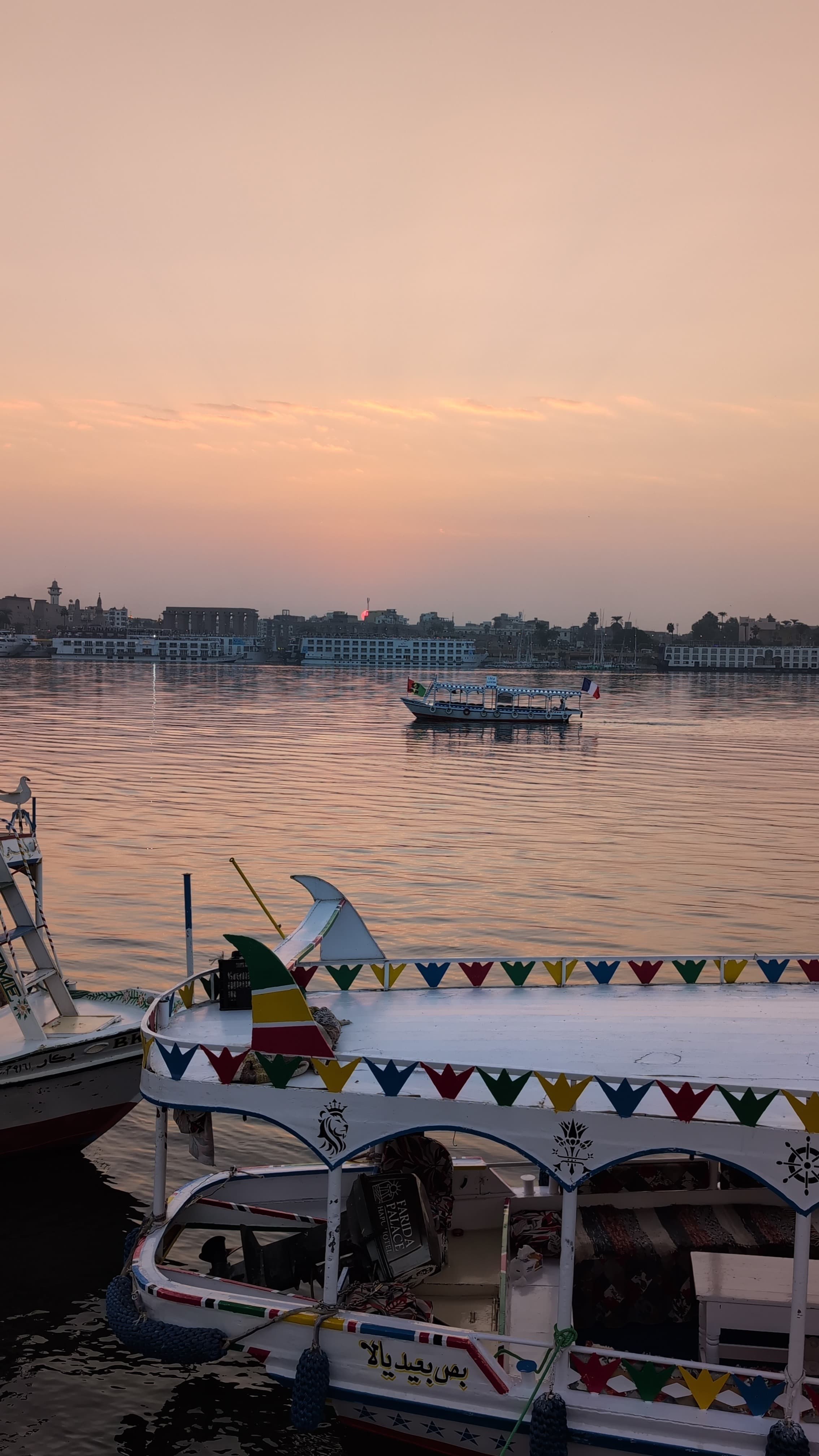
The Nile at Luxor in the late afternoon is one of those views that your brain keeps returning to. The river is wide here, the banks lined with palms, the water going orange as the sun drops. Felucca boats — the traditional wooden sailing boats — move slowly across the water in both directions. The West Bank cliffs glow. The call to prayer comes from somewhere in the city.
I sat at a restaurant on the corniche — the riverside promenade — and drank tea and watched the light change. This is also Egypt. The temples and the tombs are extraordinary. But it's this — sitting by the river, watching feluccas drift, the sky going pink — that I keep thinking about.
Y
Written by
Yavuz
Travel writer and photographer obsessed with slow travel, local food, and the roads less taken. Based wherever the next flight lands.