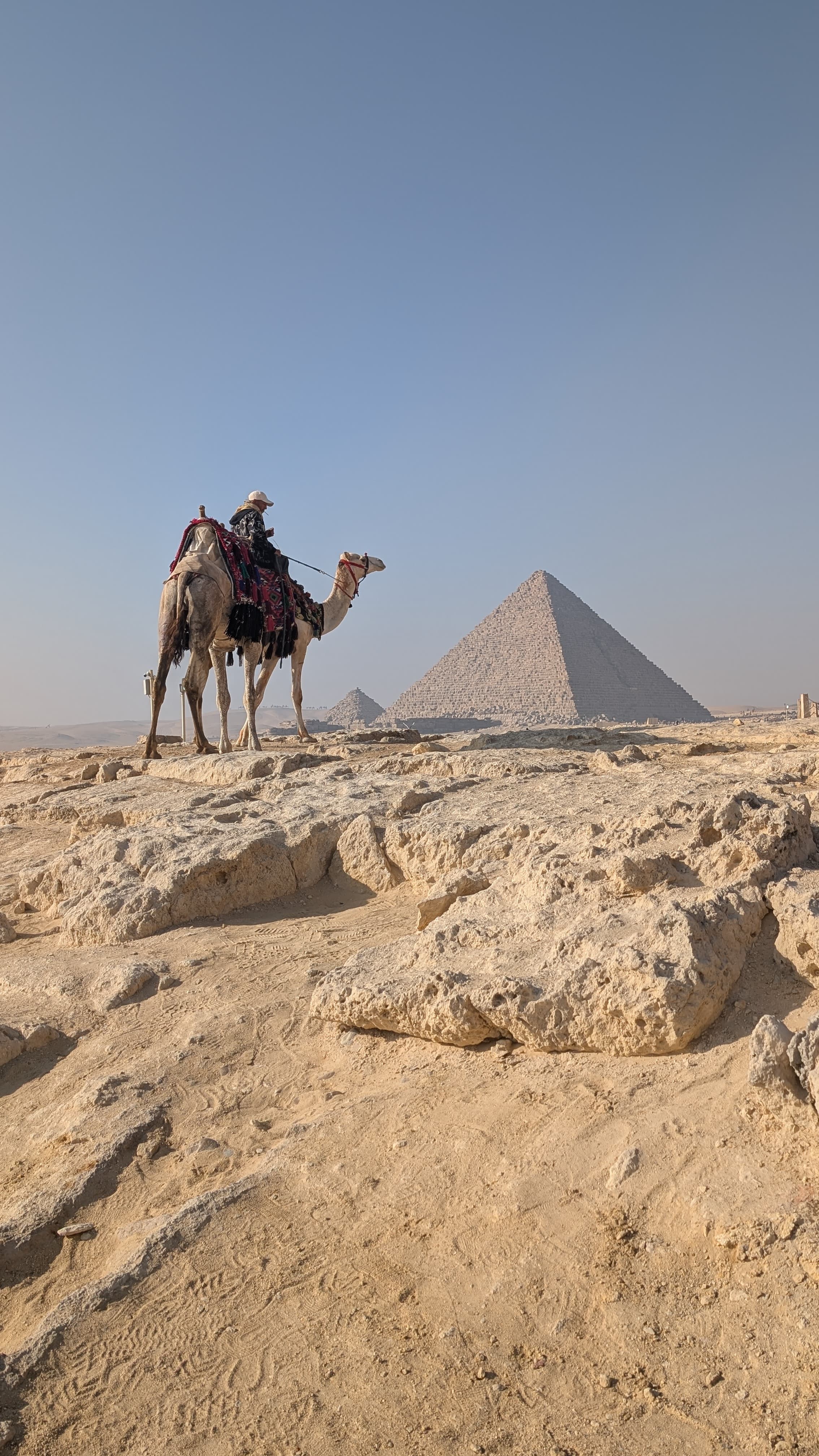
They built something new next to the oldest things on earth — and somehow it works
Cairo, Egypt·December 20, 2025
The Grand Egyptian Museum sits at the edge of the Giza plateau, close enough that you can see the pyramids from the entrance. That spatial relationship — the newest museum in the world next to the oldest buildings in the world — is either the best curatorial decision ever made or something that happened because there was no other sensible place to put it. Maybe both.
I went on a morning in November, arrived at opening, and still spent five hours inside. That was not enough time.
The Atrium
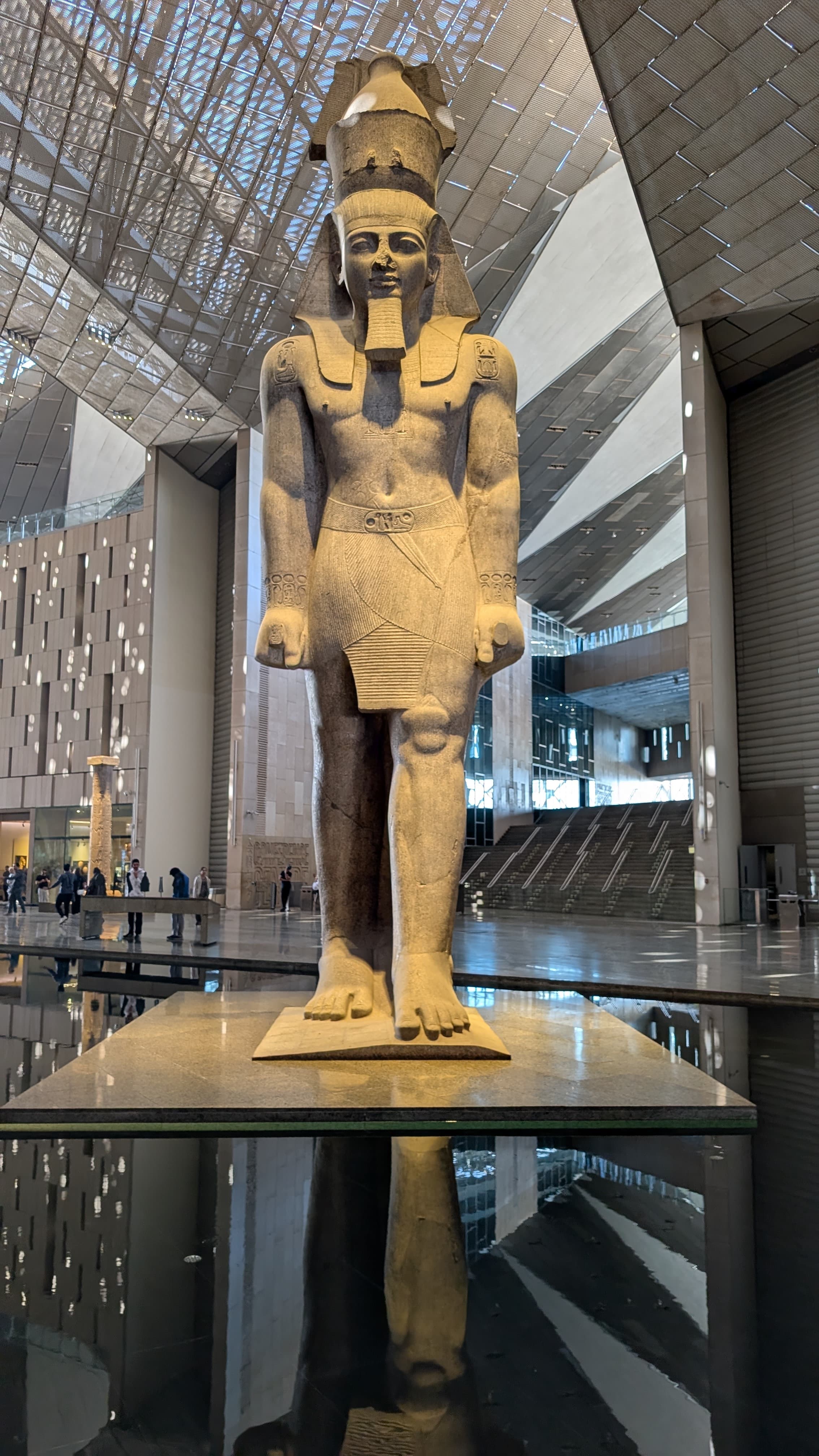
The building itself is an event. A massive triangular glass facade lets in light that falls across a grand staircase lined with hundreds of ancient statues — pharaohs, gods, scribes, animals — each one lit to look like it emerged from the stone a moment ago. The centrepiece is Ramesses II: a statue over eleven metres tall, reassembled from pieces found at the Memphis quarry, standing in the middle of the atrium in a posture that suggests he finds the whole setup appropriate.
It's theatrical. It's also undeniably effective. You walk in and immediately understand that this is not a collection of interesting old objects. This is the material record of an entire civilisation, gathered in one place, and the sheer scale of it is part of the argument the building is making.
The Tutankhamun Galleries
The GEM holds the complete Tutankhamun collection — all 5,000-plus objects from the tomb, displayed together for the first time since Howard Carter excavated them in 1922. The golden death mask is here. The innermost coffin of solid gold. The canopic shrine, the model boats, the alabaster unguent jars. Everything pulled from a single tomb of a relatively minor king who died at nineteen.
Standing in front of the death mask is strange in the way that very famous things are strange: you've seen it ten thousand times in photographs and then you're in front of it and it's real and three-dimensional and made by a craftsman three thousand years ago, and none of your previous exposure quite prepared you for that.
Islamic Cairo
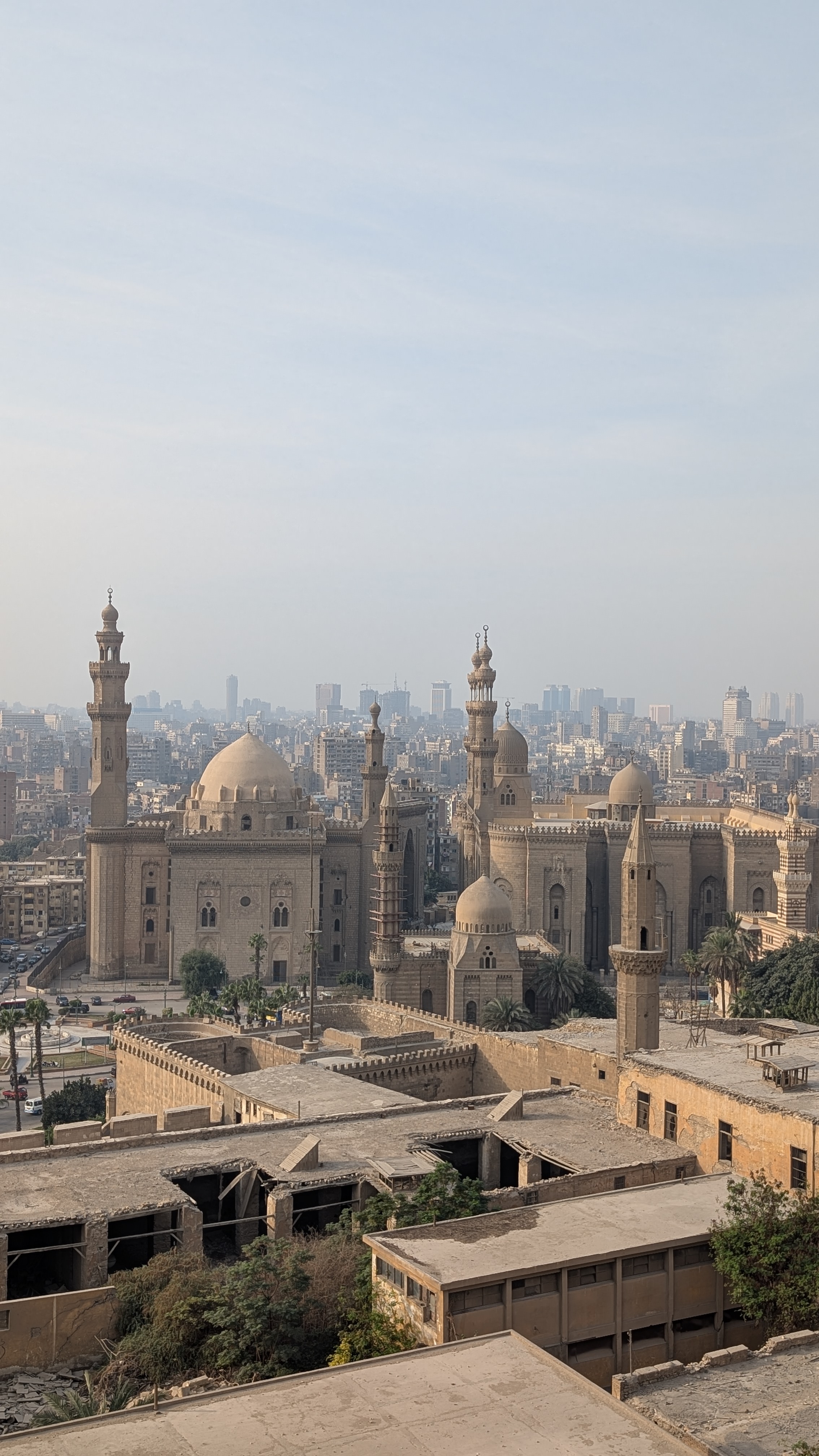
The afternoon I spent in Islamic Cairo — the old medieval city south of the modern centre — was as disorienting as the museum, in a different way. The Citadel of Saladin sits on a hill above the city, and from its terrace you get the best view of Cairo's skyline: the Sultan Hassan Mosque and the Al-Rifa'i Mosque side by side at the base of the hill, the minarets rising above the low ochre city, the haze and the sound of traffic and the faint call to prayer.
The view from the Citadel — Sultan Hassan and Al-Rifa'i side by side, minarets above the haze.
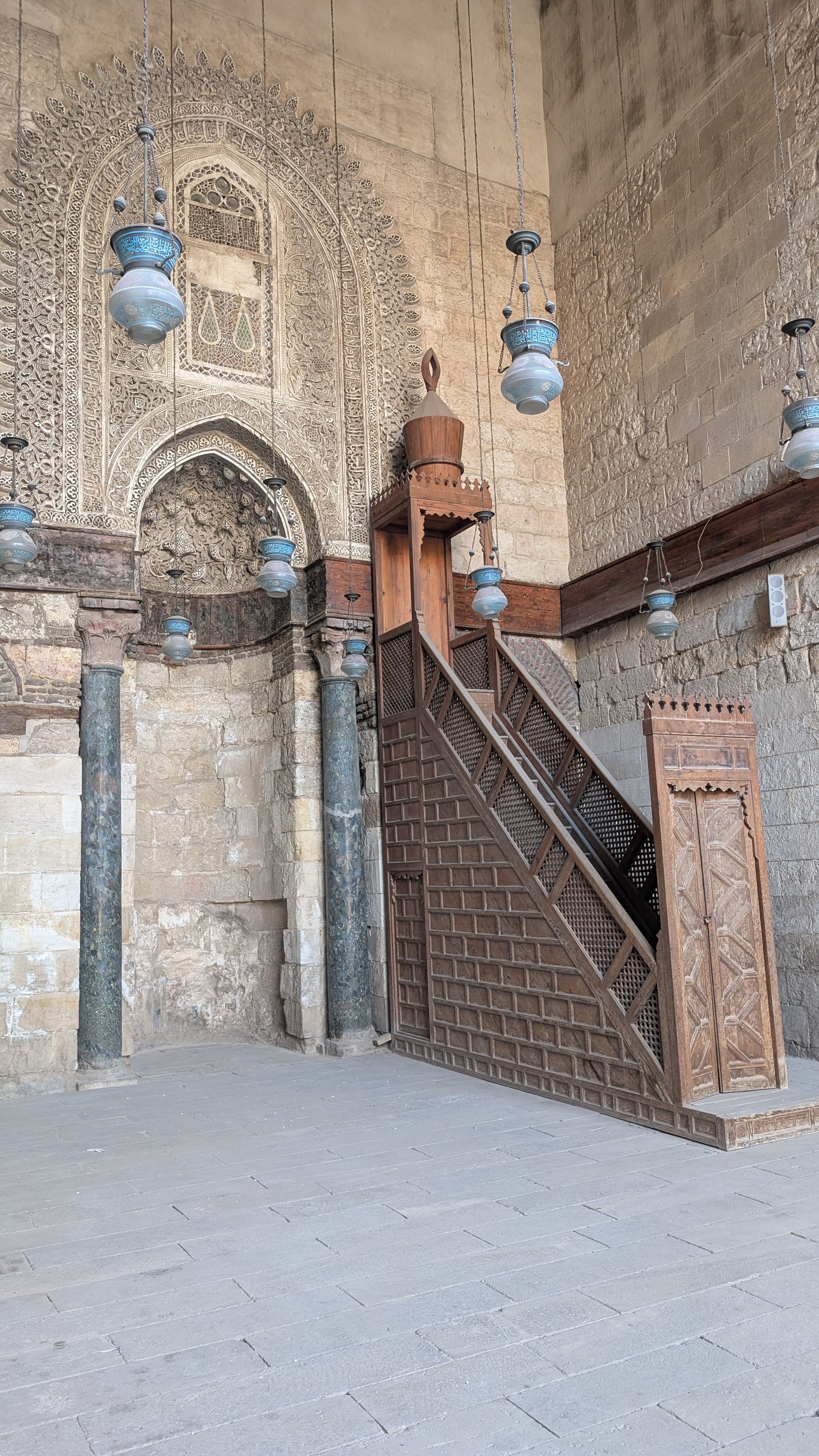
Inside the Sultan Hassan Mosque, the scale shifts again. The courtyard is vast and mostly empty. The stone is cool. The ornate wooden minbar — the pulpit, carved centuries ago — rises on one side in a structure of such intricate geometry that you just stand and look at it. There are no audio guides in places like this. You're just in the space with the thing.
The minbar inside Sultan Hassan Mosque. Every surface carved, every angle considered.
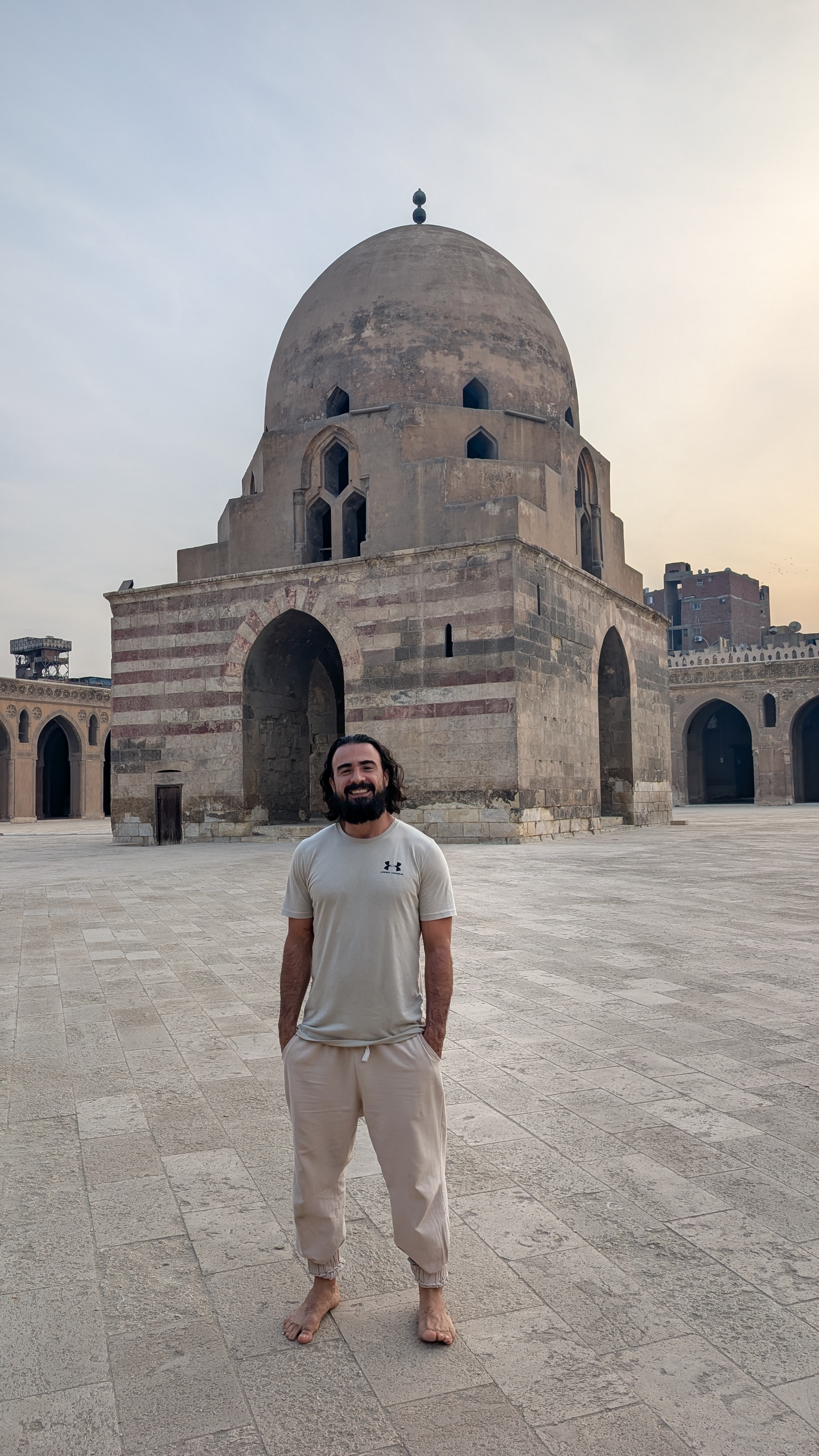
I also found Ibn Tulun — Cairo's oldest surviving mosque, ninth-century, built around a central courtyard with a spiral minaret that looks like nothing else in the city. It was almost completely empty when I visited. A caretaker nodded at me from across the courtyard. I sat on the warm stone and stayed longer than I planned.
Ibn Tulun at golden hour. Ninth century, still standing, almost no one else there.
This is Cairo. You keep finding things. You run out of time before you run out of city.
Y
Written by
Yavuz
Travel writer and photographer obsessed with slow travel, local food, and the roads less taken. Based wherever the next flight lands.