culturephotography
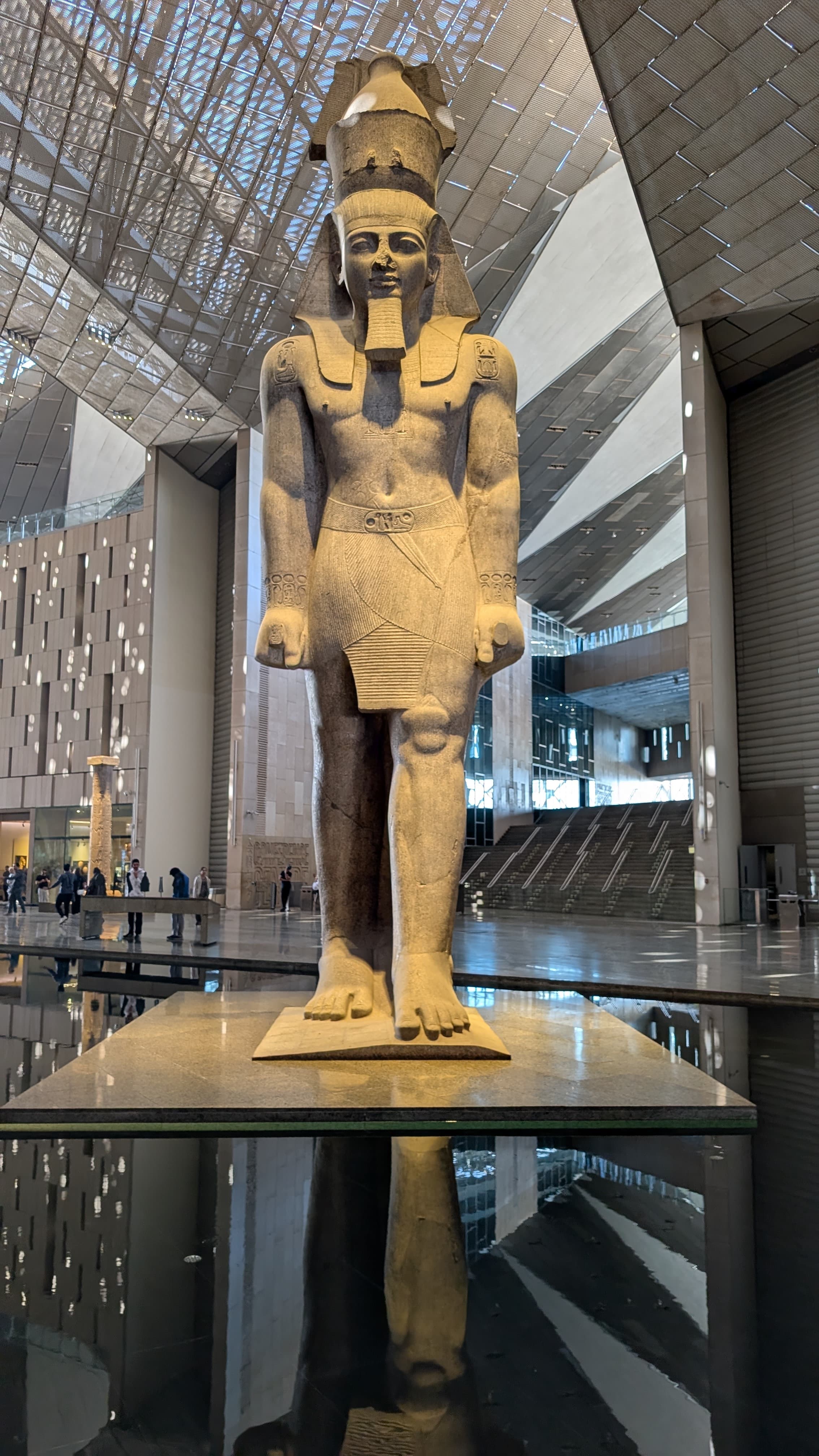
The Grand Egyptian Museum Is Not What I Expected
The GEM is enormous, overwhelming, and unlike any museum I've been to. Then you walk out and the pyramids are right there. It takes some adjusting.
December 20, 2025
Three cities, five thousand years of history, and one very fast reality check
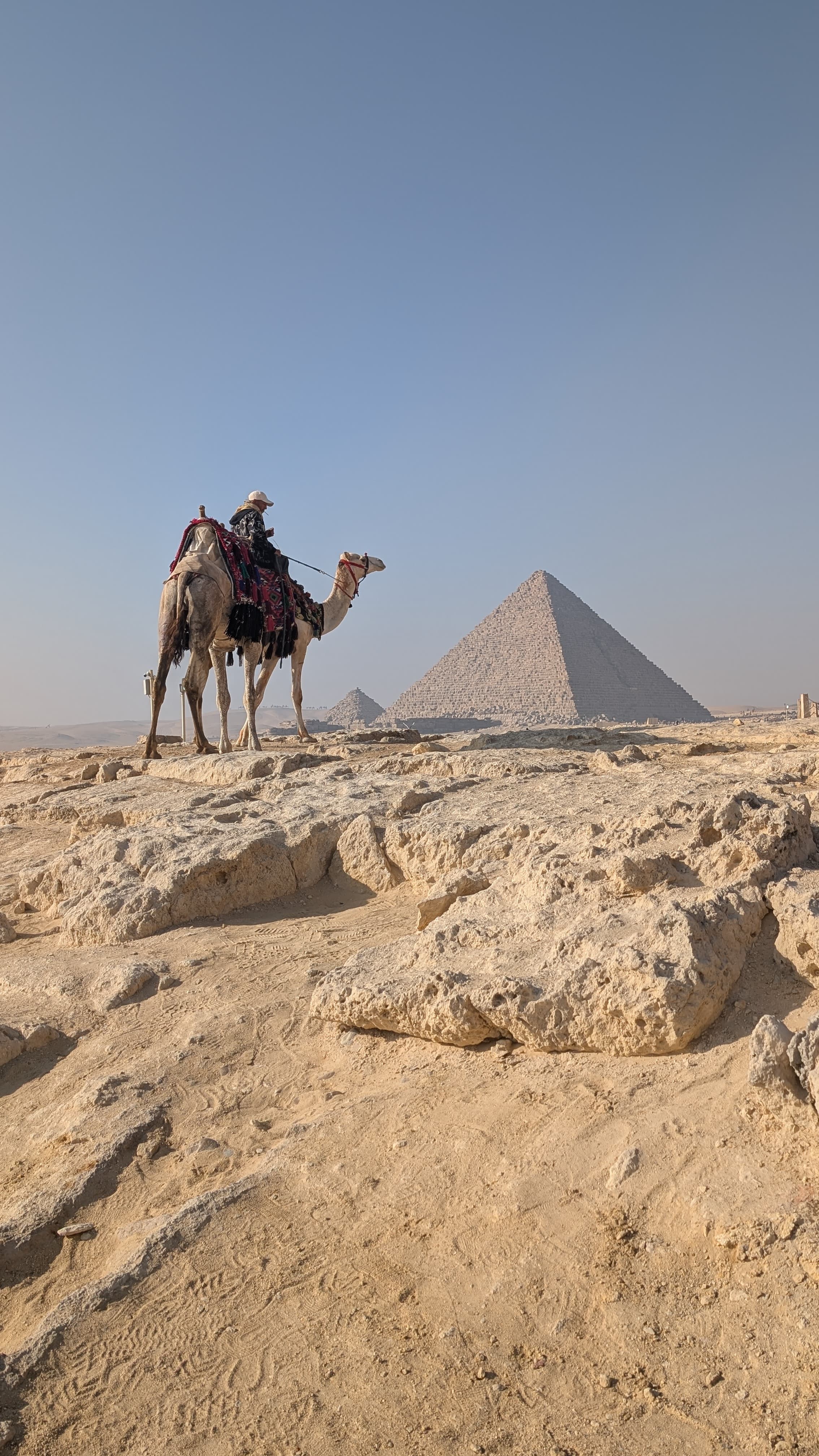
The pyramids are visible from the city. That's the first thing that resets you. You're in a taxi, stuck in Cairo traffic, dust and horns and the smell of exhaust — and then there they are, at the end of a wide road, just sitting there above the rooftops. The Pyramids of Giza. Three of them. Like they've always been there and the city simply grew up around them.
Which is more or less exactly what happened.
I arrived in Cairo not knowing what to expect, and Egypt took about four hours to make it clear that whatever I had expected was wrong. Not in a bad way. In a you-were-operating-with-the-wrong-mental-model way. This is one of the oldest continuously inhabited cities on earth. You feel it. Not as abstract history but as physical weight — in the dust, in the scale of everything, in the unhurried confidence of a place that has been a city for five thousand years and will continue to be a city long after everywhere else has been forgotten.
The standard approach to the Giza plateau is to arrive early, before the tour groups, and ride a camel or horse to get a view from the desert side. This is the correct approach. Do it. The wide angle — the three pyramids and the Sphinx spread out across the plateau, Cairo's haze and minarets visible in the distance — is one of those images that your brain simply cannot scale properly from photos. They're bigger than you think. The scale is genuinely disorienting.
But the thing nobody quite prepares you for is standing at the base of the Great Pyramid and looking up. The individual limestone blocks are taller than your chest. There are 2.3 million of them. Some were quarried hundreds of kilometres away and floated down the Nile. The engineering is extraordinary even now; in 2500 BC, it is almost incomprehensible.
I stood there for a while, which felt like the only honest response.
Outside the pyramid plateau, Cairo is a city of 22 million people doing 22 million things at once. The traffic follows its own logic. The streets are narrow and layered — colonial-era buildings above Ottoman archways above Coptic churches below street level. The call to prayer echoes from several directions at different times. The noise is constant but not unpleasant; it has rhythm.
The Nile cuts through the middle of it all, brown and wide and surprisingly calm. Sitting on a felucca on the water as the city lights come on at dusk is one of those rare travel moments that feels exactly like it's supposed to feel and still somehow exceeds expectation.
I stayed in Cairo for three days before heading south to Luxor, and by the time I left I understood something I hadn't before: Egypt is not a country you can be indifferent to. The scale of what happened here — the length and depth of the civilisation, the art, the architecture, the sheer ambition of it — demands some kind of response. Awe, disorientation, obsession. You pick one. You don't get to be neutral.
I chose obsession. I kept trying to see more, understand more, stand in more places where something improbable had been built. It's an impossible task. That's also the point.