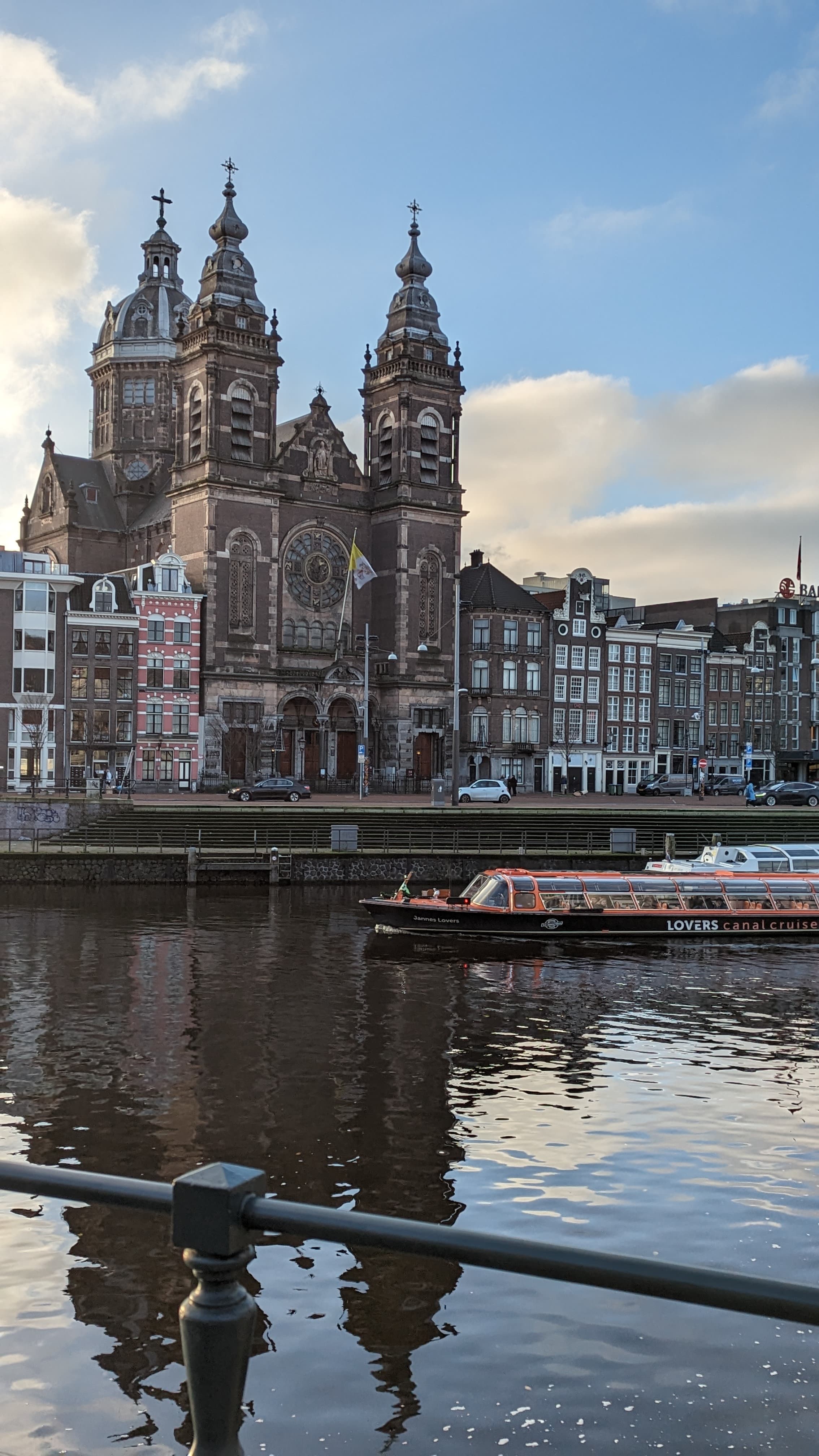
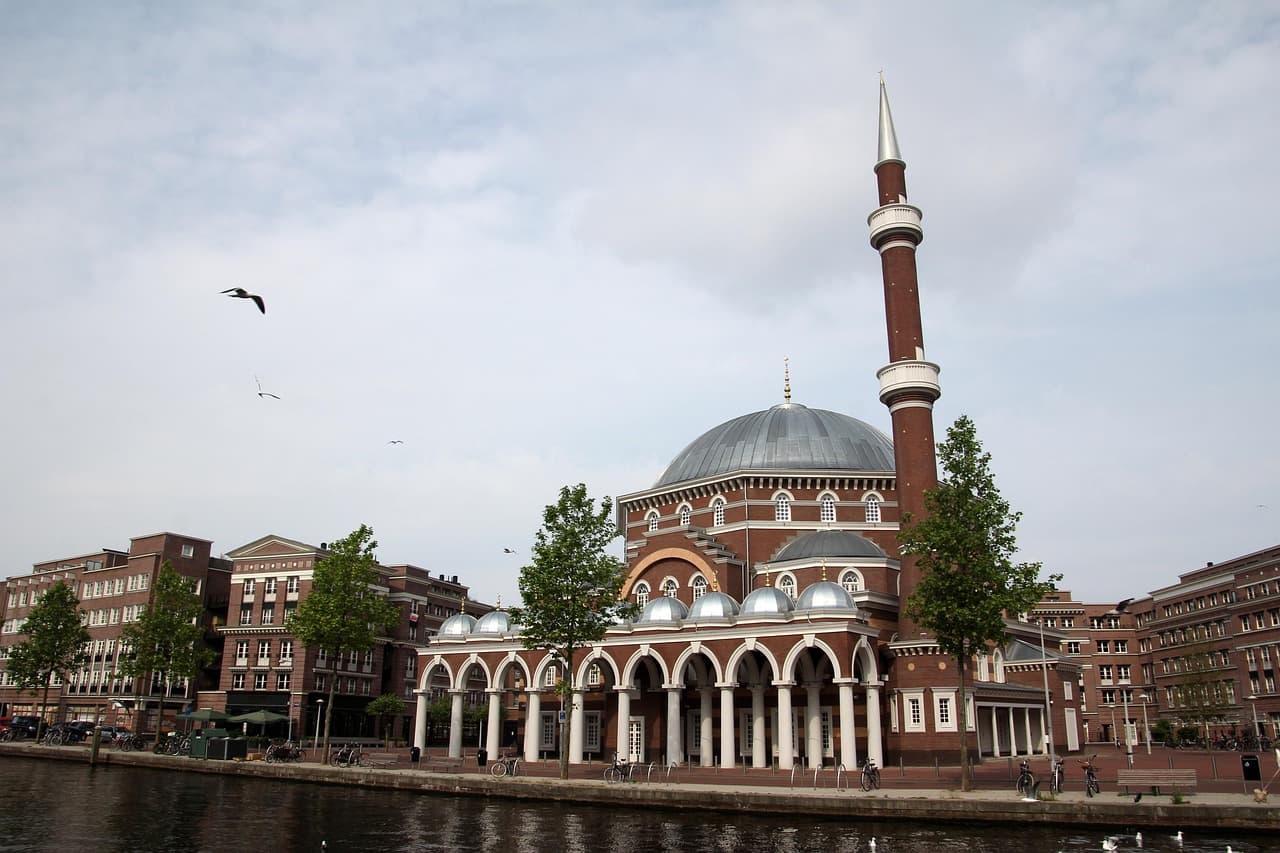
The canal system is what makes Amsterdam comprehensible. The city is built on a series of concentric canals — the Singel, the Herengracht, the Keizersgracht, the Prinsengracht — radiating outward from the central station in a pattern that was planned in 1613 and built largely within a single generation. Standing on any of the main bridges and looking along a canal in either direction, you see the thing that defines Amsterdam: the narrow gabled canal houses, each slightly different from its neighbours, each leaning forward slightly from its foundations, reflected in dark water with bikes and boats in the foreground. It is one of the most photographed urban views in the world and it still works. The reality matches the image.
I spent four days in November. The tourist volume at that time of year is manageable, the light is interesting — grey and low and occasionally golden — and the city goes about its actual life in a way that is visible and interesting. Amsterdam is not a city that performs for visitors. It is a city that happens to be beautiful and happens to be worth visiting, and makes the distinction clearly.
The Rijksmuseum
The Rijksmuseum contains the largest collection of Dutch Golden Age painting in the world. Rembrandt's Night Watch, Vermeer's The Milkmaid, Frans Hals' portraits, Jan Steen's chaotic domestic scenes — all of it in one building, in a context that explains the culture that produced it. The Golden Age (roughly 1580–1680) was a period when Amsterdam was the wealthiest trading city in the world, and the art reflects it: prosperous merchants, serene interiors, exact observations of everyday life rendered with a technical precision that hasn't been equalled.
The Night Watch alone justifies the visit. It is very large and very dark and very good, and the room it hangs in is designed around it with a seriousness that makes the experience of standing before it feel considered rather than overwhelming. Allow two hours minimum for the museum. If you're interested in applied arts — Delftware, furniture, jewellery — add another hour.
The Anne Frank House
The Anne Frank House on the Prinsengracht requires booking well in advance — often months ahead — and the visit is deliberately slow and quiet. The secret annex where the Frank family hid for two years is empty of furniture (moved during the war) but the emptiness is part of the point. The rooms are small. The windows had to stay covered. The perspective that standing in those rooms provides — on confinement, on the specific mechanics of hiding — is not something that a book or a film can fully give you. Go if you can get a ticket.
Jordaan and the Neighbourhoods
Jordaan — the neighbourhood west of the main canals — was a working-class district in the Golden Age, built to house the artisans and workers who served the wealthy merchant families on the main canals. It is now the most desirable residential area in the city: small streets, brown cafés (bruine kroegen — the traditional Dutch pubs, dark wood and old beer mats), independent shops, galleries. The Saturday flower market on the Amstelveld is small and worth an hour.
The brown café culture — dim lighting, beer on tap, jenever (Dutch gin) in small glasses, conversation — is the authentic social institution of Amsterdam and still functions exactly as it always has. Find one that looks worn enough to have been there since the 1970s and sit with a glass of something cold and watch the city go by through the window.