On bikes, bridges, and learning to see a city the way it sees itself
Amsterdam, Netherlands·September 20, 2024
The first thing I did in Amsterdam was hire a bicycle. Not because I planned to — I'd intended to walk the canal belt and take trams like a sensible tourist — but because everyone else was cycling and standing on the pavement watching the traffic flow felt like watching a river from the bank when you could be swimming in it. So I rented a black city bike, got yelled at twice in the first ten minutes, and then suddenly understood the city.
Amsterdam was built for bicycles. More accurately, it rebuilt itself for bicycles over the last fifty years — a deliberate political choice made in the 1970s, when the city looked at the car-centric future and decided that wasn't the future it wanted. Now there are more bikes than people. The cycling infrastructure is so complete and so confident that pedestrians are the ones who feel like they're in the way.
The Canal Belt
The grachtengordel — the canal belt — is a UNESCO World Heritage Site, and rightfully so. It was built in the seventeenth century during the Dutch Golden Age, a planned urban expansion of concentric semicircular canals radiating out from the old city centre. From above, it looks like a spider's web; at street level, it looks like one of the most beautiful pieces of urban design ever built.
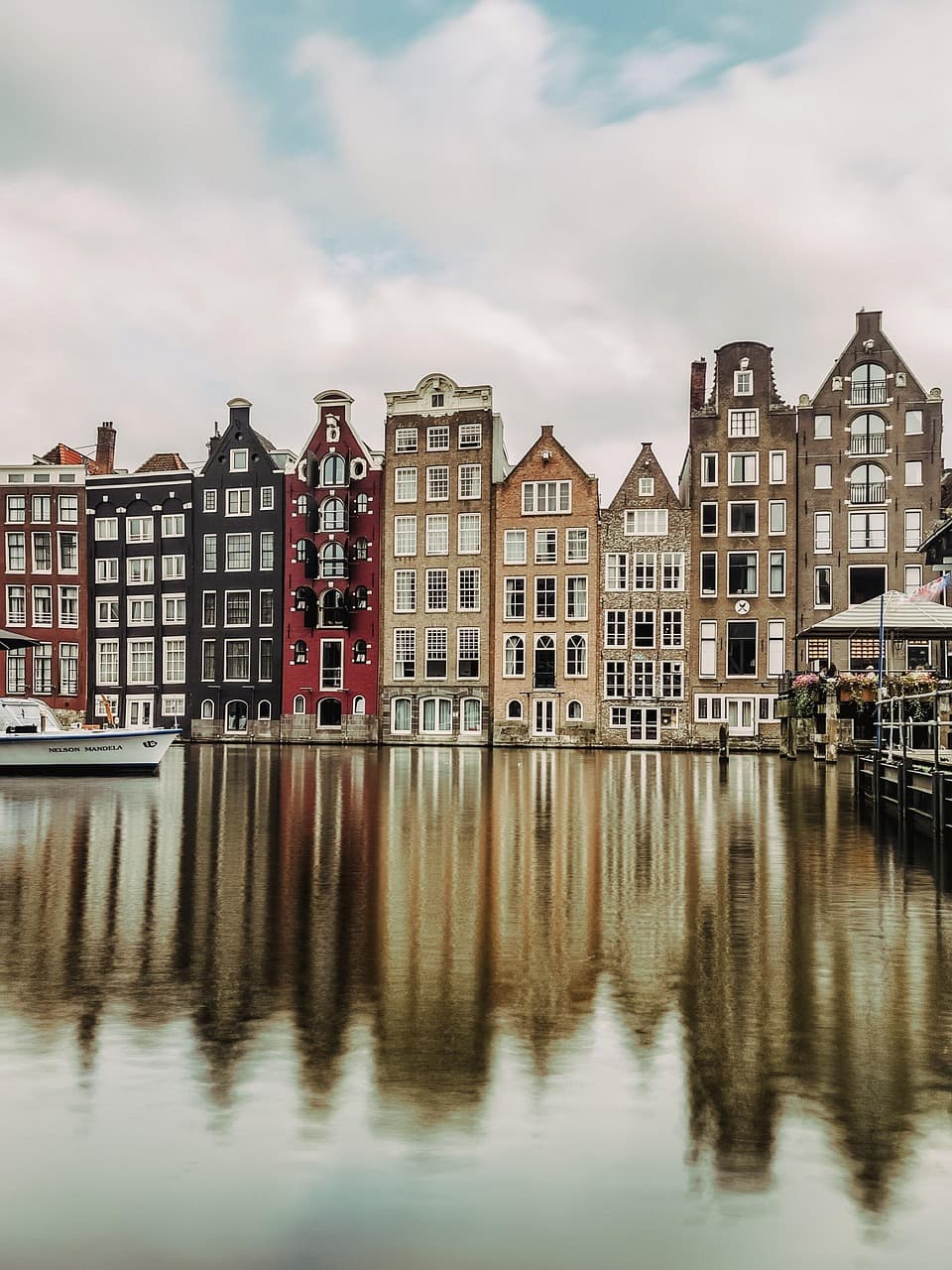
The canal houses are tall and narrow — Dutch property tax was historically calculated by the width of the facade, so merchants built up, not out. They lean slightly forward, a structural necessity for hauling goods up to the upper-floor storage rooms via the hook still visible on most facades. Every house is different. Gabled facades in neck gable, bell gable, step gable, or spout gable — an architectural vocabulary I did not know existed before Amsterdam made it impossible to ignore.
The Herengracht in late afternoon light. Every gable is different if you start paying attention.
The Rijksmuseum and the Dutch Golden Age
The Rijksmuseum is one of the great art museums in the world, and I say that as someone who has walked through enough art museums to feel their general sameness. The Dutch Golden Age collection is extraordinary: Vermeer's The Milkmaid, Rembrandt's The Night Watch, hundreds of still lifes and merchant portraits and seascapes. What strikes you is the specificity of it — these are not mythological allegories or religious scenes but actual people, actual objects, actual rooms, painted with an attention to light and texture that still rewards very close looking.
The Night Watch is bigger than photographs suggest. It's about 3.6 by 4.4 metres, and it's hung in its own room at the end of a long gallery. You see it from a distance first, which is probably the correct way.
Jordaan and the Brown Cafés
The Jordaan is the neighbourhood west of the canal belt — originally a working-class district, now the city's most coveted address, but without the sterile polish that usually accompanies that transition. The streets are narrow and residential. There are small courtyards hidden behind unmarked doors (the begijnhof is the famous example, but there are others), independent bookshops, antique dealers, and brown cafés — bruine kroegen — which are what Amsterdam calls its traditional pubs. Dark wood, low ceilings, candles in wine bottles, beer on tap. I found one on the Prinsengracht on my second evening and stayed until I'd missed dinner.
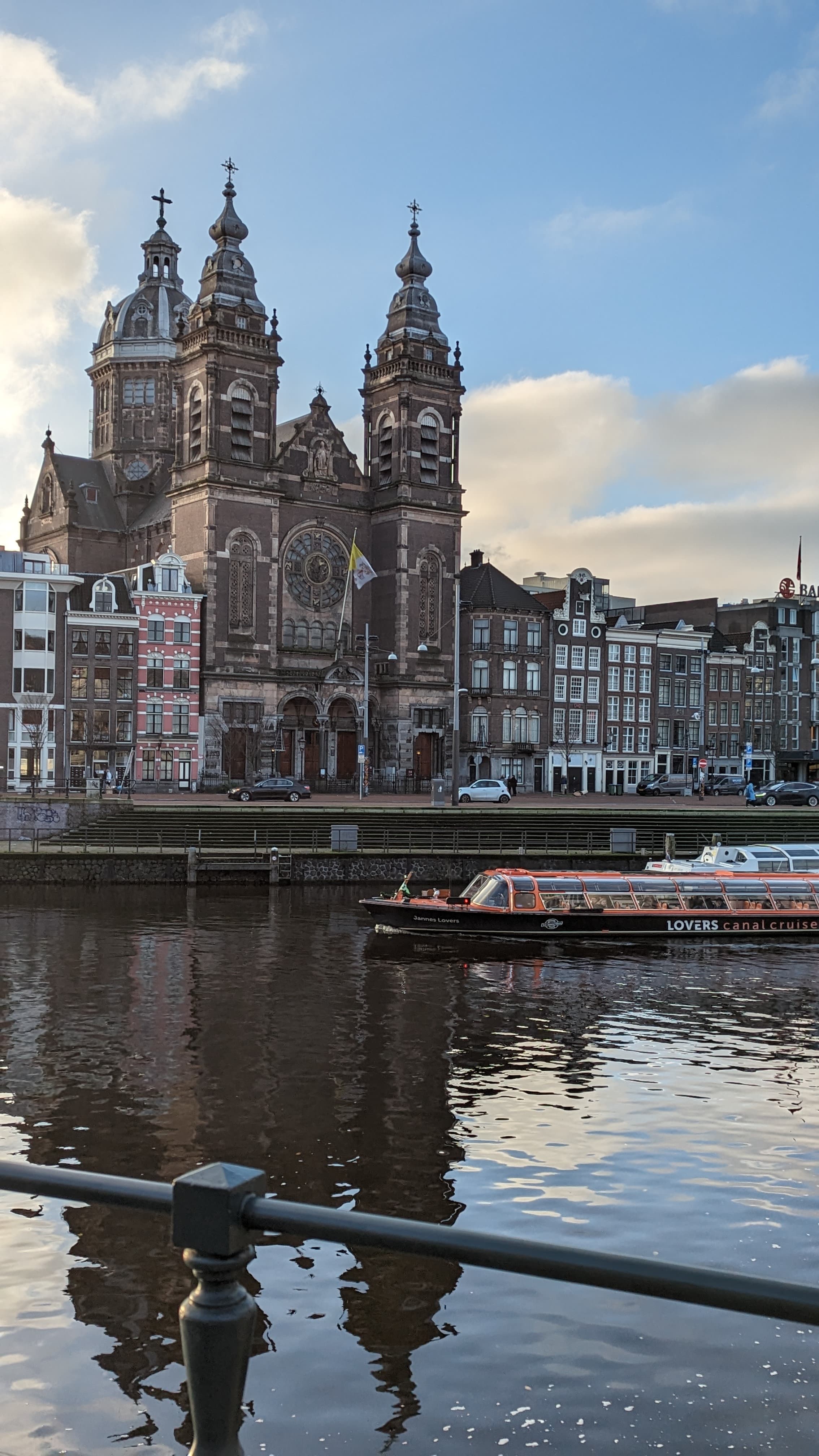
Every street in the Jordaan looks like this. Every one is different once you slow down.
Amsterdam
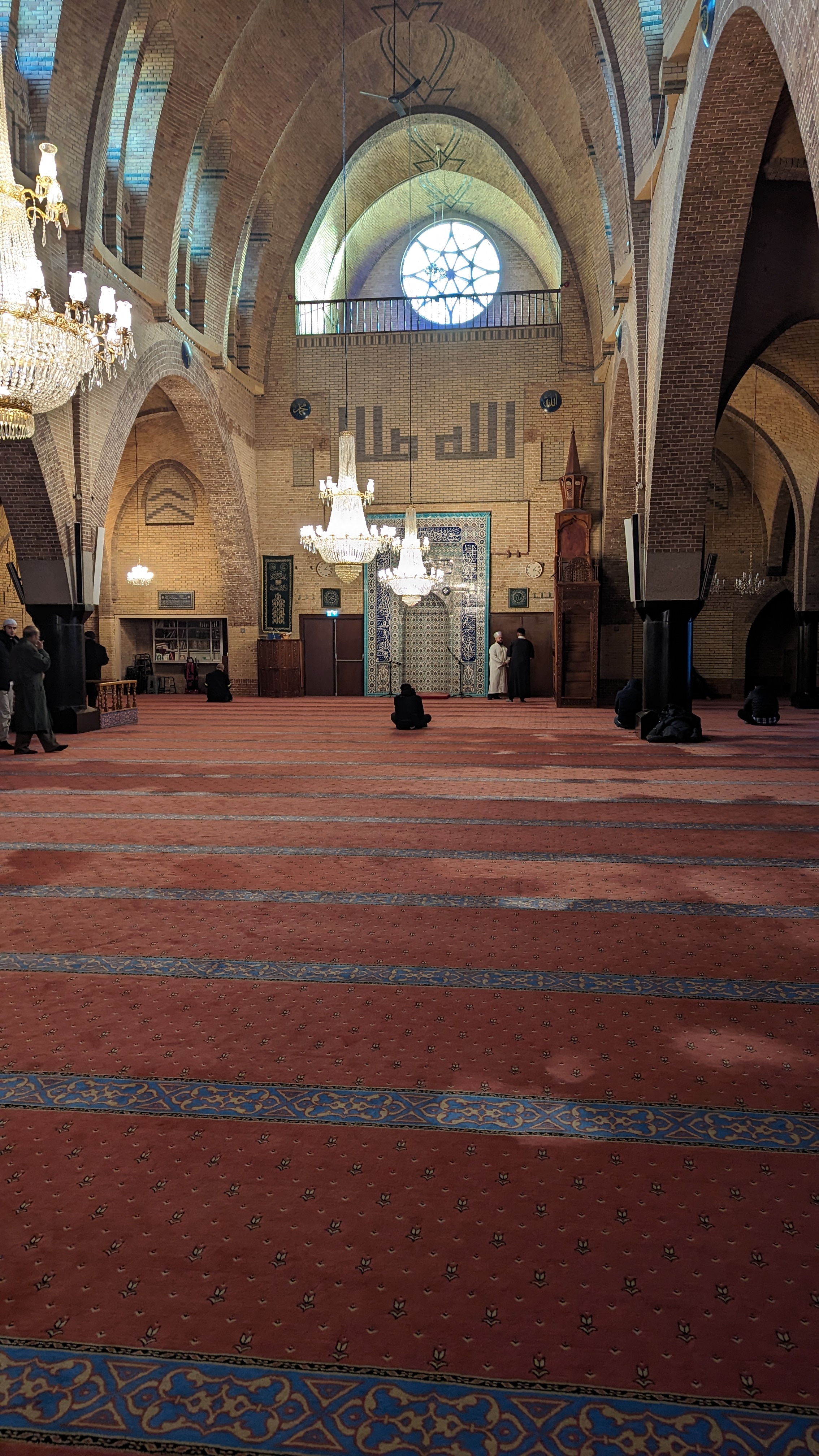
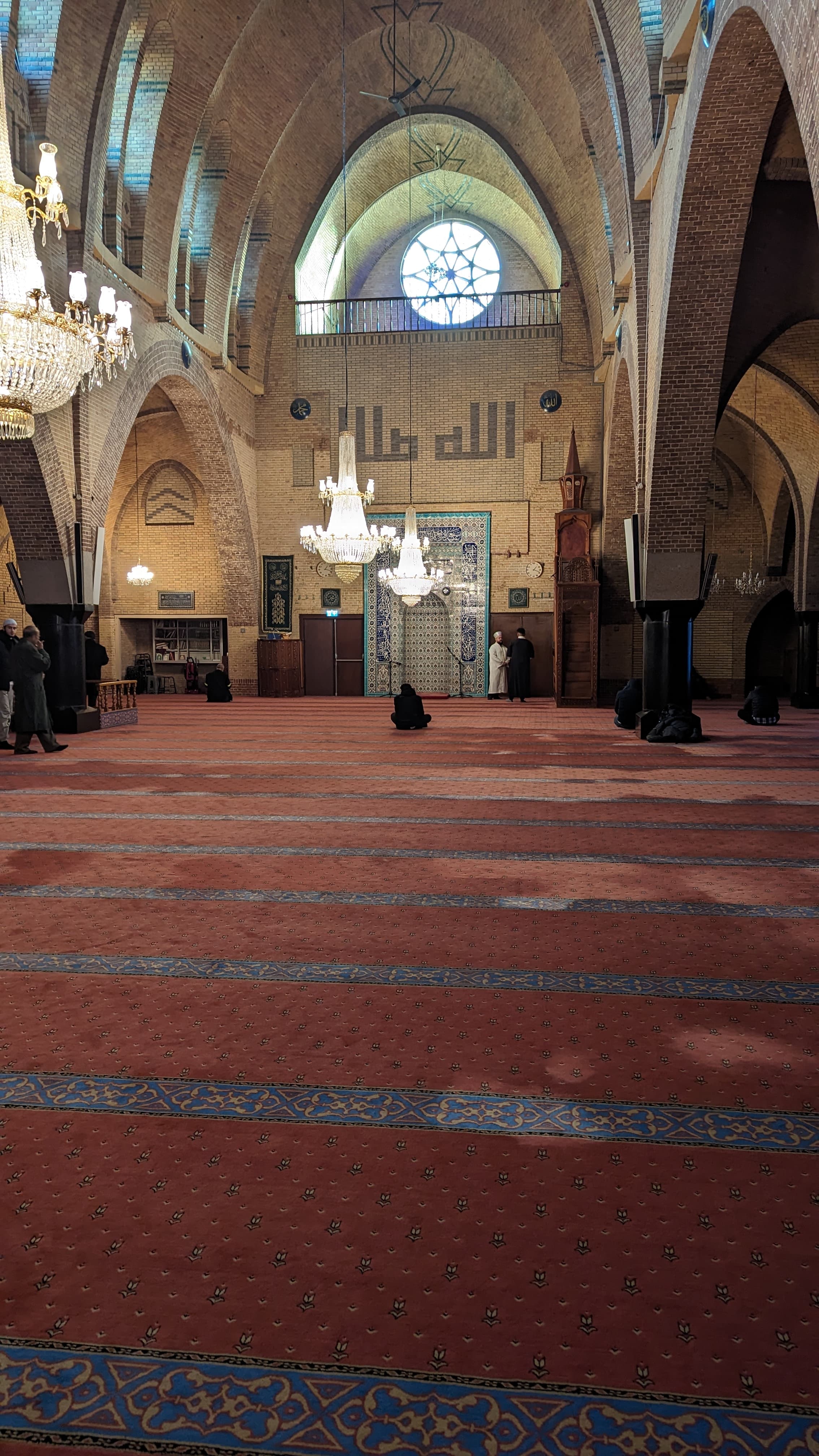
Inside one of Amsterdam's mosques — brick vaults, red carpet, crystal chandeliers, and Arabic calligraphy on the wall. The city's Muslim community has been here for decades.
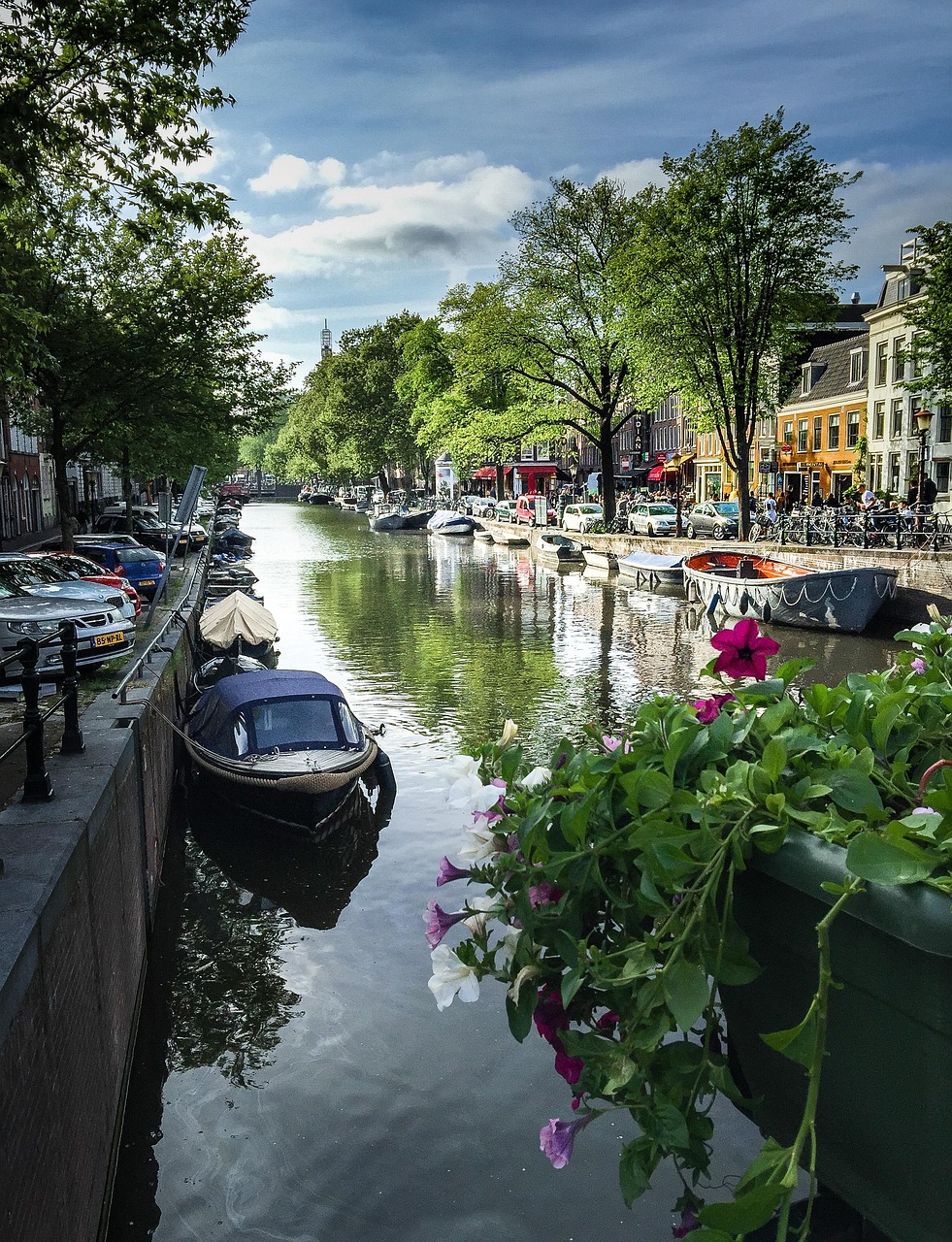
A summer afternoon on the canal. Moored boats, petunias on the bridge rail, trees closing over the water — Amsterdam in the season it was made for.
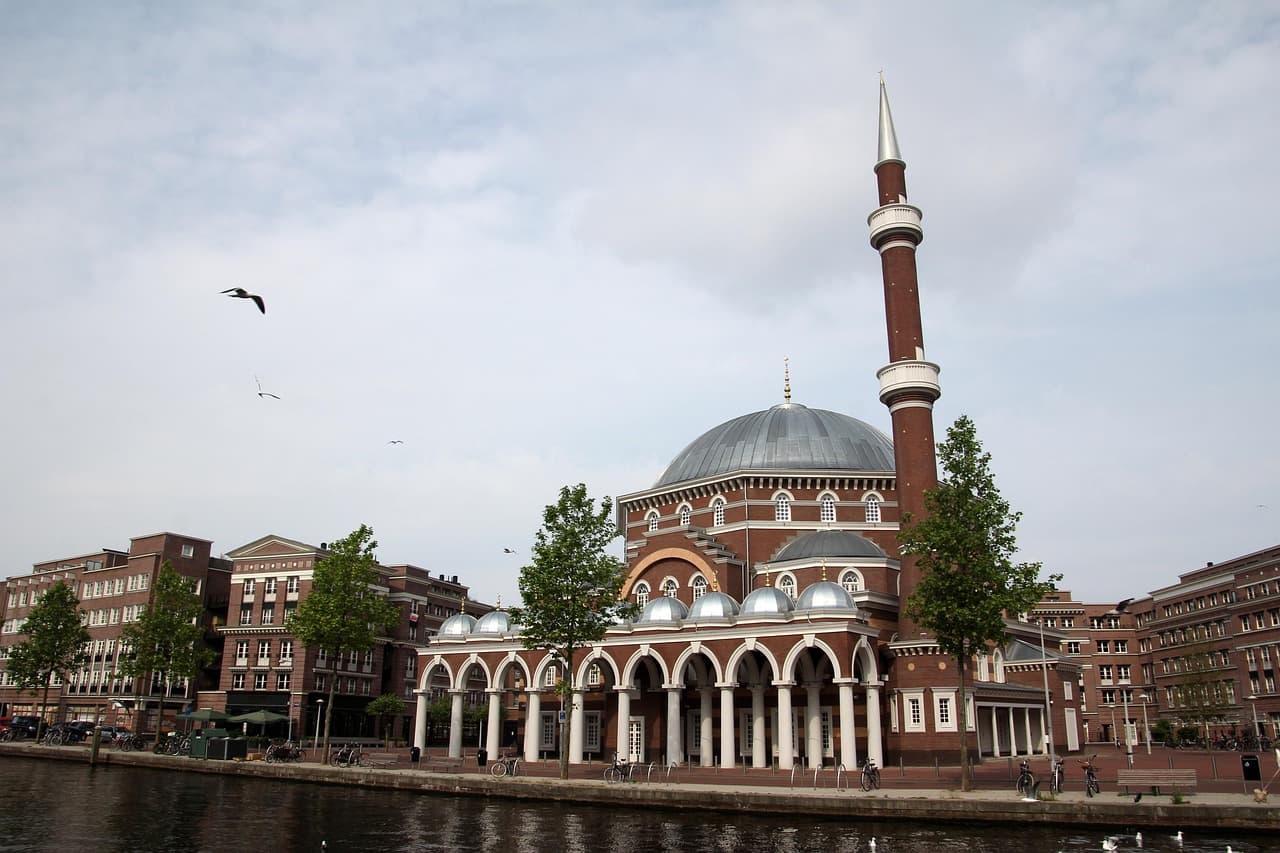
The Westermoskee on the Baarsjesweg, seen from across the canal. Red Dutch brick, silver dome, a single minaret. One of the largest mosques in the Netherlands.
The Damrak canal houses — narrow, gabled, each one slightly different, all of them mirrored in still water. The most photographed street in the city. Still worth it.
Y
Written by
Yavuz
Travel writer and photographer obsessed with slow travel, local food, and the roads less taken. Based wherever the next flight lands.