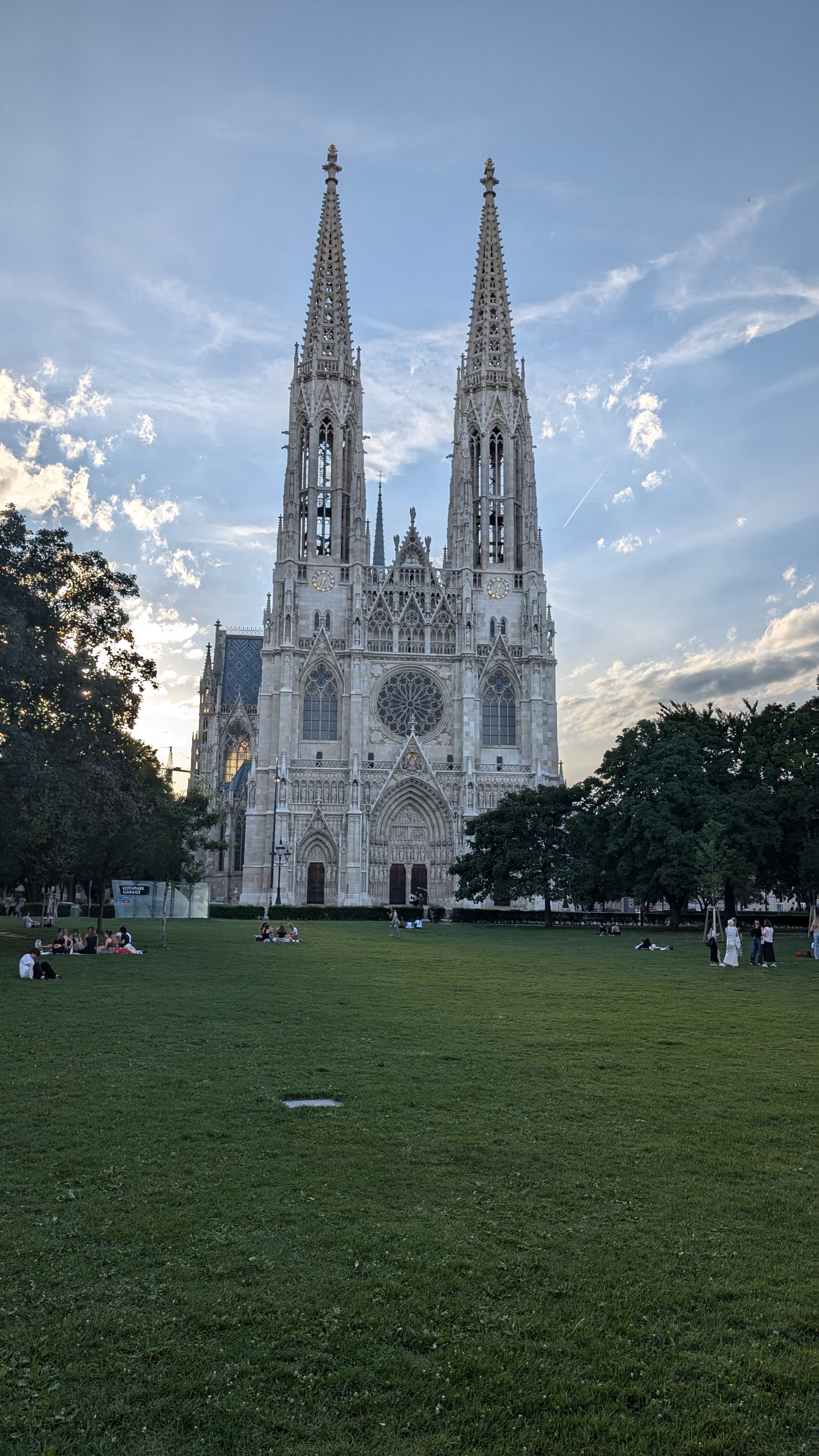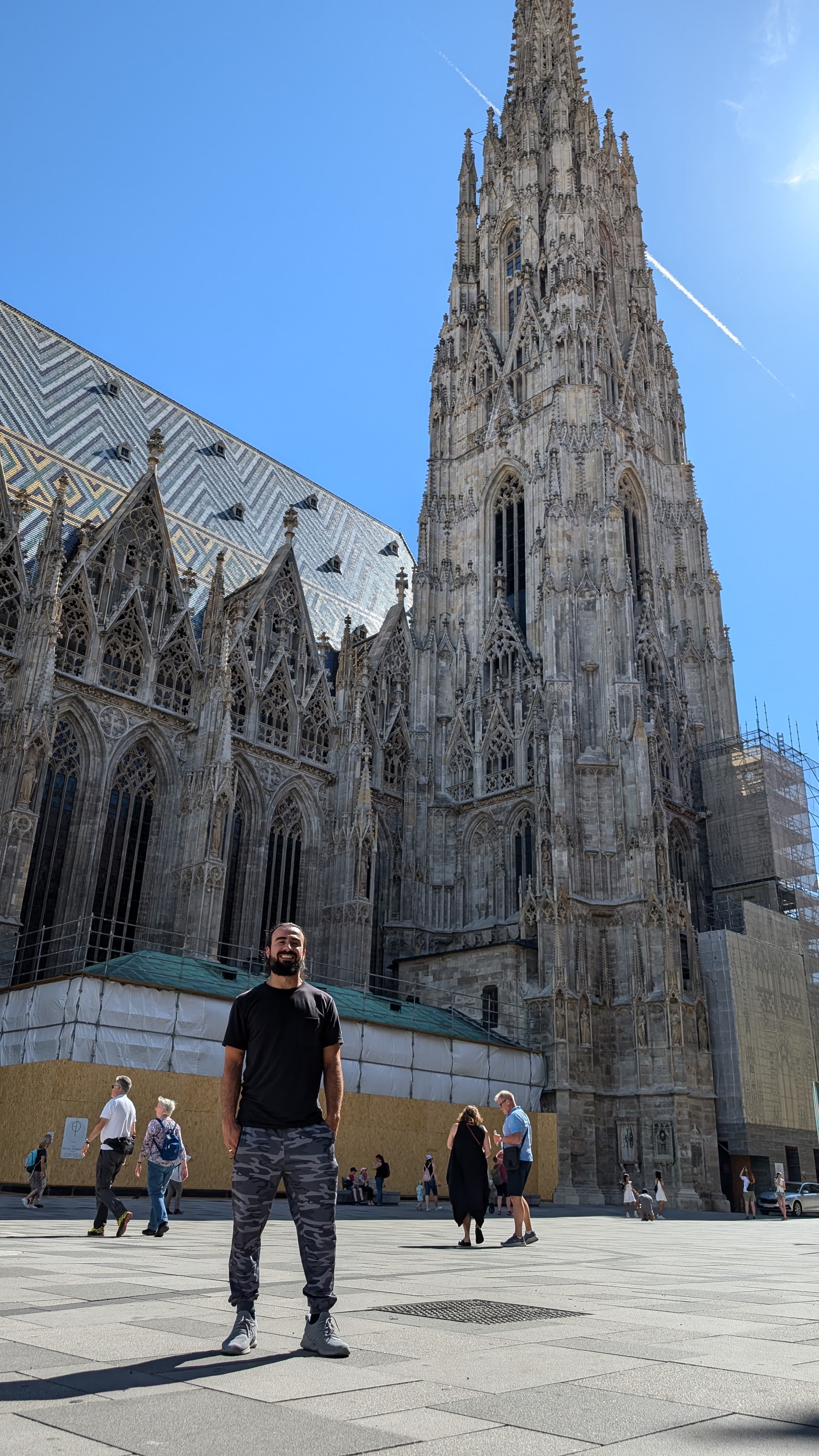
Vienna Between the Coffeehouses
Imperial palaces, Secessionist art, and a city that takes its café culture more seriously than anything else
The Viennese coffeehouse is not a café. The distinction matters. A café is somewhere you go to get coffee and leave. A coffeehouse is somewhere you go to read the newspaper, write a letter, argue about Mahler, and stay until the light changes. There is no time limit. The waiter does not bring the bill until you ask for it. The newspapers — actual newspapers, on wooden rods — are hung by the entrance and you take one to your table and the waiter brings a small glass of water alongside the coffee, unprompted. This is the operating system of Vienna. Once you understand it, the rest of the city makes more sense.
I arrived in November, which is the right time to arrive. Vienna in summer is a city of tourists. Vienna in November is a city of Viennese people going about the business of being Viennese, which is a thing worth witnessing. The museums are quieter. The opera tickets are more available. The air is cold and clean and the grey light makes the cream-coloured buildings look more beautiful, not less.
The Ring and the Palaces
The Ringstrasse — the wide boulevard built by Franz Joseph I in the 1860s to encircle the inner city — is one of the great pieces of urban planning in European history. It runs for five kilometres in a horseshoe, lined with the Kunsthistorisches Museum, the Naturhistorisches Museum, the State Opera, the Burgtheater, the Rathaus, and the Hofburg palace complex. Every building is monumental. Every building faces the Ring with a self-confidence that is slightly exhausting to stand before. The ambition is extraordinary and the effect, when you walk the whole boulevard in one go, is of a city that decided once — in about 1870 — what it wanted to look like and then built it all at once.
The Hofburg is where the Habsburgs actually lived, and the state rooms are open to visitors. What strikes you inside is not the grandeur — you expect grandeur — but the intimacy of some of the rooms. Franz Joseph's study is spare and almost spartan by imperial standards. His desk is small. The portrait of Empress Elisabeth faces him from across the room. He worked sixteen-hour days for sixty-eight years. The room has the feeling of a place where real, unglamorous work got done.
The Secession
In 1897 a group of artists and architects led by Gustav Klimt broke from the conservative Viennese art establishment and formed the Vienna Secession. The building they put up to house their exhibitions — the Secession Building, completed in 1898 — is one of the most extraordinary things in the city: a white cube with a golden laurel-leaf dome on top, completely unlike anything around it, sitting at the end of the Naschmarkt with an air of total self-possession. The motto above the entrance reads: To every age its art, to art its freedom.
Inside, in the basement, is the Beethoven Frieze — Klimt's 34-metre painted frieze created for an 1902 exhibition. It is on permanent display and it is the reason to visit. The figure of the Knight, the floating women, the Hostile Powers — Klimt's symbolic language is strange and precise at the same time, and standing in the low basement room looking at the whole length of it, you understand why this movement shook European art when it appeared.
Naschmarkt and the Food
The Naschmarkt is Vienna's main market — 1.5 kilometres of stalls running along the median of a wide street — and it is the place to eat. The standard move is to walk the length of it once to orient yourself, then backtrack to buy things: smoked meats from the central European stalls, Turkish pastries, Syrian flatbreads, cheese, pickles, coffee from one of the small stands. It is a working market and a tourist market simultaneously, with the seam between them visible if you look at the price boards.
The Viennese schnitzel — Wiener Schnitzel, made from veal, not pork, hammered thin and fried in lard — is a different thing from the schnitzel served in tourist restaurants everywhere. The crust should be light and rippled, not flat and compressed. The right place serves it with a wedge of lemon and a small green salad and nothing else.
The Imperial City