Van: The Inland Sea
A vast alkaline lake, an Armenian church on an island, and the famous cats who answer to no one
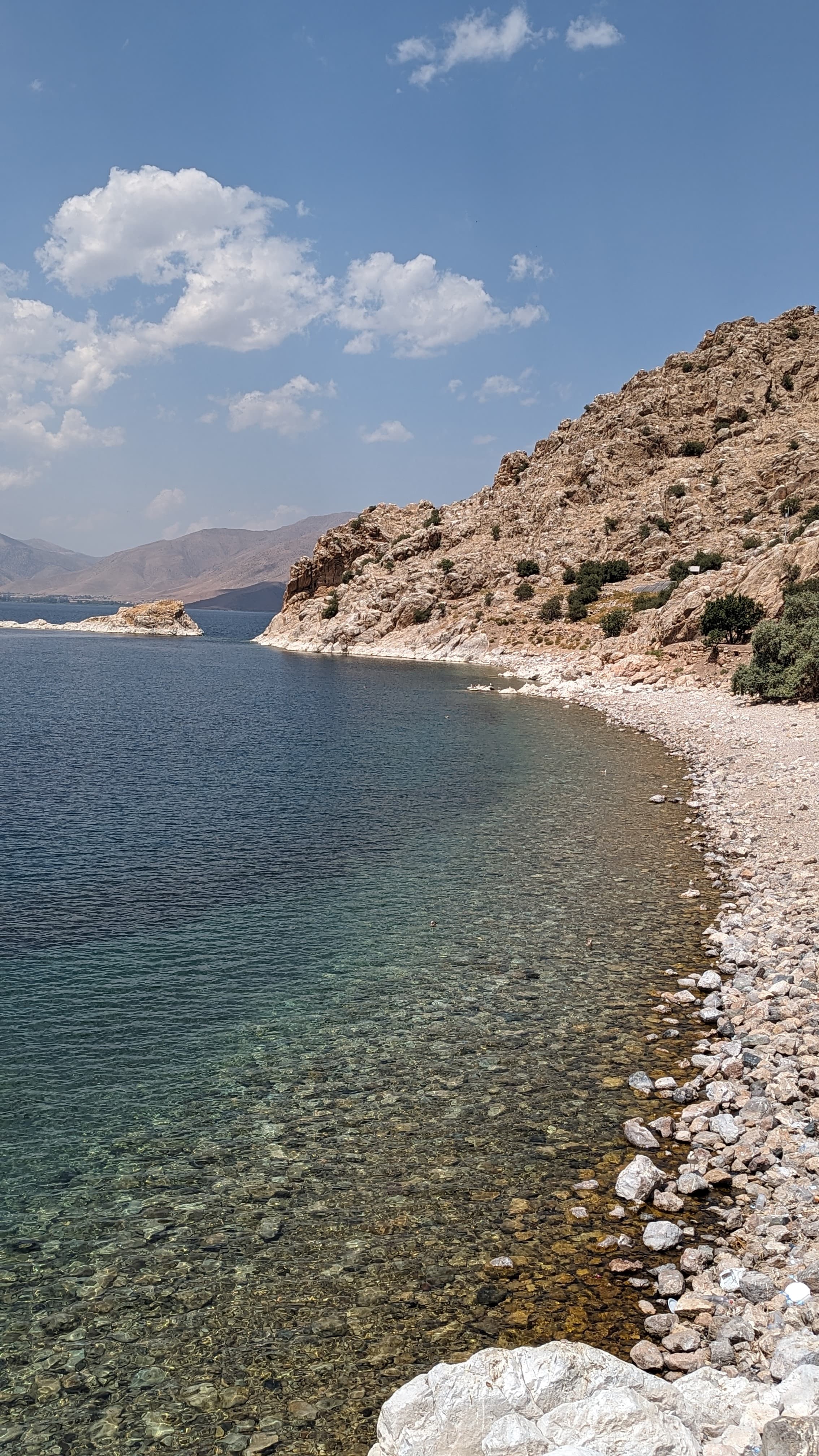
Lake Van is not quite like any other lake. It is too large — 3,755 square kilometres, roughly the size of Lebanon — and too high and too chemically strange (soda-alkaline, naturally soapy, good for washing clothes, bad for drinking) and the colour it turns in different light is not the colour of ordinary water. On a clear morning it is turquoise. In the afternoon it goes mineral blue. At dusk it can be silver or copper or, very occasionally, a dark burnt orange that seems impossible for water.
Van city sits on the eastern shore. It is a working regional city — functional, not scenic — but within an hour's drive is everything that makes this corner of Turkey worth the considerable journey to reach it.
Akdamar Island
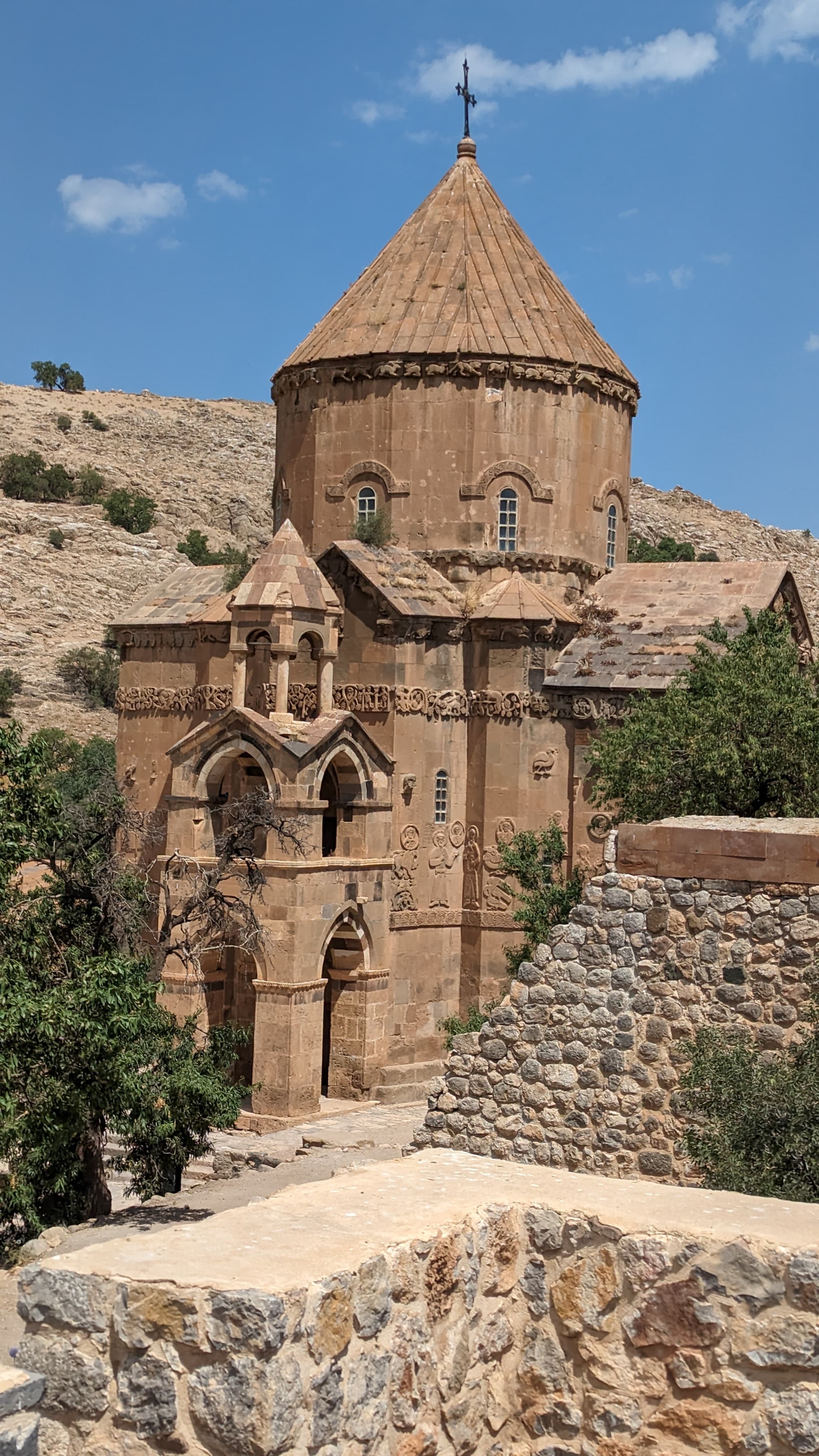
The Church of the Holy Cross on Akdamar Island was built in 915–921 AD by the Armenian King Gagik I of Vaspurakan. It is a small church on a small island, but the exterior stone carvings are among the most extraordinary things in Turkey: biblical scenes (Adam and Eve, David and Goliath, Jonah and the whale), saints, kings, and animals in a frieze that wraps the entire exterior. The carving is confident and detailed and sometimes funny — a man being swallowed by a whale with an expression of resigned surprise — and it has been here on this island for eleven hundred years, surrounded by the alkaline lake, surviving everything.
A boat goes to the island from the shore (a ten-minute crossing). The interior of the church is mostly empty now, but the frescoes are still faintly visible on the walls. On certain Sundays in September an Armenian liturgy is celebrated here, drawing Armenians from the diaspora to the island their ancestors built. The juxtaposition of the church, the lake, the distant snowcapped mountains, and the improbability of it all standing — this is the image you come to Van for.
İshak Paşa Palace
Thirty kilometres east of Van, on a rocky promontory above the town of Doğubayazıt (technically in the next province), is İshak Paşa Palace — an eighteenth-century Ottoman palace in a state of partial ruin that commands a view of the Ağrı plain and, on clear days, Mount Ararat. The palace mixes Ottoman, Seljuk, Georgian, Persian, and Armenian architectural elements in a way that makes it look completely unlike anything else. The carved portals are exceptional. The setting — plateau, mountains, the wide sky — does the rest.
Van Kahvaltısı
Van is famous throughout Turkey for its breakfast. A Van kahvaltısı is not a meal with a cup of tea on the side; it is a table covered in small dishes: otlu peynir (herb cheese, the herbs gathered from the high plateau), honey in the comb, multiple jams, cream, eggs, butter, olives, dried fruits, two or three different types of bread, and a constant supply of strong tea in tulip-shaped glasses. It takes time. It is meant to take time.
Eat it at one of the restaurants on the main boulevard. Order for two people. Do not count the dishes. The bill will be less than you expect and the food will be better than anywhere you have had breakfast before.
The Cats
Van cats are a distinct breed: white, often with one blue and one amber eye, and by tradition excellent swimmers (the lake, the genetics, and the legend are entangled). They exist throughout Turkey but the ones from Van are the originals and the locals are fiercely proud of them. You will see them in the restaurants, on the walls, in the bazaar. They will look at you with the calm authority of animals that have been famous for centuries and consider this entirely appropriate.
Lake Van & Beyond