Toledo: Three Faiths, One Hill
A medieval city on a granite plateau above the Tajo, where Christians, Muslims, and Jews lived in proximity long enough to make something extraordinary
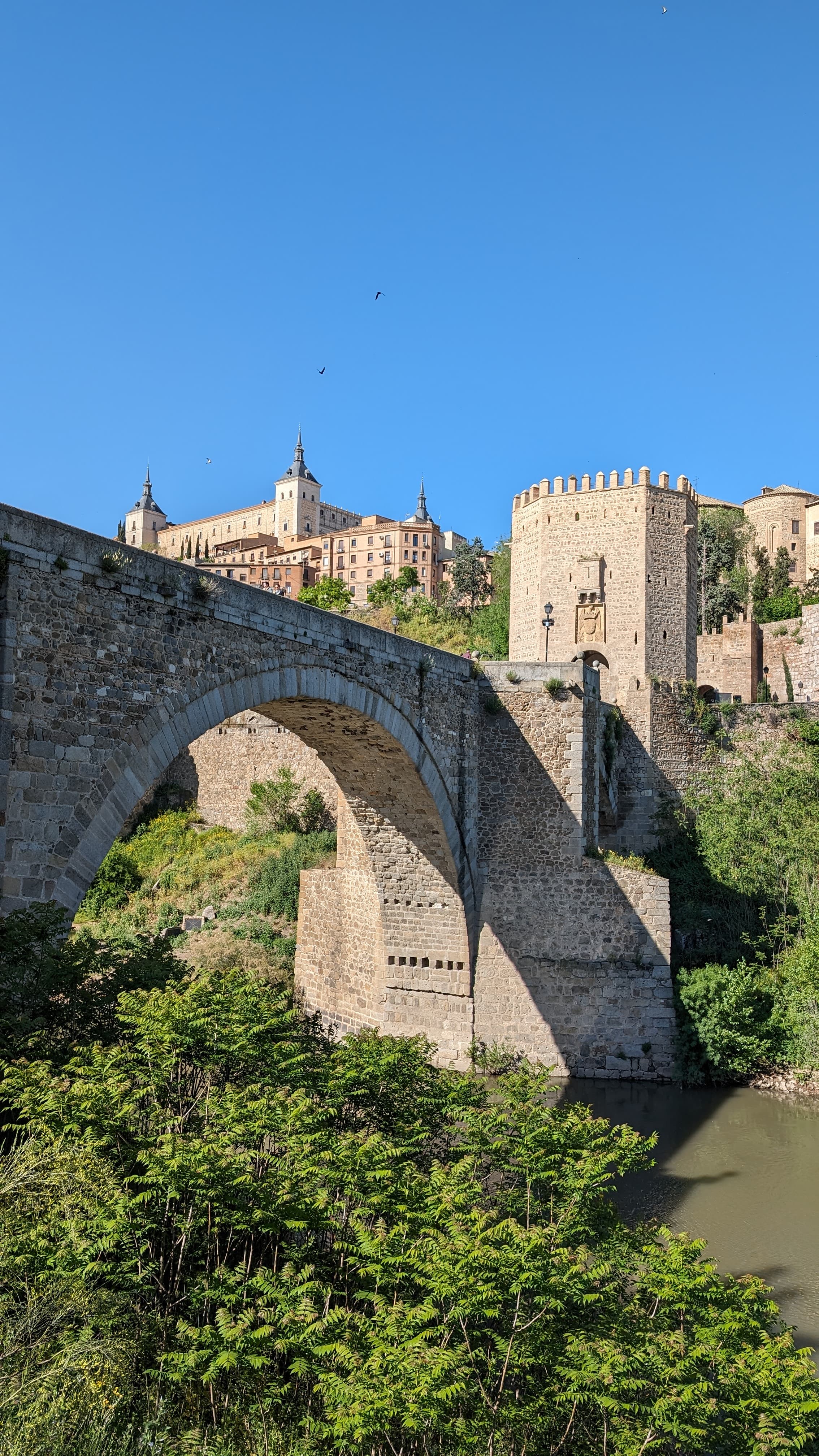
Toledo is one of those cities whose reputation for day-trippability has somewhat undermined what it actually is. Ninety minutes from Madrid by train, ringed by tour buses, its main lanes thick with souvenir shops selling Toledo steel and marzipan — it is possible to arrive, see the cathedral and the synagogue and El Greco's house and leave before dark, having technically been there. This is not the same as being in Toledo. The city's quality is cumulative and environmental: the narrow lanes, the light on the stone, the way the city falls away steeply to the river, the silence after the day tourists leave. You need to stay the night.
I arrived in the late afternoon, after the main bus groups had gone, and had the lanes around the Synagogue of Santa María la Blanca largely to myself by six in the evening. The city at that hour has the quality of a place that has been through a long day and is exhaling. The light is long and golden and hits the pale stone sideways. The marzipan shops are closing. The people who live here are coming home.
The Cathedral
The Catedral Primada de Toledo — the primary cathedral of Spain, begun in 1226 — contains what may be the most extraordinary interior in the country. The ambulatory chapels are lined with fifteenth-century altarpieces. The Transparente — a Baroque altar designed by Narciso Tomé in 1721, with a hole cut in the ceiling above it to admit light — is an architectural anomaly that has been debated ever since (either a work of wild genius or an act of vandalism against a Gothic cathedral, depending on your position). The sacristy has El Greco's Espolio, which is one of his best works in its original context.
The treasury has the Custodia de Arfe — a silver monstrance standing nearly three metres tall, carried through the streets during the Corpus Christi procession every June — which is the kind of object that makes you understand how seriously the Spanish medieval church took the public demonstration of wealth and faith as the same gesture.
The Synagogues
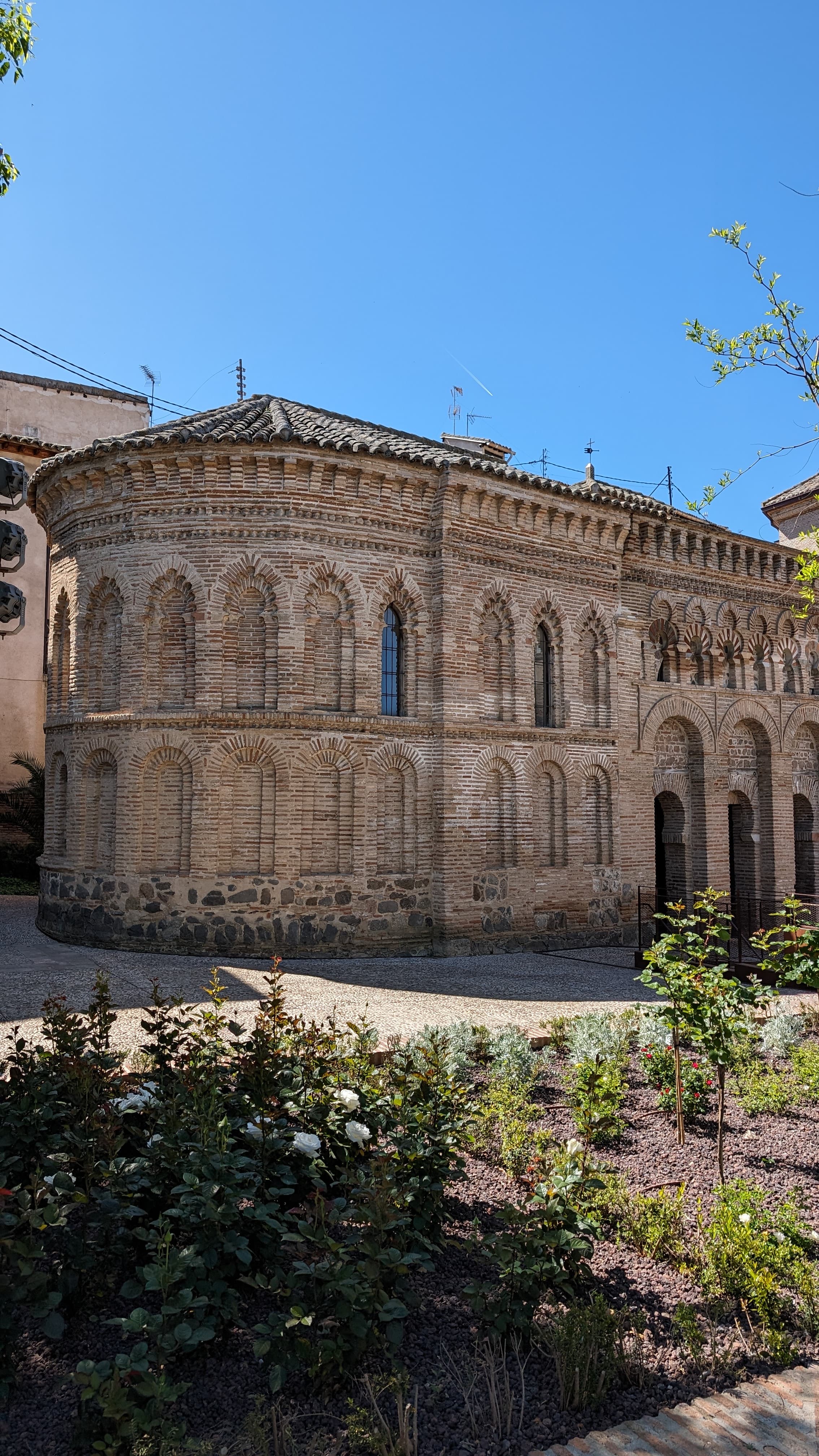
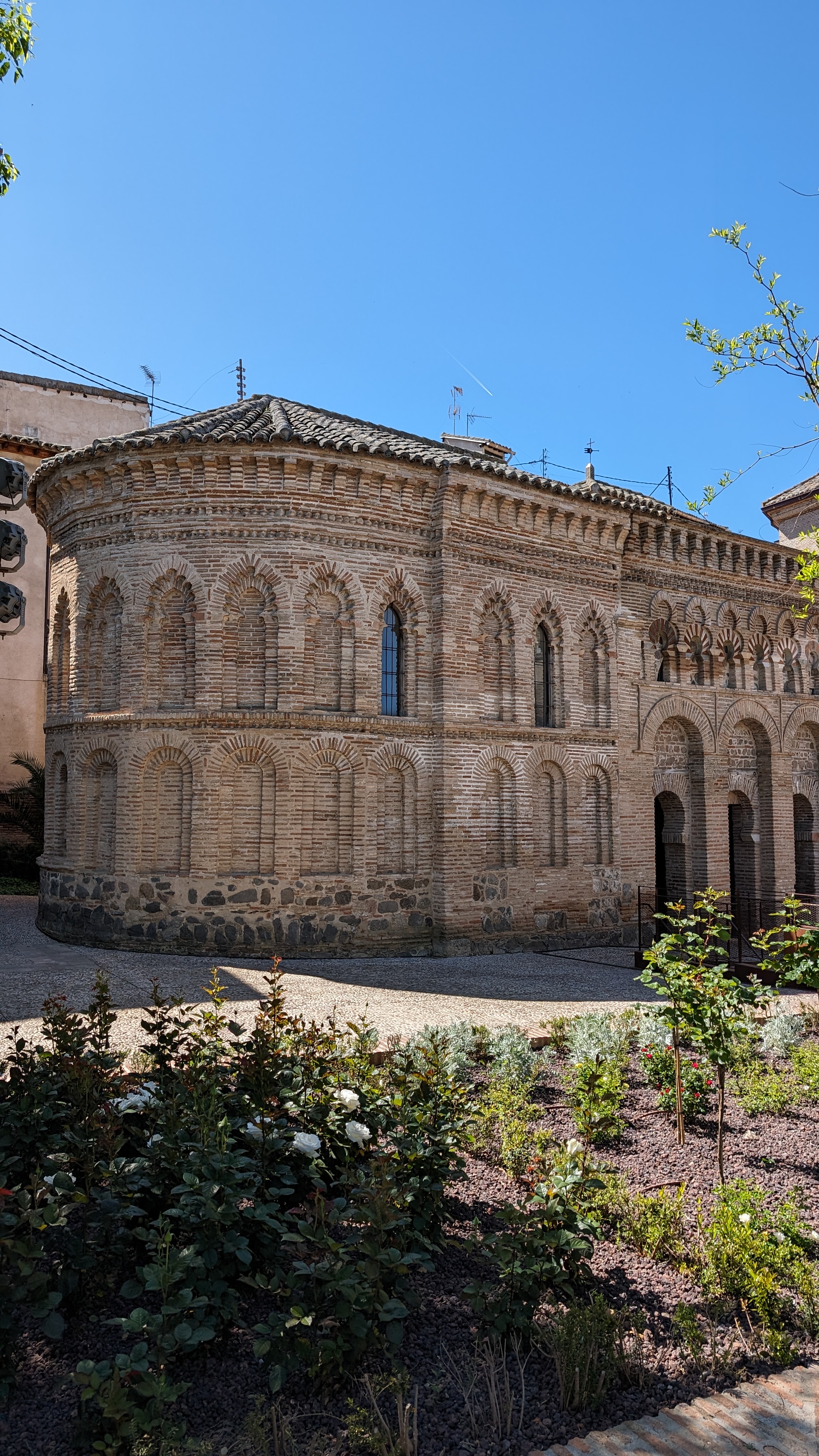
Toledo had one of the most significant Jewish communities in medieval Spain, and two of its synagogues survive — among the oldest in Europe. Santa María la Blanca (built c.1180) is the older: five aisles of horseshoe arches on octagonal columns with white capitals, originally plastered and whitewashed, now bare stone. The architecture is entirely Moorish in character — the same vocabulary as the mosques and the Alcázar — because the builders were Moorish craftsmen working for a Jewish community in a Christian-ruled city. The three traditions in one building. The Sinagoga del Tránsito (1356) has carved plaster walls with Hebrew inscriptions and geometric patterning that rivals the Alhambra. Both are now museums. Both are worth more time than most visitors give them.
El Greco
Doménikos Theotokópoulos — El Greco — moved to Toledo from Venice in 1577 and spent the rest of his life there. The city absorbed his Byzantine and Italian influences and his particular use of elongated figures, acid greens, and silver-blue light into something entirely his own. The Casa-Museo de El Greco is in the Jewish quarter near the synagogues; the works there are secondary but the context — the lanes he would have walked, the light he would have seen — makes the paintings hang differently in your memory when you encounter them later in the Prado.
The Hill City