Prague Before the Crowds Find You
Medieval lanes, a castle district at dawn, and the simple act of getting lost across the Vltava
I was told Prague was ruined. Too many stag parties, too many selfie sticks, too many restaurants with photos on the menu and prices in euros. Some of this is true. The Old Town Square — with the Astronomical Clock doing its hourly mechanical performance — is a crush of bodies from ten in the morning until well after dark. The Charles Bridge is similarly packed between mid-morning and sunset. If you approach Prague as a city to be consumed at tourist pace, in tourist hours, you will find it crowded and expensive and slightly hollow.
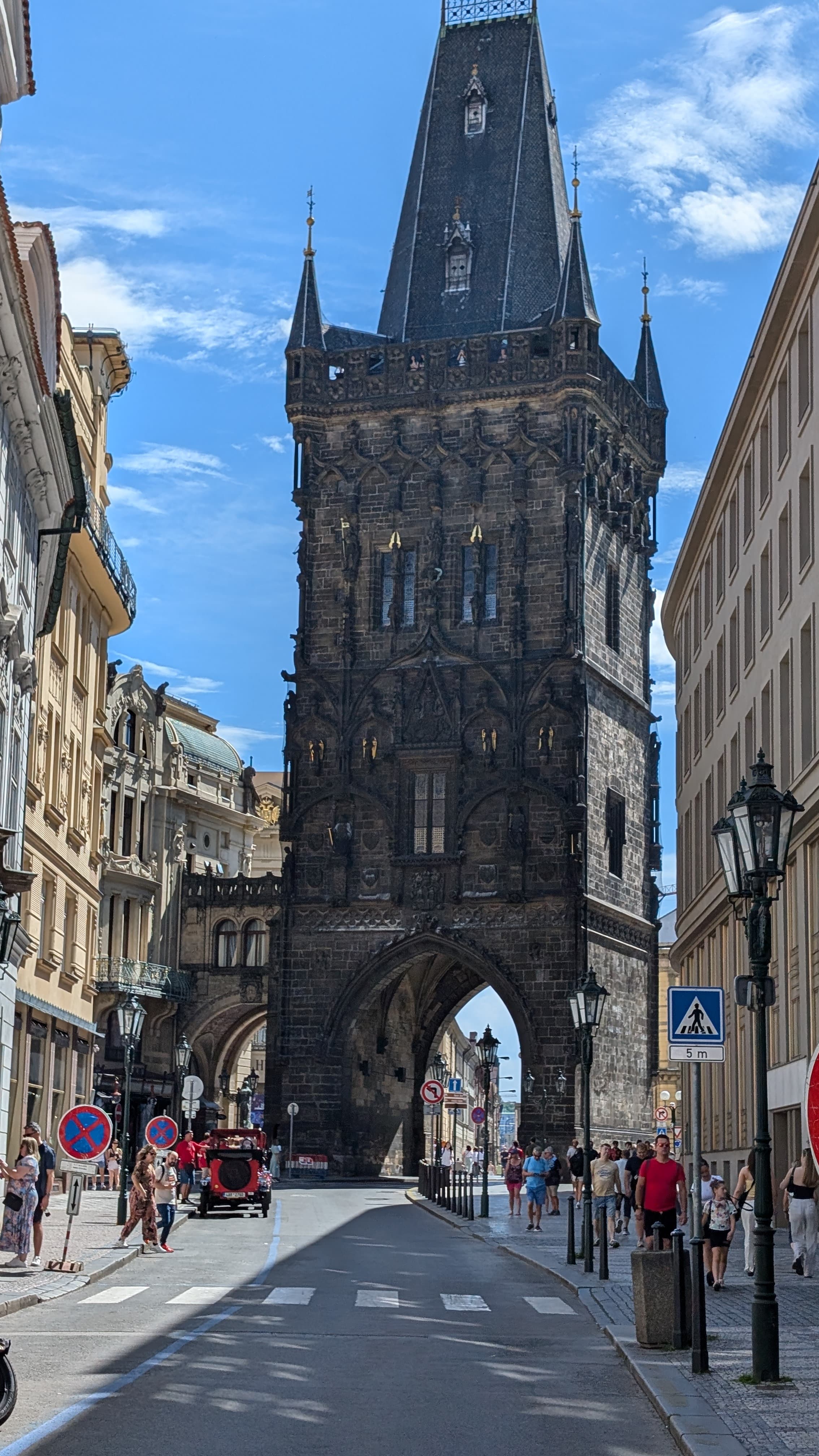
But Prague before nine in the morning is something else. I set an alarm for six every day for four days and walked, and what I found was a city that nobody had ruined at all. The lanes of Malá Strana — the Lesser Town below the castle — were empty. The Charles Bridge had maybe twenty people on it. The mist was on the Vltava. The swans were there, moving slowly in the current. The towers of the Old Town were catching the first light. Prague is one of the most beautiful cities in Europe, and it is entirely possible to experience it that way if you are willing to lose a little sleep.
The Castle District
Prague Castle is not a single building. It is a complex — the largest ancient castle in the world by area — containing palaces, St Vitus Cathedral, the old Royal Palace, the Golden Lane, defensive towers, gardens, and a dozen other things spread across a hill above the Vltava. It takes a full day to see properly. Go early.
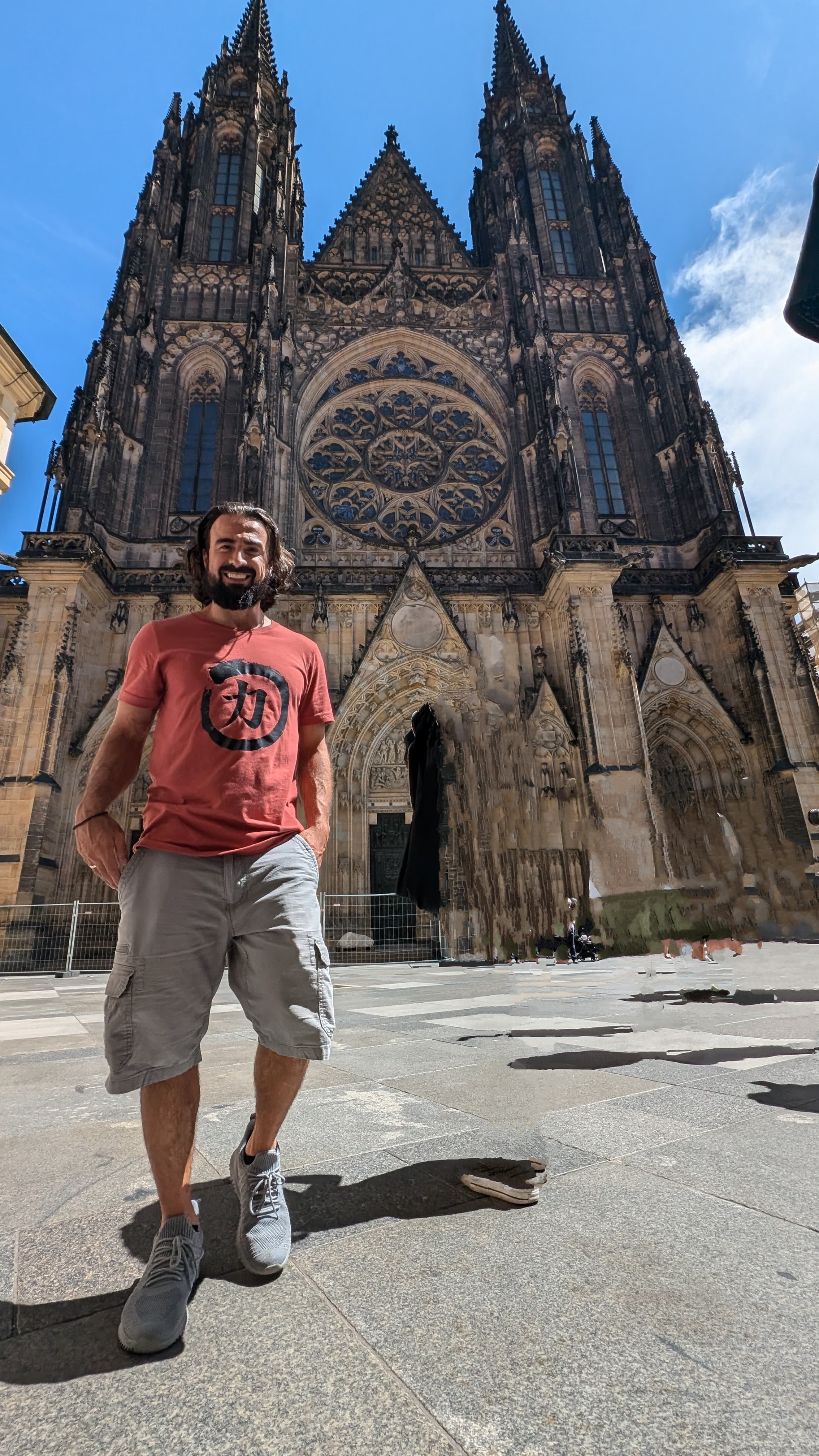
St Vitus Cathedral is the centrepiece and it is genuinely extraordinary — a Gothic cathedral begun in 1344 and not completed until 1929, six centuries of continuous construction in one building. The Rose Window over the western portal was added in the twentieth century and the Art Nouveau mosaic inside dates from the same period. The stained glass is modern. The nave vaulting is medieval. It all holds together because the Gothic logic was maintained throughout. From the nave, looking east toward the apse and the altar, the proportion is perfect.
The Old Town and the Clock
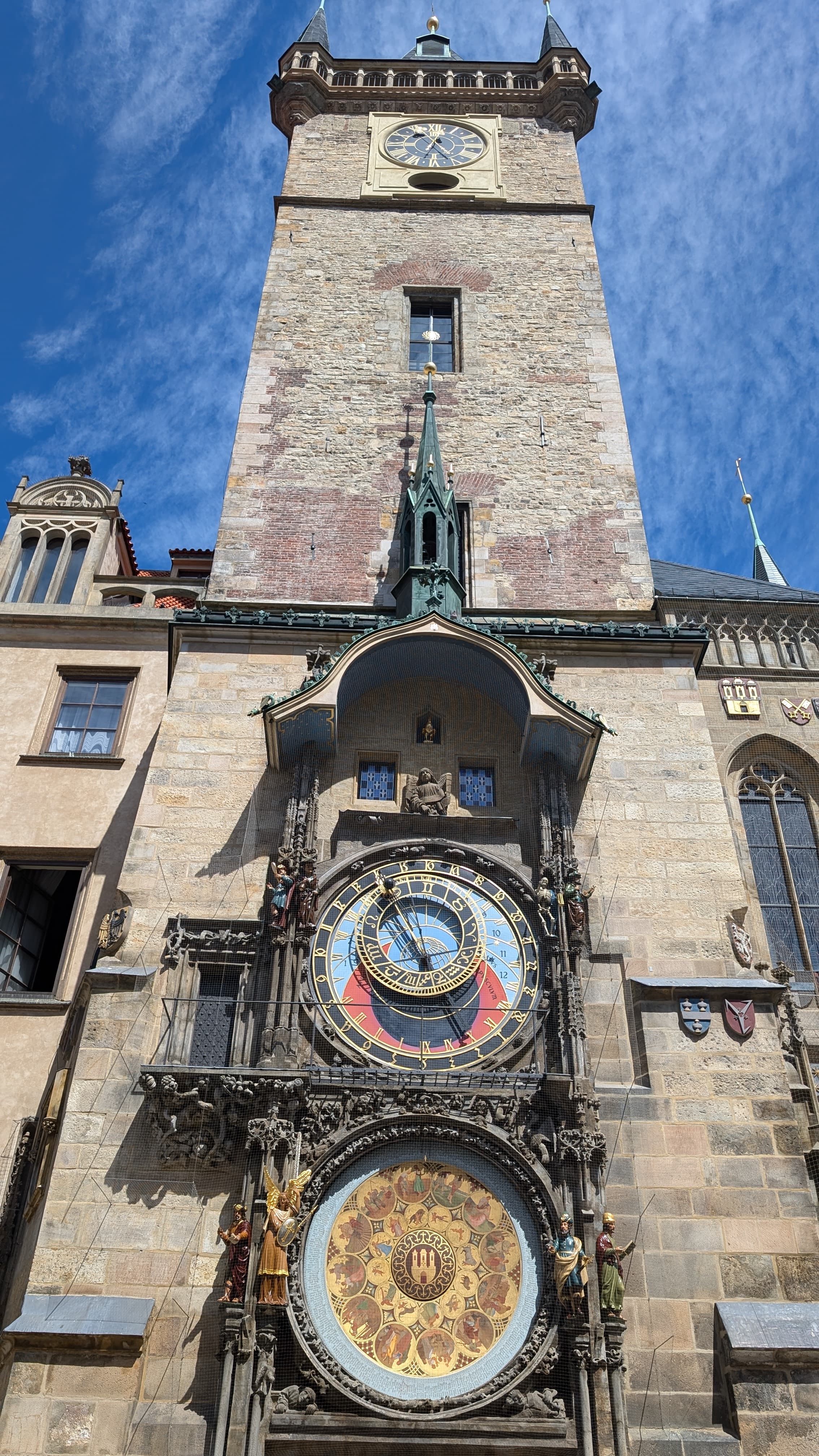
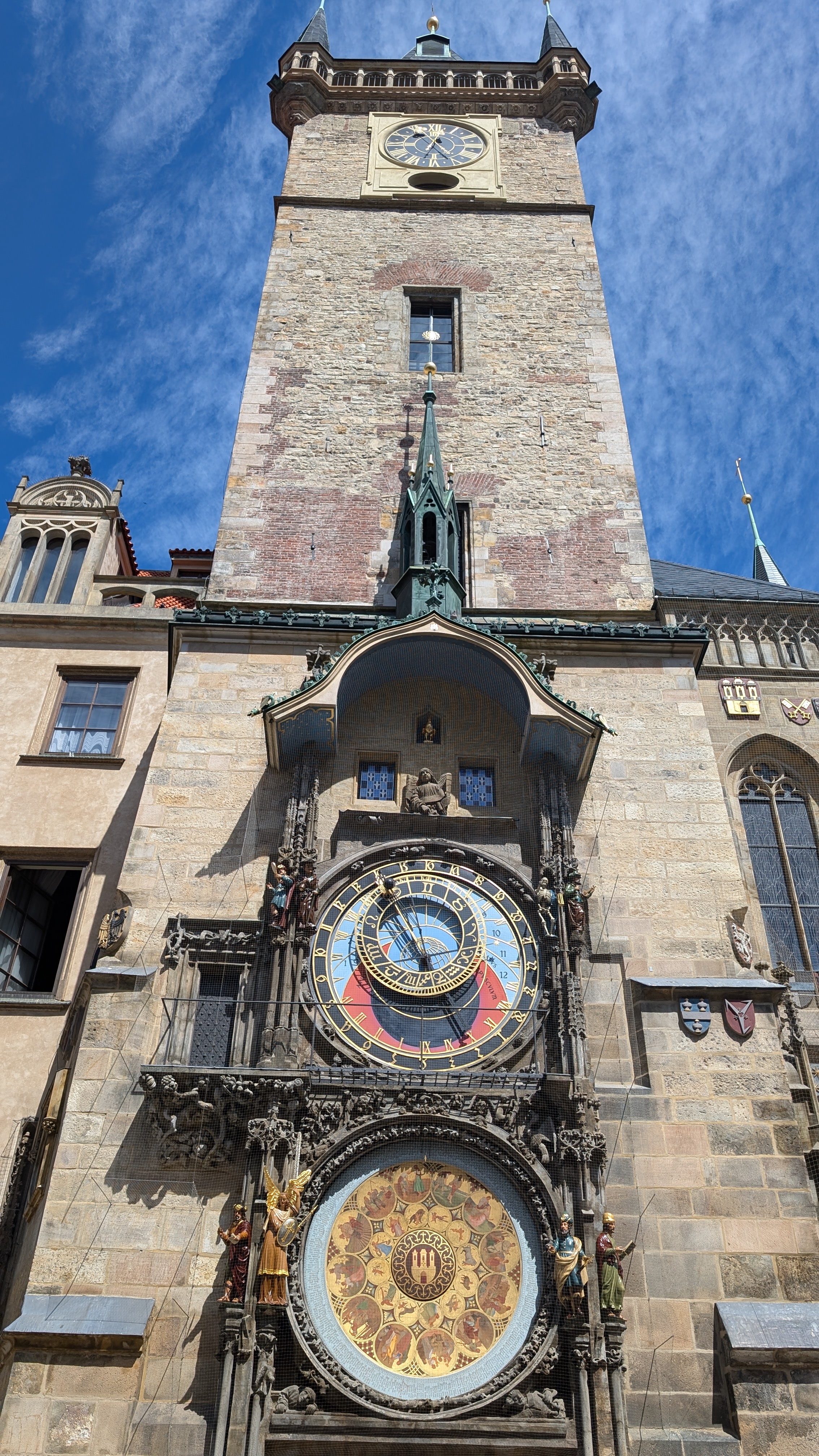
The Astronomical Clock on the Old Town Hall performs on the hour from nine in the morning to nine at night: a small procession of apostles appears in windows above the clock face, Death rings a bell, the hours pass. It takes about forty-five seconds and the crowd disperses immediately after. The clock itself is the interesting thing — an instrument that shows the time, the position of the sun and moon in the zodiac, the phase of the moon, and the Bohemian time (measured from sunset) simultaneously. It was built in 1410 and has been maintained ever since. The engineering behind it is extraordinary if you think about it long enough.
The surrounding square is ringed by Baroque and Gothic buildings in a range of colours — ochre, cream, pale green — that look more saturated than you expect in a northern European city. The Týn Church rises above the eastern end, its twin spires asymmetric and slightly forbidding. It has been there since 1365 and it still looks like it's watching the square.
Food and Drink
Czech food is not subtle. Svíčková — beef sirloin braised in root vegetables and cream, served with knedlíky (bread dumplings) and cranberry sauce — is the national dish and the best versions require a proper sit-down lunch with time to do nothing afterwards. Goulash in Prague tends to be the Hungarian version (beef, paprika, long-cooked) rather than the local variant, which is slightly thinner and goes better with dark beer.
The dark beer question is not trivial. Czech lager is excellent and famous. Czech dark beer — tmavé pivo, typically a dark lager rather than a stout — is underrated and easier to find than most visitors expect. Kozel Tmavý is the standard. Order it anywhere and it will be cold and clean and quite good.
City of Spires