Nevşehir: Cappadocia From Above and Below
Hot-air balloons at dawn, cave hotels carved from tuff, and a lunar landscape that took three million years to build
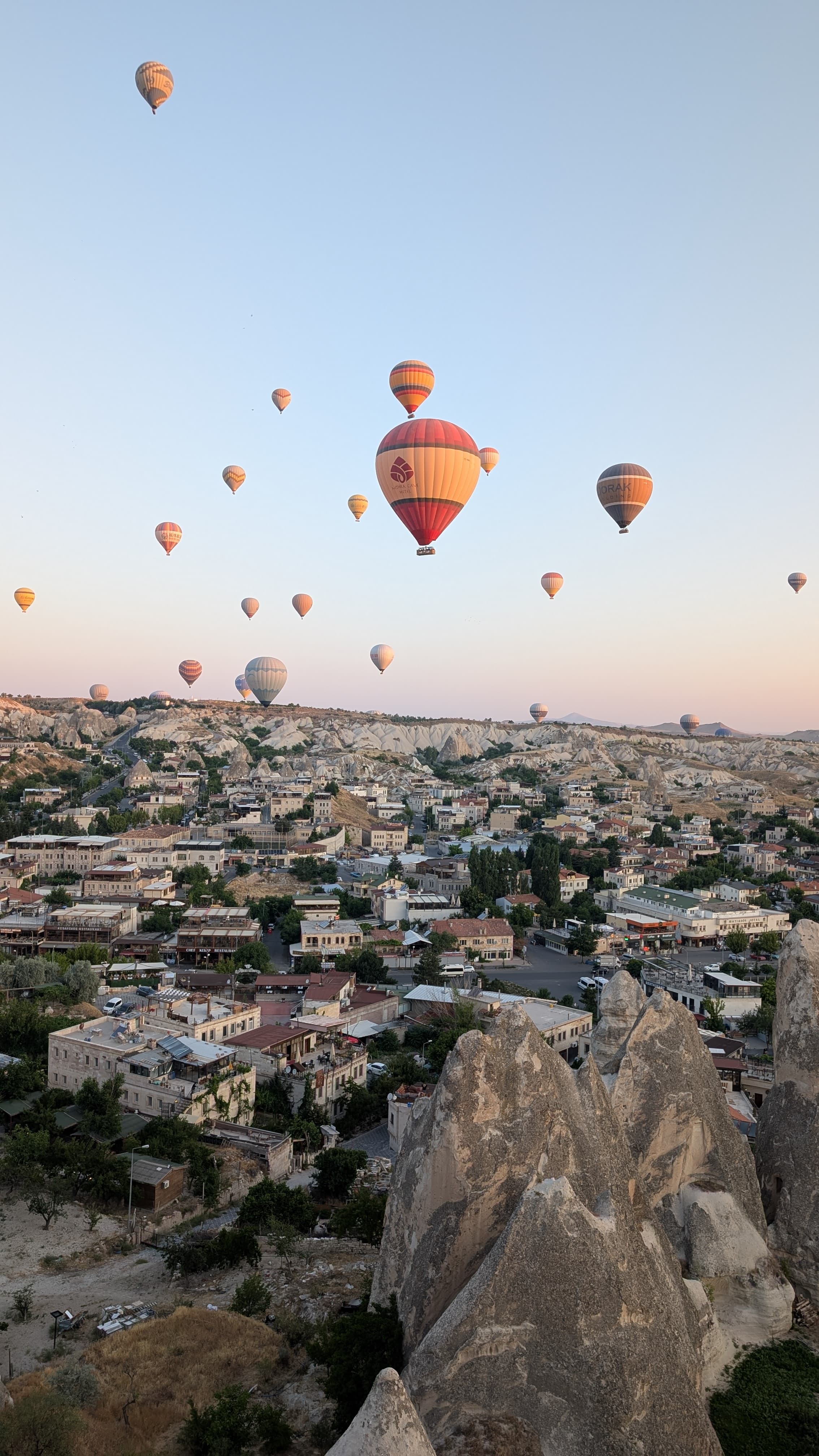
The balloons go up before dawn. That's the system: you wake at four in the morning, dress in darkness, eat a fast breakfast in the launch field, and by five-thirty you're climbing above the Göreme valley as the light begins to change. The sunrise over Cappadocia from a hot-air balloon at about 400 metres is — I'll say it plainly — one of the best experiences available to a traveller in the world. The landscape below is so strange, so unlike anything else, that the distance of the balloon actually helps you see it properly.
I was in Nevşehir in July 2025, in midsummer heat that sent most activity underground — literally, in the case of the underground cities. The region sits on a plateau at around 1,000 metres elevation, which takes some of the edge off the heat, and the rock is porous enough that the interior of a cave hotel stays cool without air conditioning. The cave hotels are not a gimmick; they are the correct adaptation to this landscape.
The Landscape
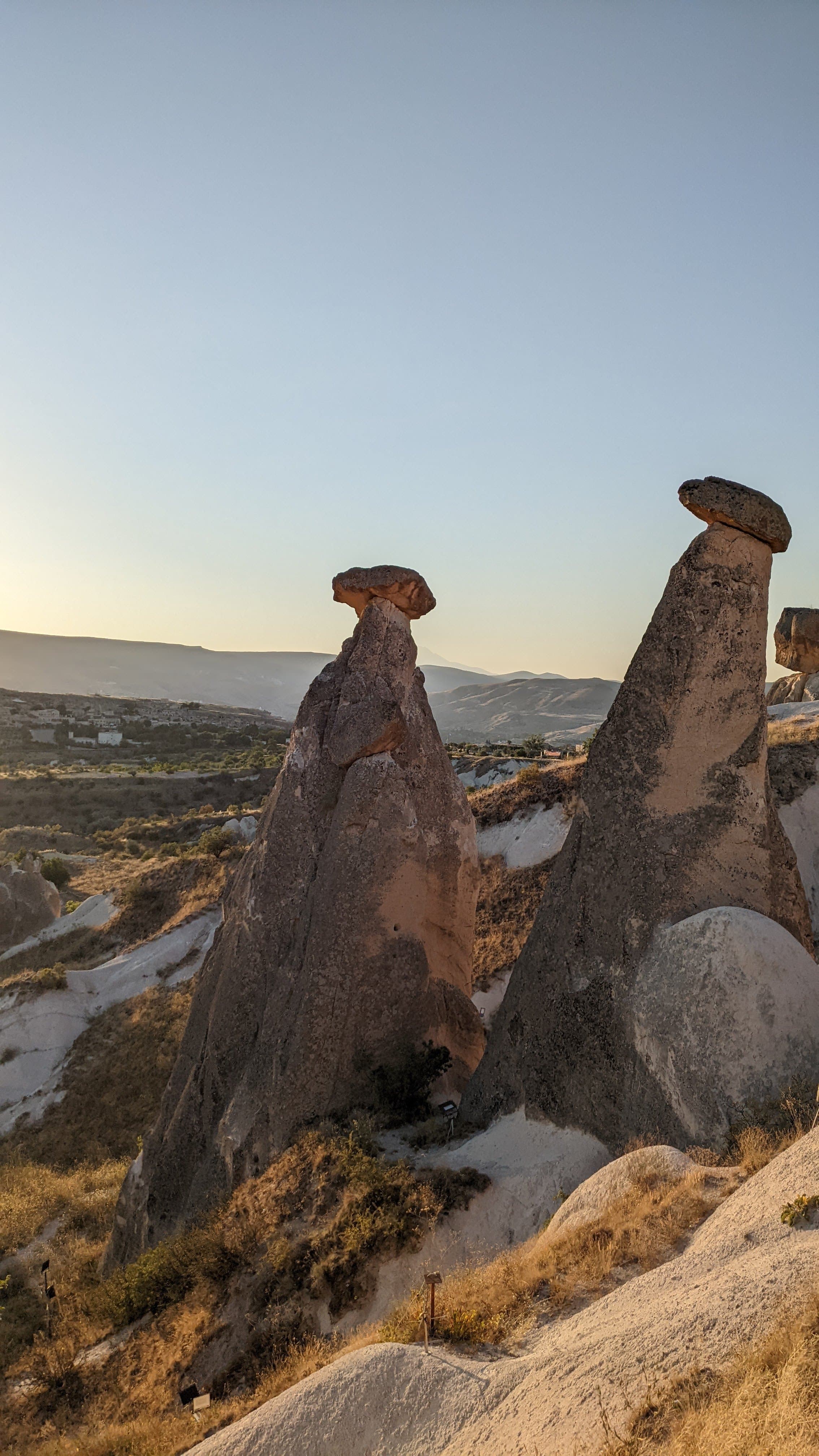
The Cappadocia landscape was formed by three million years of volcanic eruption from Mount Erciyes and the softer Hasan Dağı, which covered the plateau with ash that compressed into tuff. Erosion then cut through the tuff in irregular ways, leaving the harder cap-rocks balanced on softer cones — the fairy chimneys that define the area. The Rose Valley, the Sword Valley, the Pigeon Valley: each has its own light and colour, the tuff ranging from cream to rust to deep pink depending on the mineral content and the hour of day.
Underground and Overground
The underground cities — Derinkuyu goes down eight levels and housed 20,000 people during Byzantine-era raids — are the other side of Cappadocia's rock architecture. The same tuff that erodes into chimneys above ground was carved downward by the early Christians hiding from Arab raids. The ventilation shafts, the rolling stone doors, the stables and wineries and chapels all underground — it is engineering at a scale that makes you question your understanding of what the ancient world was capable of.
The Göreme Open Air Museum, a short walk from the village, has the best concentration of rock-cut Byzantine churches, their frescoes still vivid after a thousand years in the controlled microclimate of the tuff. The Dark Church (Karanlık Kilise) requires a separate ticket and is worth every lira.
Cappadocia