Mardin: Honey Stone Above Mesopotamia
An ancient hilltop city, a monastery older than Islam, and a plain that stretches to Syria
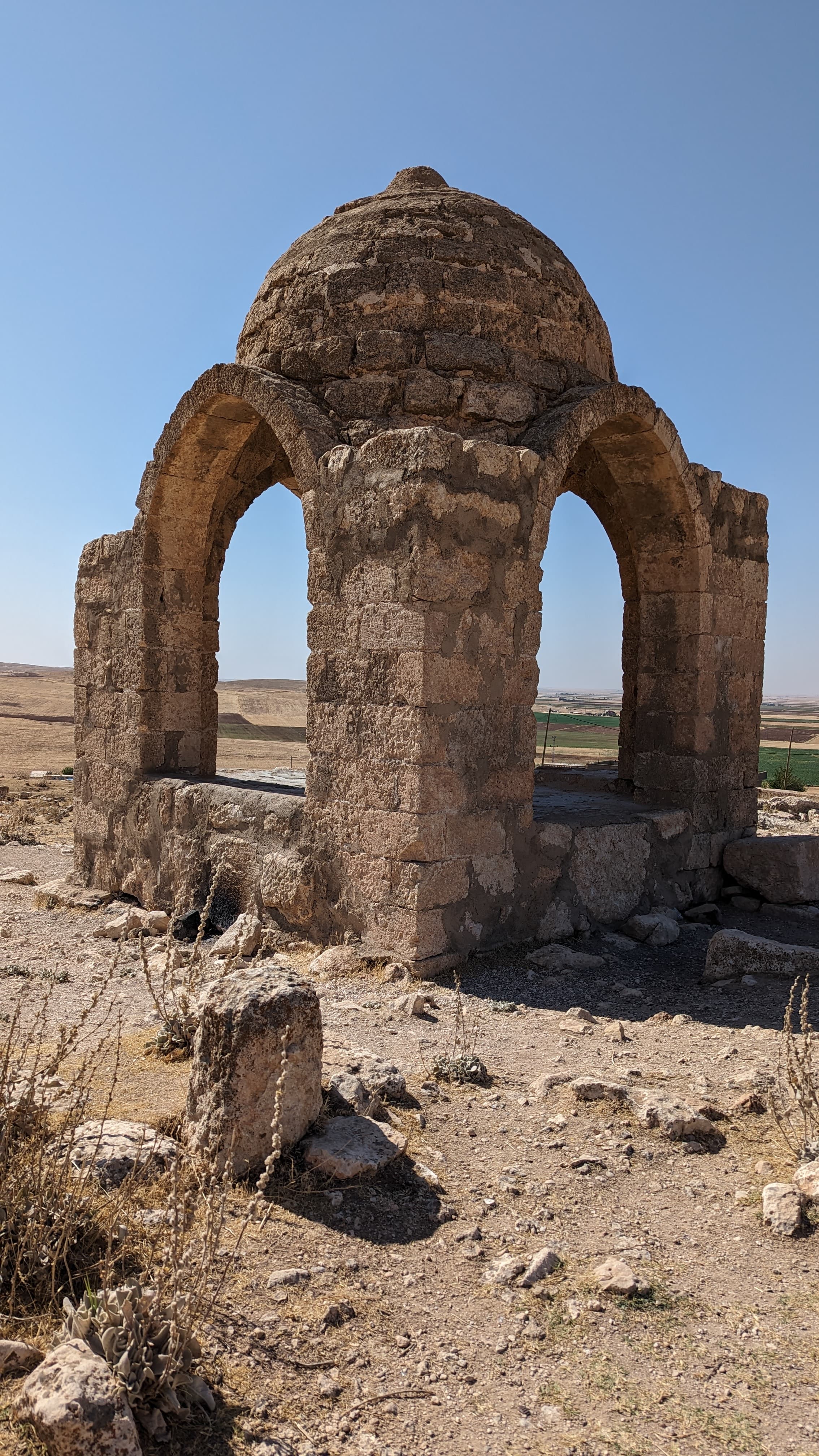
The Mesopotamian plain begins where the hills end, and Mardin is the last city before the end of the hills. It sits on a limestone ridge, its old city carved from the same stone it stands on — honey-coloured, warm even in winter light — and from the south-facing terrace at the edge of the old city you can see the plain stretching all the way to Syria, flat and immense and ancient in a way that makes your sense of scale recalibrate.
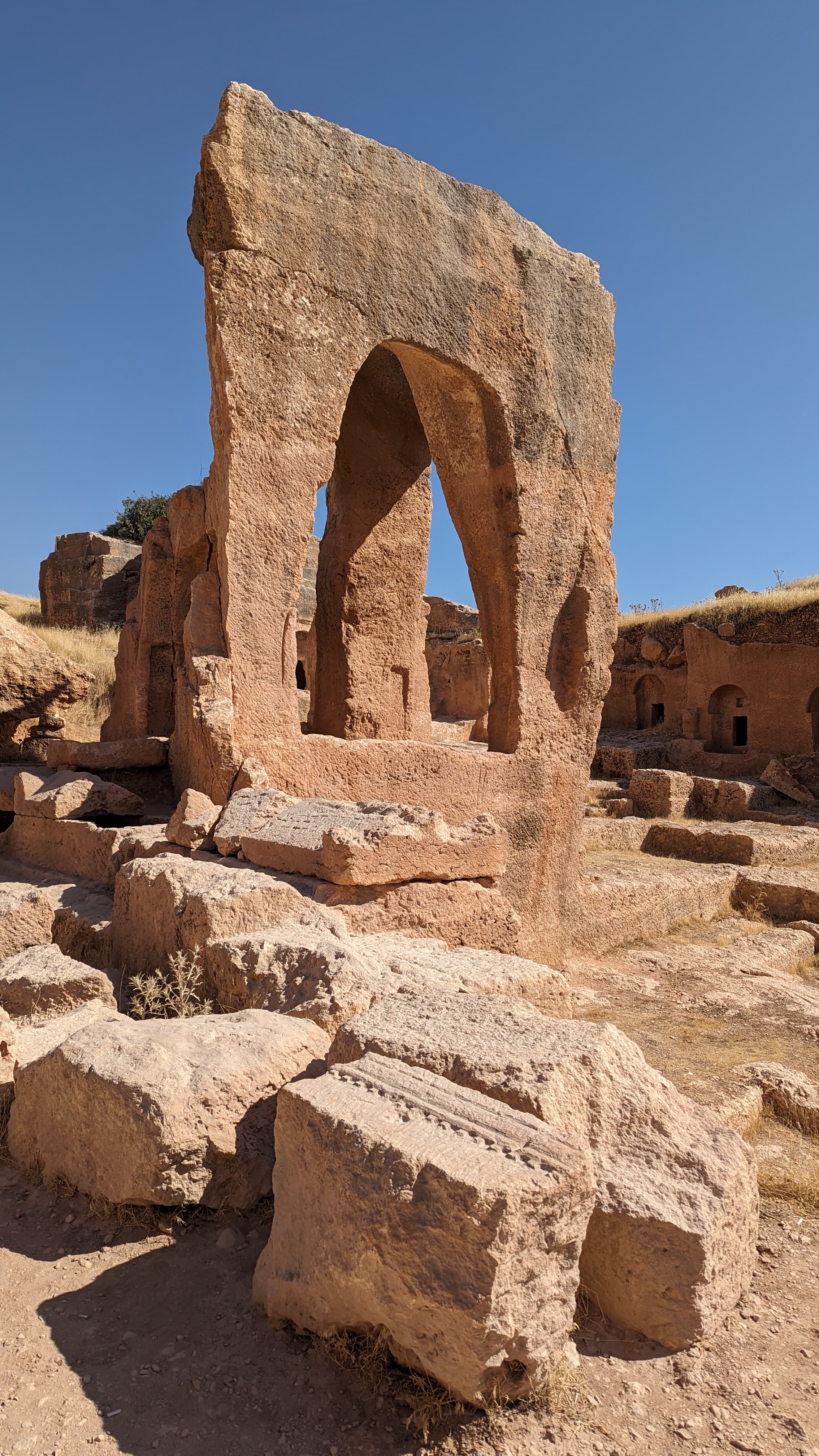
People have been living on this ridge for nine thousand years. The Assyrians, the Armenians, the Arabs, the Kurds, the Syriac Christians — Mardin has been home to all of them, sometimes simultaneously, and the city's architecture carries the evidence of all of them in the same walls.
The Old City
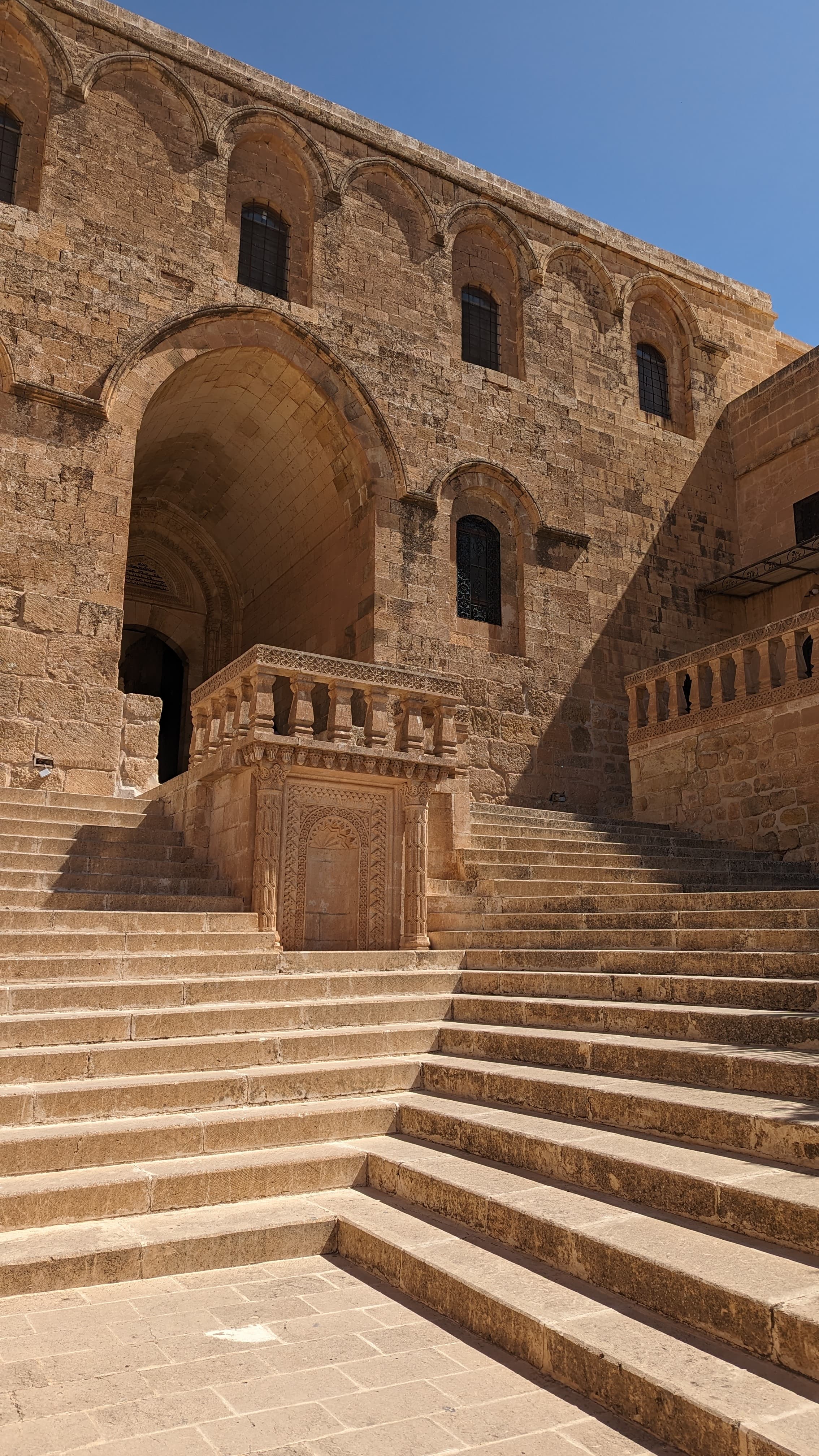
The old city is a single street — the main artery running along the spine of the ridge — with an incomprehensible tangle of lanes, courtyards, stairways, and covered passages descending from both sides. The limestone is the same colour everywhere: pale ochre in strong light, deep amber at sunset, almost white at noon. The carved facades of the mansions (konaks) are extraordinary — arabesques, geometric patterns, muqarnas cornices, stylised vegetal ornament — the accumulated expertise of multiple traditions working on the same material over many centuries.
Walking without a destination, turning into whatever lane looks interesting, stopping when a courtyard reveals itself: this is the correct approach to Mardin's old city. The lanes are too steep and too narrow for vehicles and the GPS is useless on the terraces. You get lost. That is the experience.
Deyrulzafaran Monastery
Five kilometres east of the city, built into a hillside, is Deyrulzafaran — the Saffron Monastery — one of the oldest continuously occupied Christian monasteries in the world. It has been an active Syriac Orthodox monastery since the fifth century. The church still holds services in Aramaic, the language of Christ.
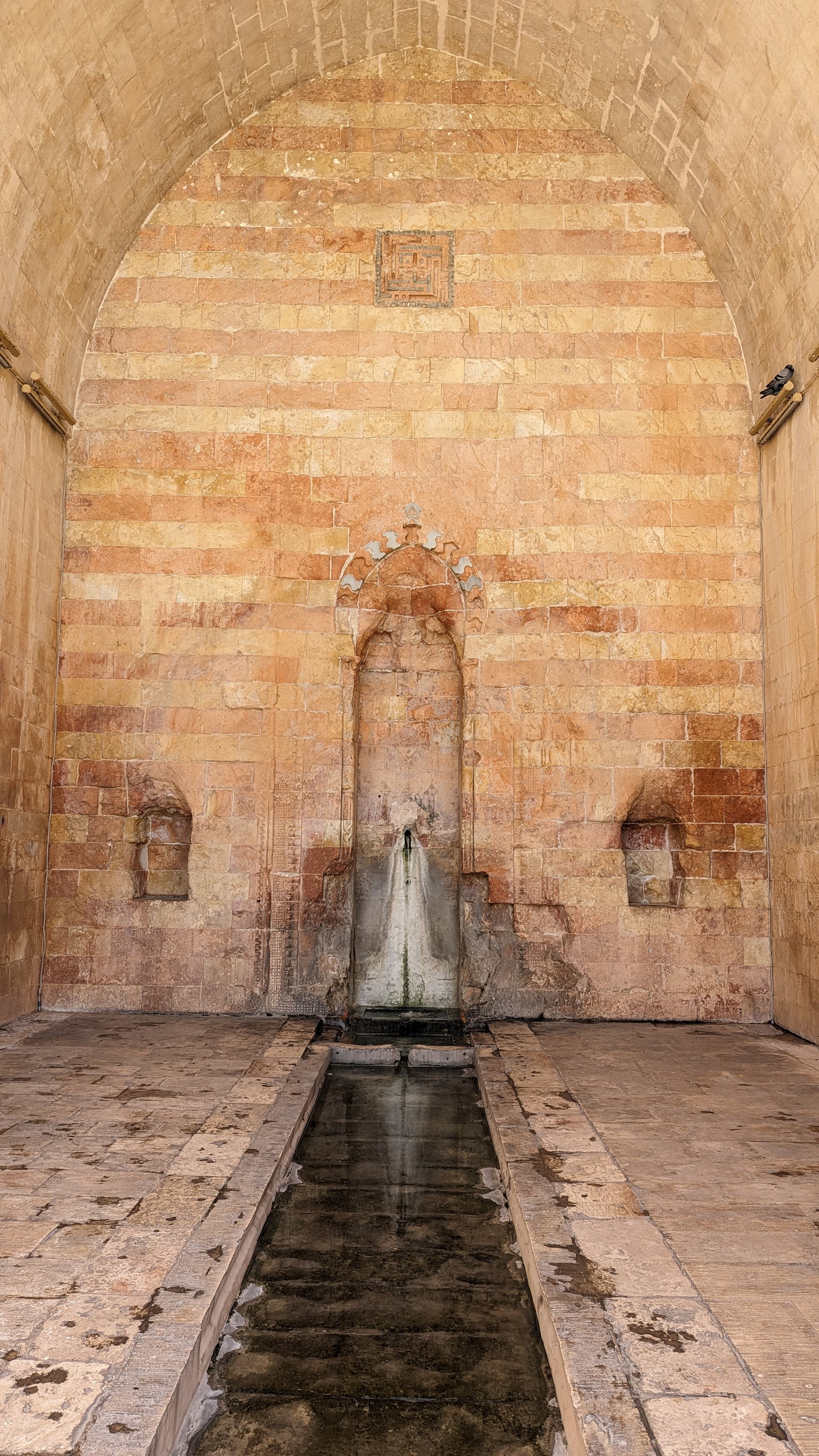
The guided tour takes you through the underground chamber (second millennium BC, possibly a sun-worship site repurposed by every subsequent religion), the early Christian chapel, the main church with its carved marble mihrab (added when it briefly served as a mosque), and the rooftop terrace with the view of the plain. The monastery school educates children from the region's remaining Syriac Christian community. The monks are unhurried and the place has an atmosphere of deep continuity that is rare and difficult to describe.
The Food
Mardin's cuisine is a meeting point of Arab, Kurdish, and Syriac traditions. İçli köfte — cracked wheat shells filled with spiced meat, fried or boiled — are excellent everywhere. Stuffed grape leaves with pomegranate molasses have a sourness that cuts against the richness of the lamb. Harire, a rich soup thickened with chickpeas and flavoured with tomato and spices, is the breakfast of choice in the old city's small restaurants.
The local olive oil is cold-pressed and grassy. It goes with everything, and the bread — thin, chewy, baked on a convex griddle — is designed to be torn and dipped. Eat at a terrace restaurant at sunset, facing the plain. The light on the limestone at that hour is the most beautiful architectural light I have seen in Turkey.
Practical Note
Stay at least two nights. The old city changes completely between morning, afternoon, and evening as the light moves across the limestone. The monasteries and the view from the southern terrace at sunset are the things worth planning your time around. Everything else — the Grand Mosque, the Post Office (a magnificent stone building, still functioning), the bazaar — you will find as you wander.
Mardin & the Plain