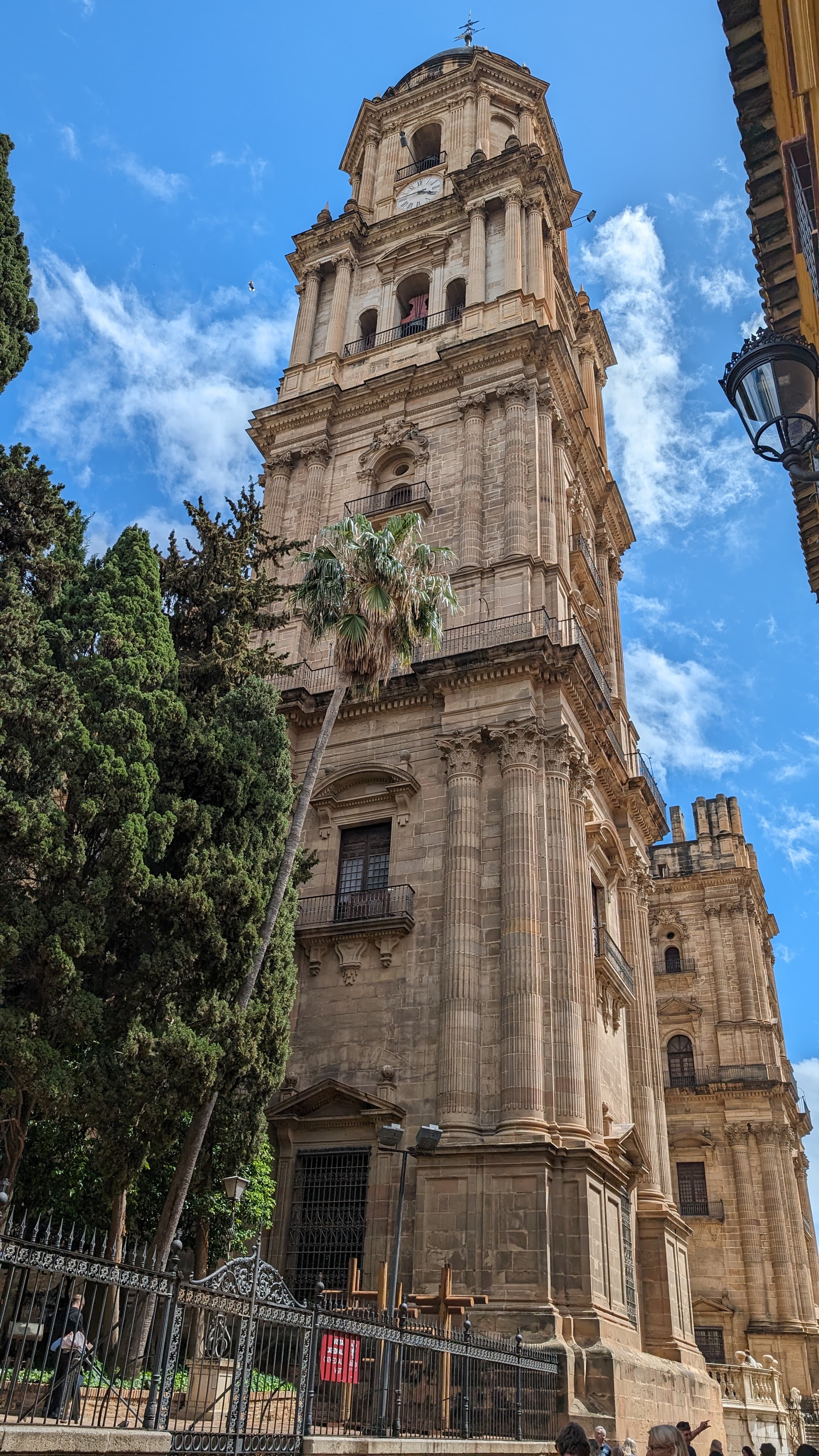
Málaga: The Coast and the Picasso
A Mediterranean port city that the Costa del Sol forgot to ruin, Picasso's birthplace, and an anchorage with real food
Málaga used to be the city you flew into and drove away from. The Costa del Sol's reputation — package tourism, concrete, English breakfasts served at all hours — attached itself to Málaga Airport by association, and for decades the city itself was largely ignored by visitors who hadn't done their homework. This has been changing for about fifteen years, and the change is now well advanced. Málaga is a genuine city with a real food scene, a serious art museum, a walkable old centre, a beach that works, and a characteristic coastal Mediterranean ease that is not performed for tourists.
I arrived by train from Madrid — about two and a half hours on the high-speed service — and walked from the station to my accommodation in the old town in fifteen minutes. This is the correct way to arrive. The city is compact and the old centre is walkable. On day one I walked every lane in the neighbourhood around the Picasso Museum before lunch, covering ground that would have taken an hour in Madrid and took forty minutes here.
The Picasso Museum
Pablo Picasso was born in Málaga in 1881 (the house on Plaza de la Merced is now a small museum) and the Museo Picasso Málaga — opened in 2003 in a sixteenth-century palace — holds works across all his major periods. It is not the Picasso Museum in Paris. The collection is smaller and less comprehensive. But it has some excellent things — the portraits especially, the ceramics, the late works — and the palace building is itself beautiful: a courtyard with orange trees and Roman ruins visible in the basement.
The collection's strength is in the intimacy of some of the pieces. Small paintings, drawings, studies for larger works. The big public Picassos you know from posters and textbooks are absent, which means you're looking at a different kind of work — more provisional, more personal. This is often more interesting.
The Alcazaba and the View
The Alcazaba — an eleventh-century Moorish fortress on the hill above the port — is Málaga's other major monument and the one that gives you the best sense of the city's geography. From the upper ramparts you see the port directly below, the cathedral to the west, the beach stretching east, the mountains behind the city. It is a view that explains why this has been a significant Mediterranean port since the Phoenicians established a trading post here in the eighth century BC.
The Alcazaba itself is well preserved, with gardens within its walls and a series of rooms and courtyards that maintain the Nasrid architectural vocabulary — the same arches and tilework and water channels that you see in the Alhambra, at smaller scale. It takes about an hour and the combination of architecture and view makes it the single best thing to do in the city.
The Port and the Food
Espetos de sardinas — sardines speared on cane skewers and grilled over wood fires on the beach — are the defining food of Málaga, served at the chiringuitos (beach restaurants) on the Malagueta beach. The best time is lunch: the fish is fresh from the morning boats, the fire is at its best temperature, and the whole operation is managed by people who have been doing this their whole lives. Order a cold glass of Manzanilla and eat sardines by the water and you will understand exactly why people come to the Costa del Sol, in the version that has nothing to do with package tourism.