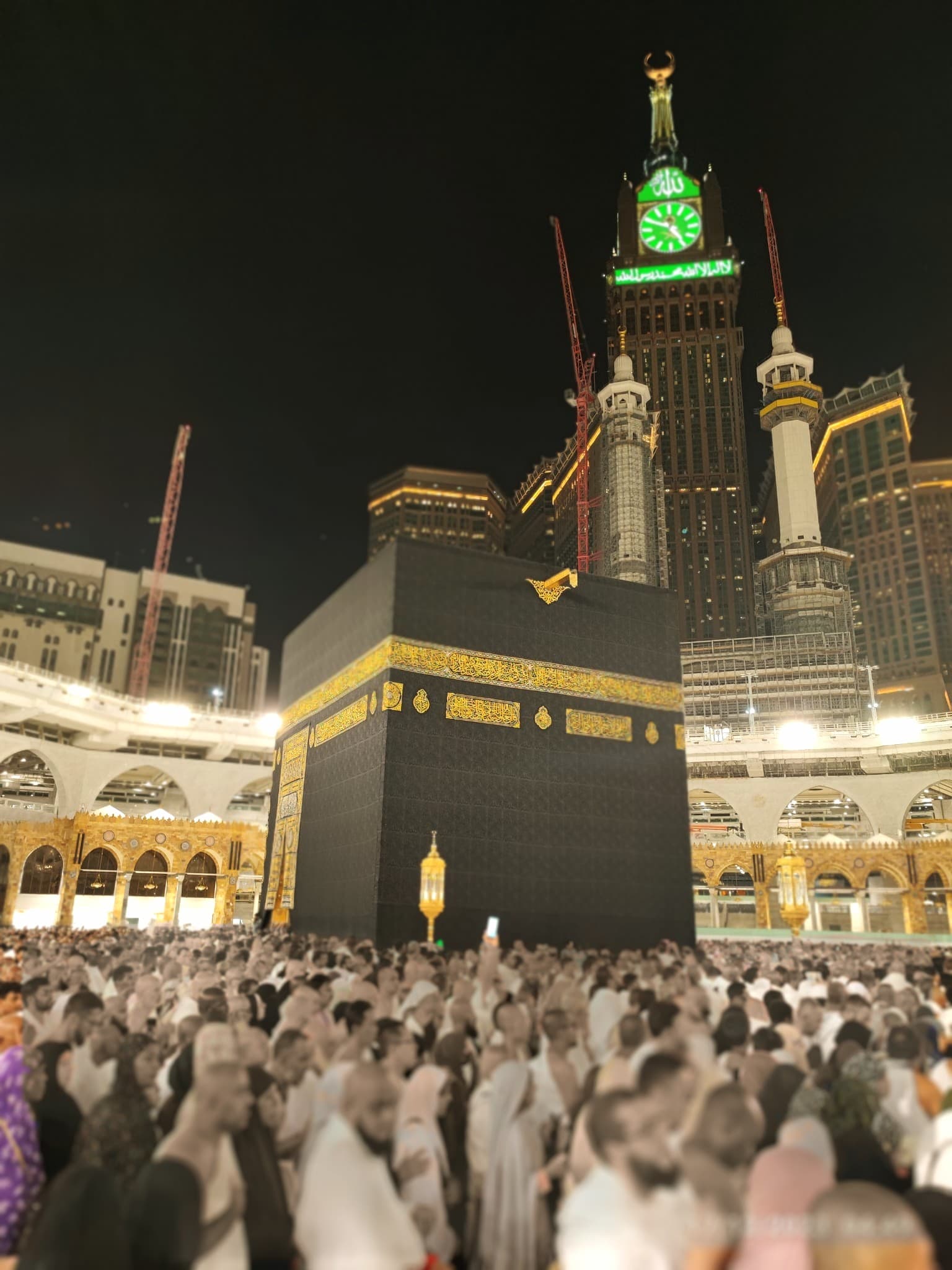
Makkah: The Centre of Everything
The holiest city in Islam, the Masjid al-Haram, and the experience of tawaf around the Kaaba
The first view of the Kaaba is disorienting in a way that I was not prepared for. You descend from the upper levels of the Masjid al-Haram through one of the many gates, and the mosque opens out around you — one of the largest buildings in the world, a vast marble courtyard surrounded by multi-level arcades — and at the centre is the Kaaba. It is smaller than you expect. It is also exactly the right size. It is a cube covered in black cloth (the Kiswah), standing in the centre of the courtyard, and around it the tawaf is continuous: circles of people moving counter-clockwise, at different speeds, in different states of intention and prayer. There is no moment, day or night, when tawaf stops. It has been continuous for fourteen centuries.
I performed umrah — the lesser pilgrimage, possible at any time of year unlike the Hajj — and the tawaf was the first ritual. You enter the state of ihram (two white unsewn cloths for men, plain white clothing covering everything except the face and hands for women), make the intention, and begin walking. The first circuit, you are thinking about the logistics of it, about not losing your group, about not bumping into the people walking faster. By the third circuit, something else happens. The repetition, the crowd, the heat, the proximity of the Kaaba — the analytical mind quiets. By the seventh circuit, the experience is simply itself.
The Masjid al-Haram
The Grand Mosque is the largest in the world: it covers 356,800 square metres and can accommodate four million worshippers during the Hajj. The scale is incomprehensible until you are inside it and look across the prayer halls and see the crowd extending to the limit of visibility. During peak times, the mosque manages this with systems of movement and crowd control that are genuinely impressive engineering problems solved with traffic management.
The Zamzam well — the well that Islamic tradition holds was miraculously revealed to Hagar in the desert — is inside the mosque complex, and Zamzam water is available throughout the mosque in cooled dispensers. You drink it and it is cold and clean and slightly mineral and thousands of people around you are drinking the same water from the same source and have been for centuries.
The Hills of Sa'i
Part of the umrah ritual involves walking seven times between the two small hills of Safa and Marwa — the sa'i, commemorating Hagar's search for water for her son Ishmael. The distance is enclosed in a long gallery inside the mosque complex. At the height of the pilgrimage season, thousands of people walk this gallery simultaneously, in both directions, and the sound and energy of it — the prayers, the pace, the occasional child being carried — is something that has no equivalent in any other place I have been.
The City
Makkah outside the mosque is a modern Saudi city built to serve pilgrims: hotels, restaurants, transport, crowd management. The old city — the neighbourhood where the Prophet (peace be upon him) was born, where the first revelation came — is largely gone, replaced by the expanding mosque complex and the hotel towers. What remains is the purpose: this is a city that exists because of one thing, and that one thing is present and immediate and felt by everyone who comes here. That is not a small thing. It may be the most focused place on earth.