Madrid: The Long Afternoon
The Prado, the Reina Sofía, Retiro Park, and a city that eats dinner at ten and considers this perfectly normal
The Madrid rhythm requires adjustment if you're coming from anywhere that eats dinner before eight. Lunch is the main meal and it runs from two until four or later. Tapas happen at eight in the evening, which is when restaurants begin filling up. Dinner — a proper sit-down dinner — starts at ten and the kitchens are still running at midnight. The city is fully awake at one in the morning on a Wednesday. By the time you understand this and adapt to it, you have three days left and you spend them eating in a slightly delayed state of comprehension, trying to catch up with a schedule that runs about four hours behind your instincts.
I spent a week and managed to synchronise by about day four. Day four was the best day.
The Prado
The Museo del Prado is one of the great art museums of the world and it is not possible to see it in a single visit. The collection — Velázquez, Goya, Rubens, Titian, Bosch, El Greco — spans five centuries and the rooms go on beyond what feels reasonable. The strategy I'd recommend: decide on three to five things you want to see properly and go to those first, then explore whatever time remains.
Las Meninas — Velázquez's 1656 painting of the Infanta Margarita surrounded by her ladies-in-waiting, with the painter himself in the canvas and the king and queen reflected in a mirror behind — is in Room 12 and is always crowded. Stand far back from it, far enough to see the whole composition, and stay until the composition resolves: the depth, the light, the recursive reflection, the way the viewer is implicated in the scene. It is one of the most sophisticated paintings ever made and it rewards being with it slowly.
The Reina Sofía
Guernica — Picasso's 1937 response to the bombing of the Basque town of Guernica during the Spanish Civil War — is in the Reina Sofía, the national museum of twentieth-century art. The painting is 3.5 metres tall and 7.8 metres wide and black and white and grey, and the first encounter with the scale of it in person — after knowing it only from reproductions — is genuinely startling. The distorted figures, the screaming horse, the electric light bulb above. It is the most politically serious painting I know of, and the most effective.
Retiro Park
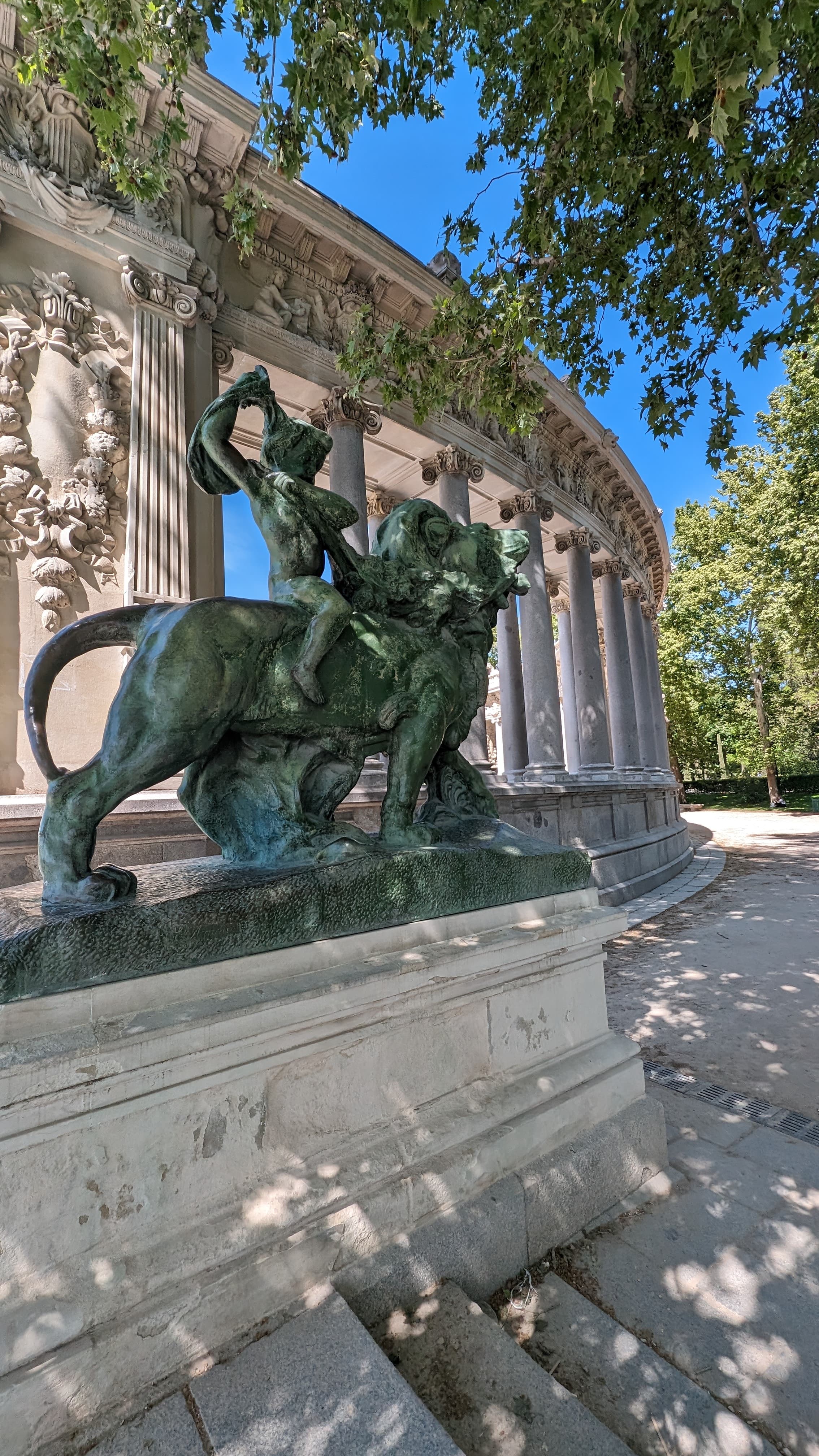
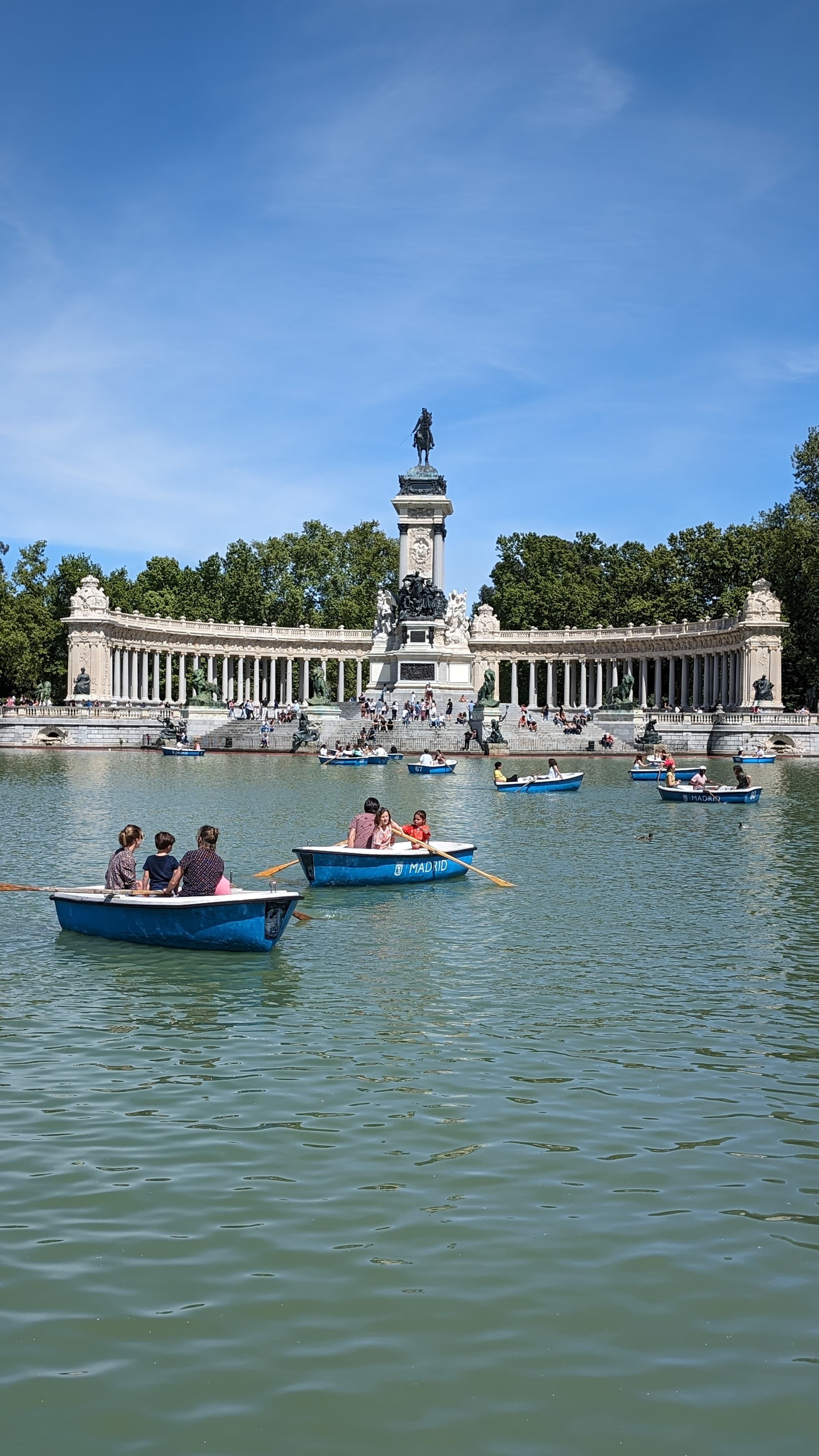
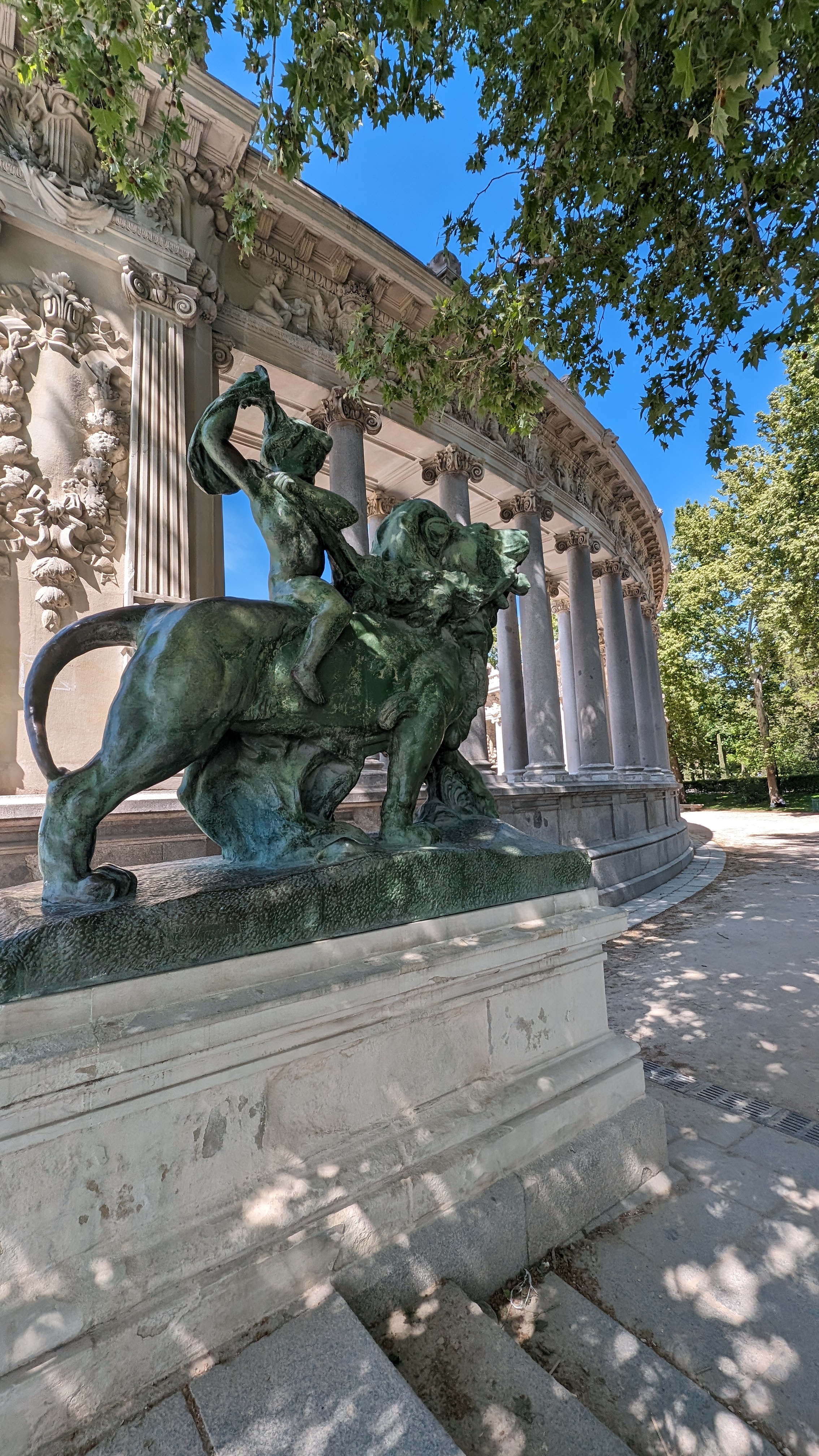
Parque del Buen Retiro — 125 hectares in the centre of the city — is the lungs of Madrid and one of the great city parks in Europe. The rowing lake, the rose garden, the Palacio de Cristal (a nineteenth-century iron and glass structure used for exhibitions), the monument to Alfonso XII — it is all there and it fills with Madrileños on weekend mornings in a way that is genuinely heartening. Children play. Old men argue on benches. Couples walk slowly. The city uses its park.
Mercado de San Miguel and the Food
The Mercado de San Miguel near the Plaza Mayor is a covered market with stalls selling tapas, wine, seafood, and small plates — a beautiful cast-iron nineteenth-century building doing the work of a contemporary food hall. It is busy and somewhat expensive and worth it. But the more interesting eating happens in the tapas bars of La Latina neighbourhood, where the weekend vermouth culture — Sunday midday, the whole neighbourhood at bar stools with a cold vermut and some olives, not planning to go anywhere — is the most Spanish thing you can participate in.
The Capital