Madinah: The City of the Prophet (peace be upon him)
The second holiest city in Islam, the Prophet's Mosque, and a city built around a single sacred purpose
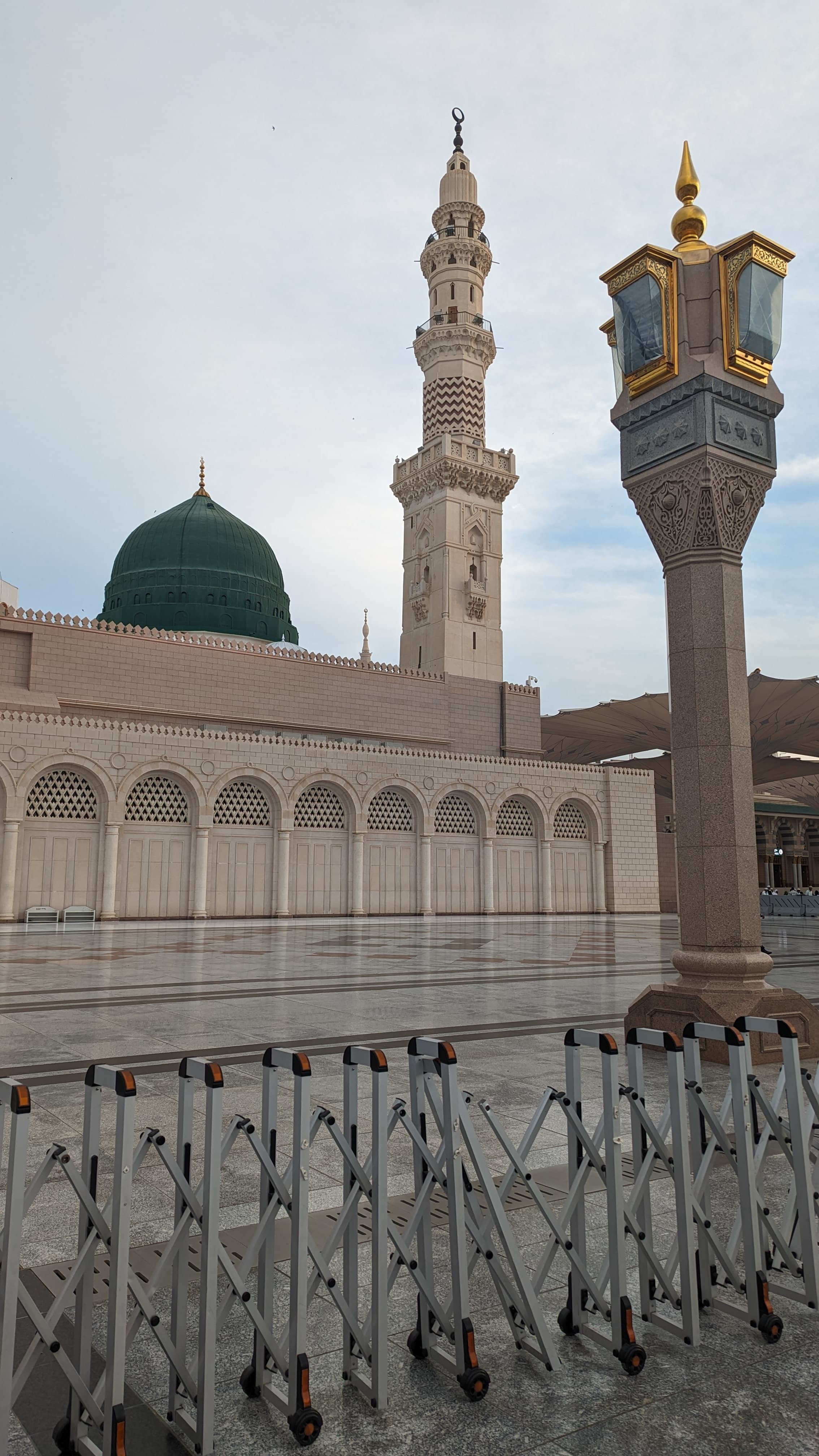
Madinah is the second holiest city in Islam — after Makkah — and it has been built and rebuilt around the mosque of the Prophet Muhammad (peace be upon him) for fourteen centuries. The current Prophet's Mosque (Al-Masjid an-Nabawi) is one of the largest in the world: it can accommodate one million worshippers at peak capacity, its green dome visible from throughout the city, its 250 retractable umbrellas shading the outer courtyard in the day and folding back at night. The scale is genuinely startling. Nothing quite prepares you for the first view of those white columns extending to the horizon, or the sound of the adhan rising from the mosque and carrying across the city at prayer time.
I arrived by train from Makkah — the Haramain High Speed Railway, which connects the two holy cities in roughly ninety minutes across the desert — and walked from the station toward the mosque. The walk takes about twenty minutes and the mosque's green dome grows as you approach, pulling you toward it in a way that is less metaphorical than it sounds.
The Prophet's Mosque
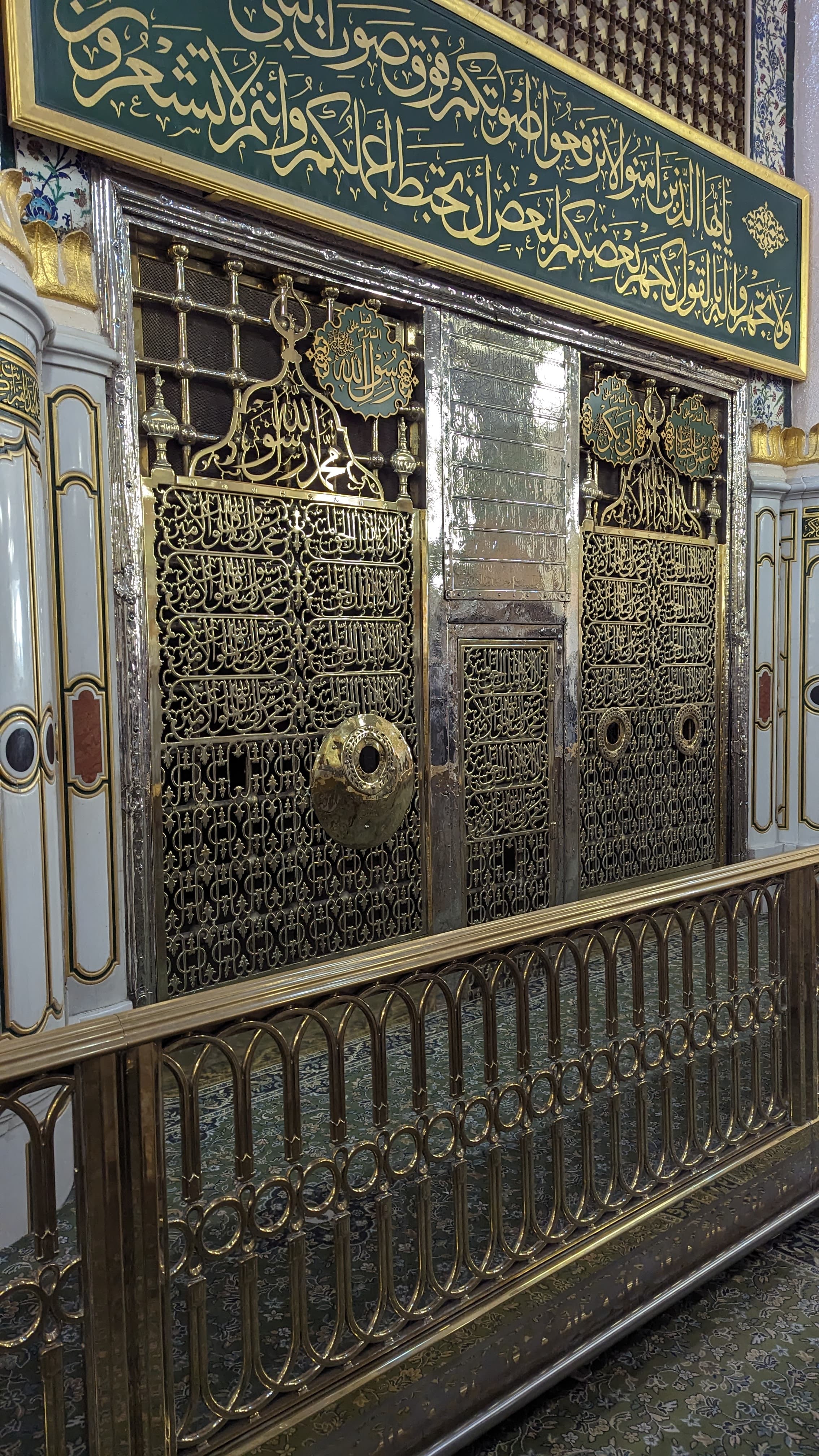
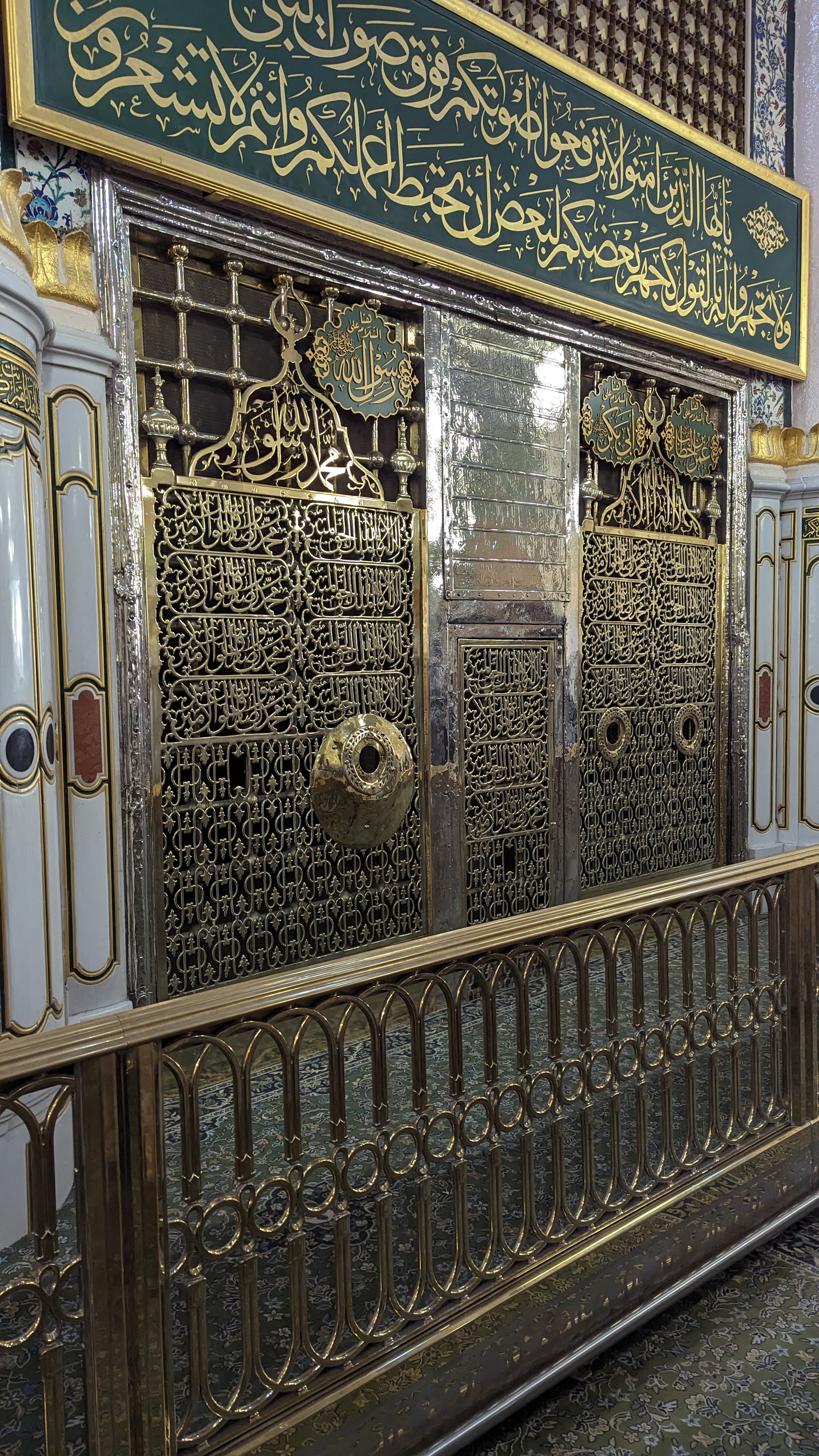
The mosque was originally built by the Prophet Muhammad (peace be upon him) himself in 622 CE on the site of his arrival in Madinah. It has been expanded continuously since then — by successive caliphs, by the Mamluks, by the Ottomans, and most extensively by the Saudi government in the twentieth and twenty-first centuries. The current structure contains the original mosque within it, in the section around the Green Dome, where the Prophet's tomb is located.
The atmosphere in the mosque is unlike any religious space I have been in. The volume of people is enormous — hundreds of thousands pass through on any given day during the pilgrimage season — and yet the interior achieves a quality of quiet and calm that should not be possible at that scale. People sit and read Quran. People sleep. People pray in every corner. The light comes through the retractable roof sections in long shafts. The marble is cool underfoot even in summer.
The City Around the Mosque
Madinah is not only the mosque. The old markets around it — the date markets especially — are worth an hour or two. Madinah dates are among the best in the world: Ajwa dates (dark, dense, sweet, traditionally associated with the Prophet (peace be upon him)) and Safawi and Medjool varieties are sold fresh and in ornately packaged boxes. The vendors know their product and will let you taste before buying. This is the right approach: taste three or four varieties, understand the differences, buy accordingly.
The Quba Mosque — the first mosque ever built in Islam, constructed by the Prophet (peace be upon him) on his arrival in Madinah in 622 CE — is three kilometres from the Prophet's Mosque and is visited by pilgrims who wish to pray two rak'ah there, which carries the reward of an umrah according to hadith. It is smaller and quieter than the main mosque, built in contemporary Saudi style, and worth the short taxi ride.
The Feeling of the City
Madinah has a particular quality that I haven't found in other pilgrimage cities. It is not anxious or transactional. People move slowly. The city around the mosque is arranged for the purpose of being near the mosque — the hotels, the restaurants, the shops — and the purpose is serious, and the seriousness creates an atmosphere of genuine calm. Whether you are Muslim or not, you feel the weight of what this place means to the people who are here, and that weight is not oppressive. It is steadying.
Al-Masjid an-Nabawi