London Between the Landmarks
A city too large to know, but small enough — neighbourhood by neighbourhood — to fall into
London is too big to understand as a single place. The mistake visitors make is trying to see it that way — doing the Tower, the Eye, the National Gallery, the market at Borough — as if these are nodes in a connected system. They are not. London is a collection of villages that were absorbed by expansion without losing their individual characters, and the way to see it is to pick two or three and go deep rather than touching everything at the surface.
I spent a week and focused on Bermondsey, Shoreditch, and Hackney — the arc of east and south-east London that has changed most in the past fifteen years. This is not a guidebook recommendation. It's just where I ended up, following food and a few people I knew. But it is also where London is currently most alive — most in conversation with itself about what it is and what it's becoming.
The River
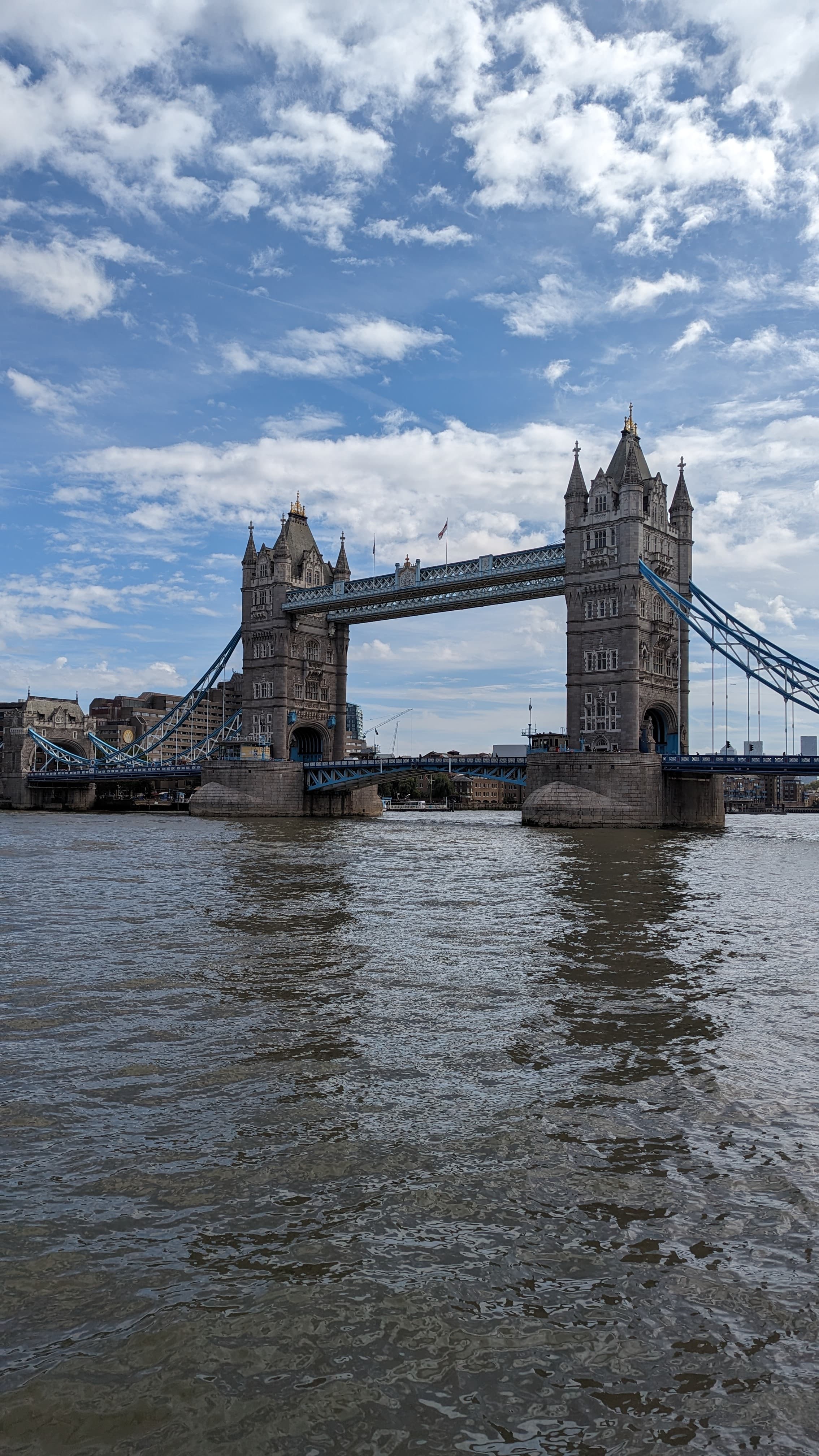
The Thames is the thing that holds London together. The Embankment walk — from Waterloo Bridge west to Tate Modern, or east toward Tower Bridge — gives you a London that the streets don't. The city opens up. You see St Paul's dome from the water the way Canaletto painted it. The Tate Modern's old chimney stack stands on the South Bank with the kind of casual authority that makes you realise the building was always going to be an institution. Tower Bridge opens. Actual ships pass.
Walk across Waterloo Bridge at dusk on a clear evening and you will understand why people have been coming to London and finding it beautiful for centuries. The light on the river, the skyline, the bridges stretching both directions — it is not subtle, but it is genuinely good.
Borough Market and the Food
Borough Market has been a food market in some form since the thirteenth century, which is an implausible fact. The current version is a covered market on the south side of London Bridge, running Thursday to Saturday, with a density of good food stalls that makes it difficult to move efficiently. The standard mistake is to browse everything first and then try to buy. The correct approach is to get there early, eat something immediately — the monkfish at the fish counter, the salt beef on rye from the Jewish deli, whatever the bread stall has warm — and then browse.
London's restaurant scene has become one of the most genuinely international in the world, not as a marketing point but as a structural fact. The best Turkish food I've eaten outside Turkey was in Stoke Newington. The best Taiwanese restaurant I've found in Europe is in Soho. This is not coincidence. London's immigrant communities have been cooking seriously for generations, and the food culture reflects it.
Museums and the Free Admission Decision
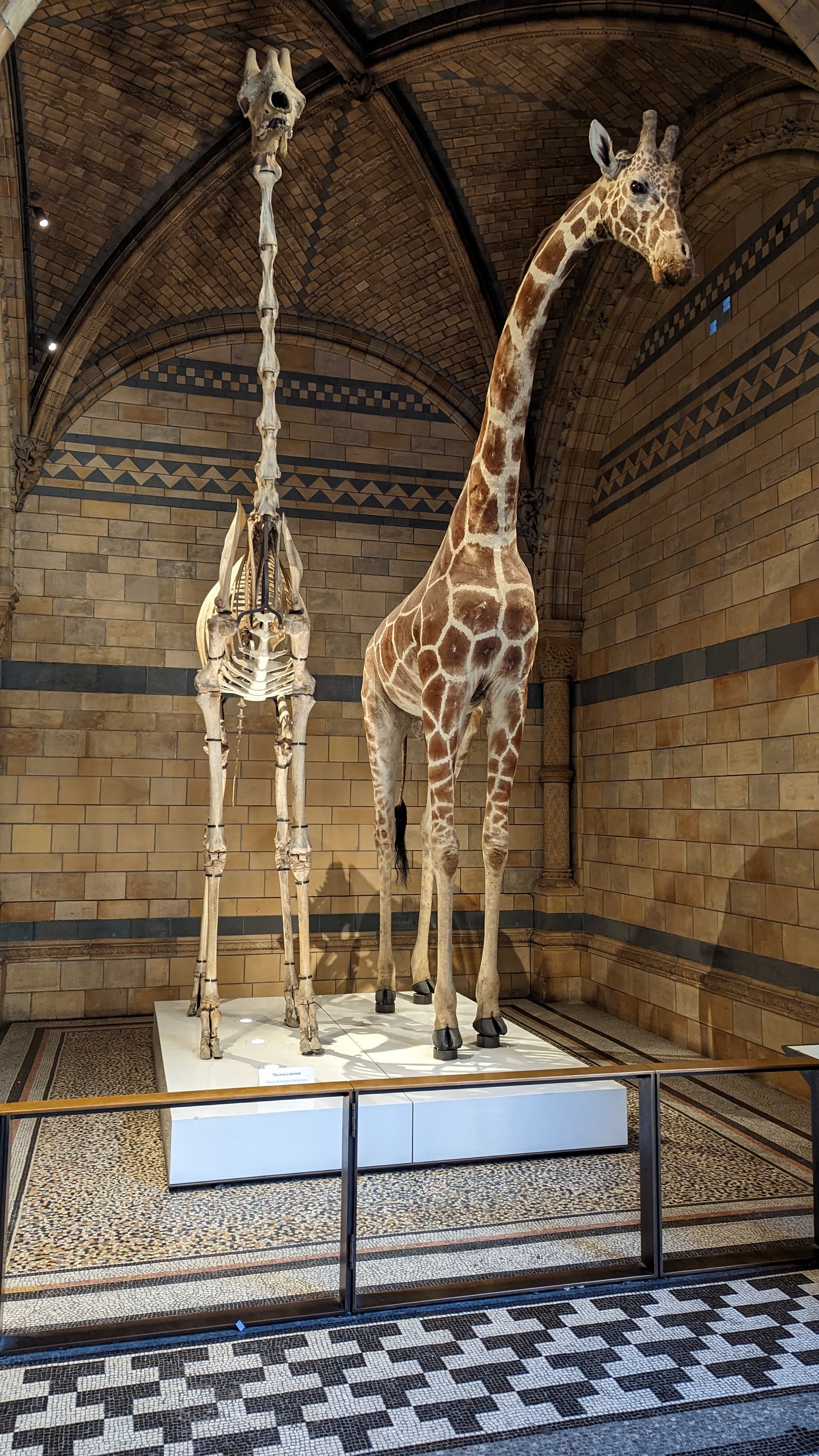
The permanent collections of the British Museum, the Natural History Museum, the Victoria and Albert, the National Gallery, the Tate Modern, and the National Portrait Gallery are all free. This is one of the great civic facts about London. You can walk into the Elgin Marbles, or the Lewis Chessmen, or Turner's late paintings, or the Rosetta Stone, on a Tuesday afternoon with nowhere particular to be. No booking, no ticket, no decision to make. The result is that these museums function as public space as much as cultural institutions — people bring sandwiches, sit in the atria, use them the way parks are used. This is the correct relationship between a city and its art.
The Parks
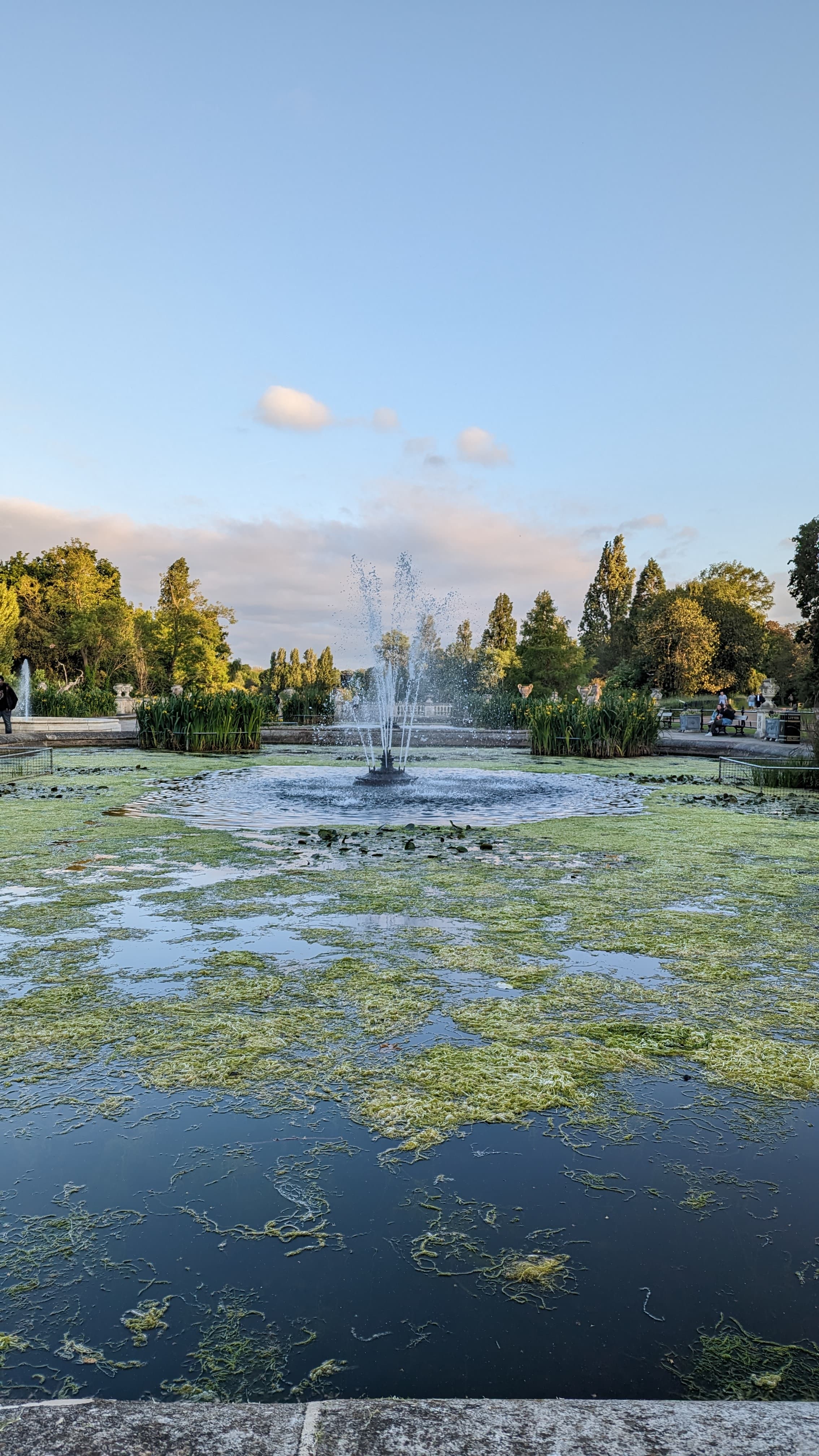
Hyde Park in October, when the leaves are turning and the morning light is low, is worth an hour even if parks are not your thing. The Serpentine Gallery on the north bank of the lake shows contemporary art in a small 1930s building and usually has something worth seeing. The Round Pond has model boats on weekends. People walk dogs with the focused purpose of people who do this every day regardless of weather. London at its most itself.
The City on the Thames