Köln and the Weight of the Cathedral
Seven hundred years of construction, the Rhine at dusk, and Germany's most visited city
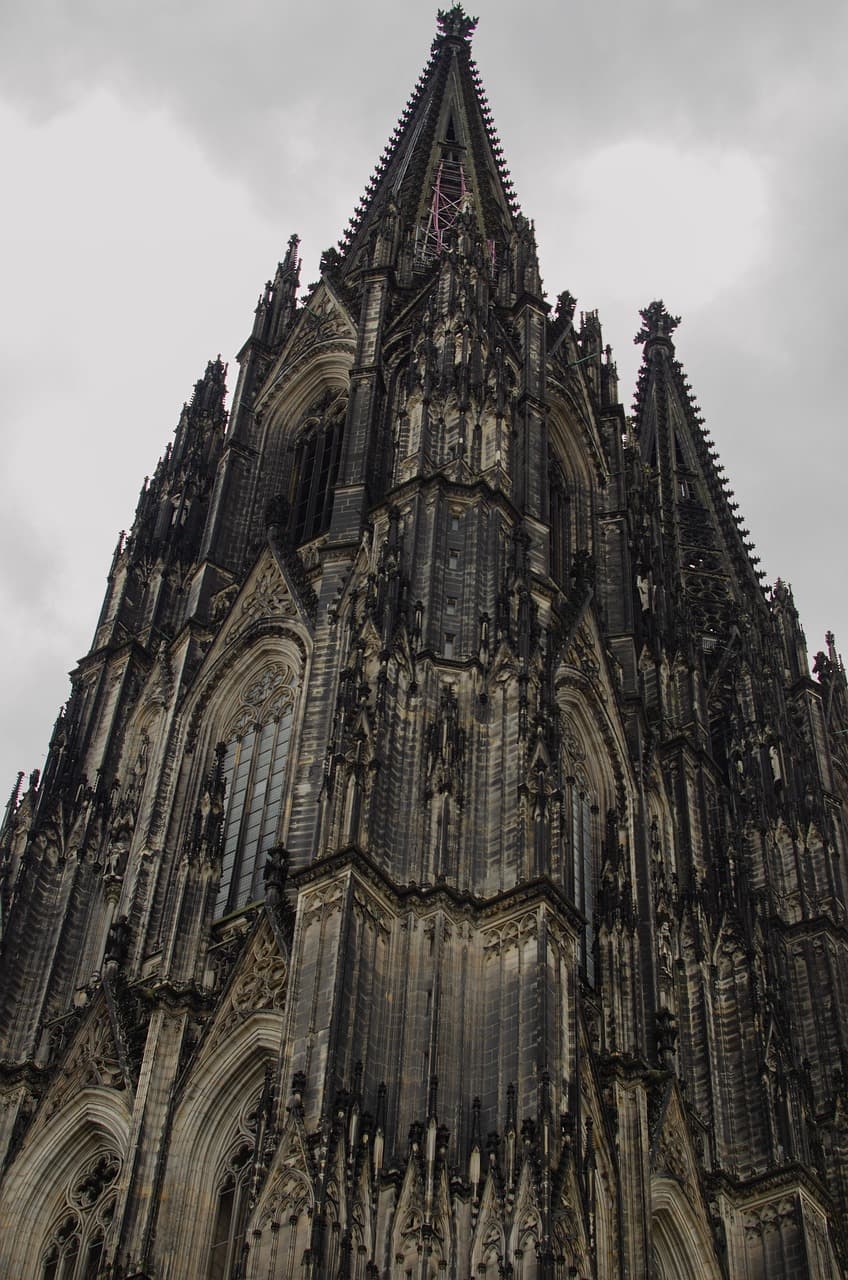
Köln Cathedral dominates the city. This is not a metaphor or a travel-writing flourish — it literally dominates. The twin spires rise 157 metres above the Rhine, visible from the train as you pull into the Hauptbahnhof (the station is immediately adjacent; you exit the train and the cathedral is right there, already above you), visible from the far bank of the river, visible from most of the city on a clear day. It is the largest Gothic cathedral in Northern Europe and the third-tallest church building in the world, and it took 632 years to complete, from 1248 to 1880.
I arrived in Köln in mid-November, grey weather, the Christmas markets just setting up in the square outside the cathedral, the light flat and cold. None of this diminished anything. The cathedral in flat November light is, if anything, more honestly itself — not prettied up by golden hour, just there in the granite reality of its stonework and scale.
Inside the Cathedral
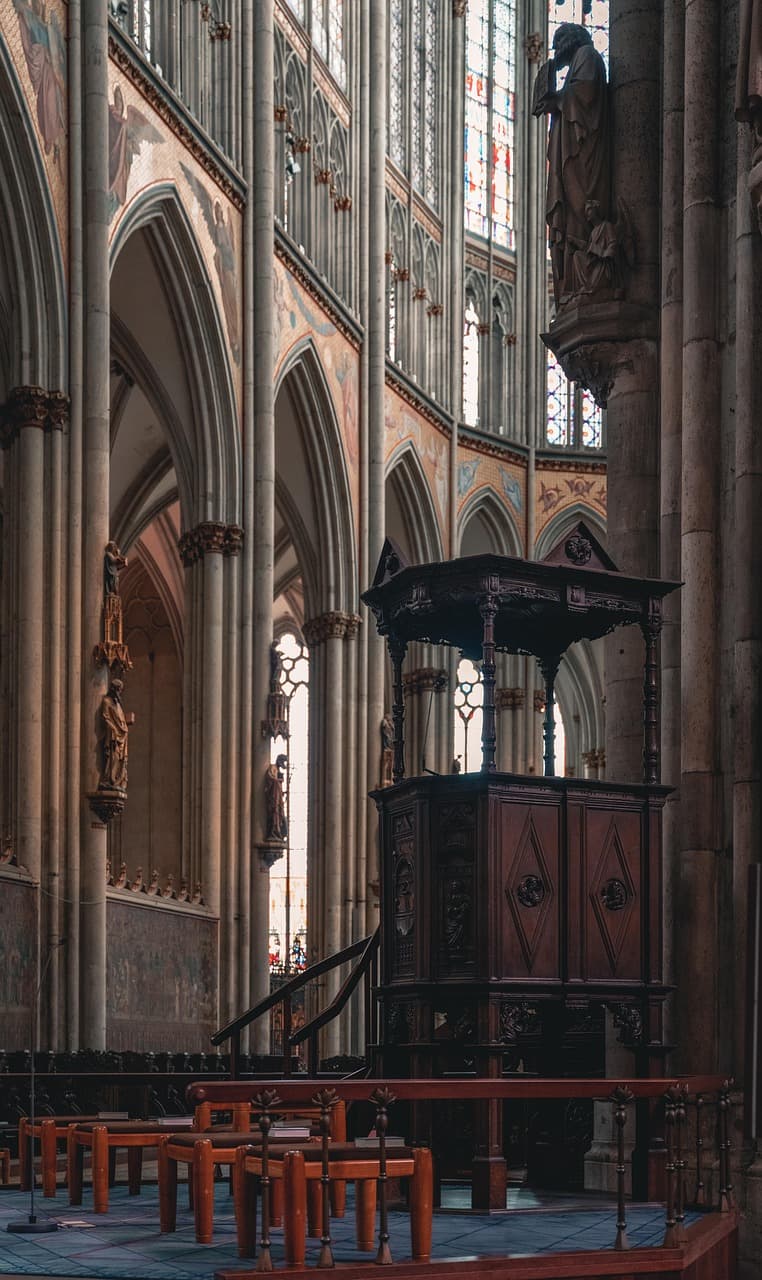
The interior is enormous, dim, and serious. The nave is 144 metres long and the vaulting rises 43 metres above the floor. The light comes through twelve windows in the choir, five of which are original medieval glass — the Bayernfenster (Bavaria Windows), donated by Ludwig I of Bavaria in 1848. The colours are deep red, blue, ochre; the figures are hieratic and flat in the medieval manner.
The Shrine of the Three Kings, behind the high altar, is the largest reliquary in the Western world — a gilded triple-arched sarcophagus encrusted with enamel, gems, and figurative goldsmith work. It was begun in 1180 and took more than fifty years to complete. It is the reason Köln became a medieval pilgrimage centre; pilgrims came from across Europe to see it. Standing in front of it, you understand, without difficulty, how this happened.
The Rhine and the Old Town
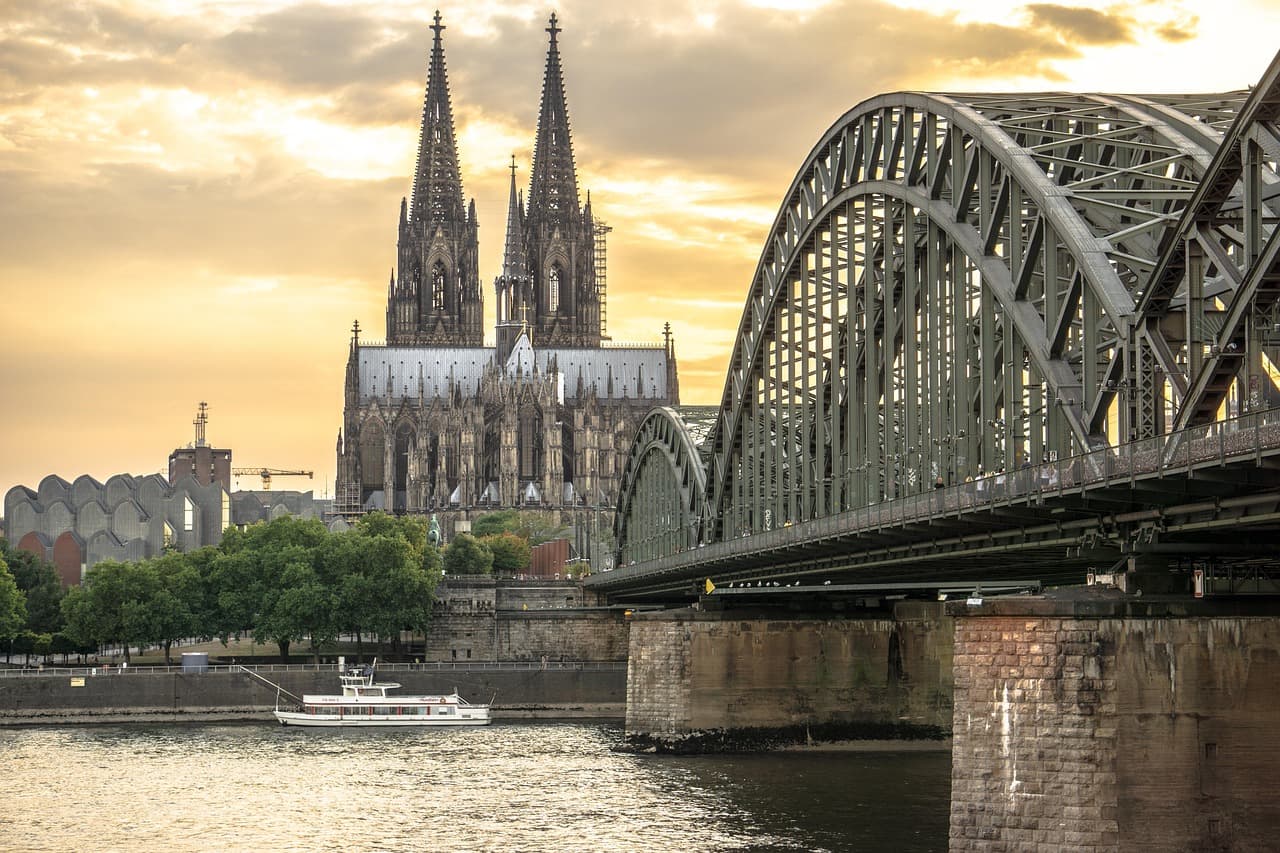
The Hohenzollernbrücke — the rail and pedestrian bridge immediately south of the cathedral — is covered in love locks, hundreds of thousands of them, layered so thick the railings have become something else: a strange civic monument to the impulse to mark a moment. People still attach locks while you're watching. A train passes every few minutes; the bridge shakes slightly; the locks rattle.
The left bank of the Rhine (the main city side) has the Altstadt running along the riverfront — a reconstruction, mostly, since the city was heavily bombed in World War II and only the cathedral survived largely intact — and the Chocolate Museum (Schokoladenmuseum) at the southern end of the waterfront. The Schokoladenmuseum is a tourist attraction that has somehow become a genuinely interesting museum about the history of cacao and chocolate production, with a fountain that dispenses free samples.
The Christmas Markets
Köln has six Christmas markets running simultaneously in November and December. The one in front of the cathedral, with the twin spires as backdrop, is the most atmospheric. The one in the old town (Alter Markt) is larger and has the best food. Both are crowded, and both are, in my opinion, worth the crowds. Glühwein from a Christmas market, held in the ceramic mug you're supposed to return but probably won't, with the cathedral lit against a dark sky and the smell of roasted almonds — this is one of those experiences that is exactly as good as advertised.
Köln