Kayseri: At the Foot of Erciyes
A Seljuk bazaar city under a volcanic peak — pastırma, medieval medreses, and the door to Cappadocia
Mount Erciyes rises to 3,916 metres above Kayseri, a near-perfect volcanic cone that is visible from almost everywhere in the city. It's snow-capped for much of the year and has a ski resort on its upper slopes. Below it, Kayseri goes about its business with the efficiency of a city that has been a commercial hub since the Hittites: textiles, furniture, the famous Kayseri carpet trade, and the cured meat industry that produces pastırma — the heavily spiced, air-dried beef that has been made here for centuries and that the city exports everywhere.
I was there in July 2024 for three days, on a swing through central Anatolia that also included Sivas and Nevşehir. Kayseri was the least-visited of the three and, in some ways, the most interesting — a city functioning on its own terms, not curated for tourism, with a historical core dense enough to spend days in.
The Seljuk Core
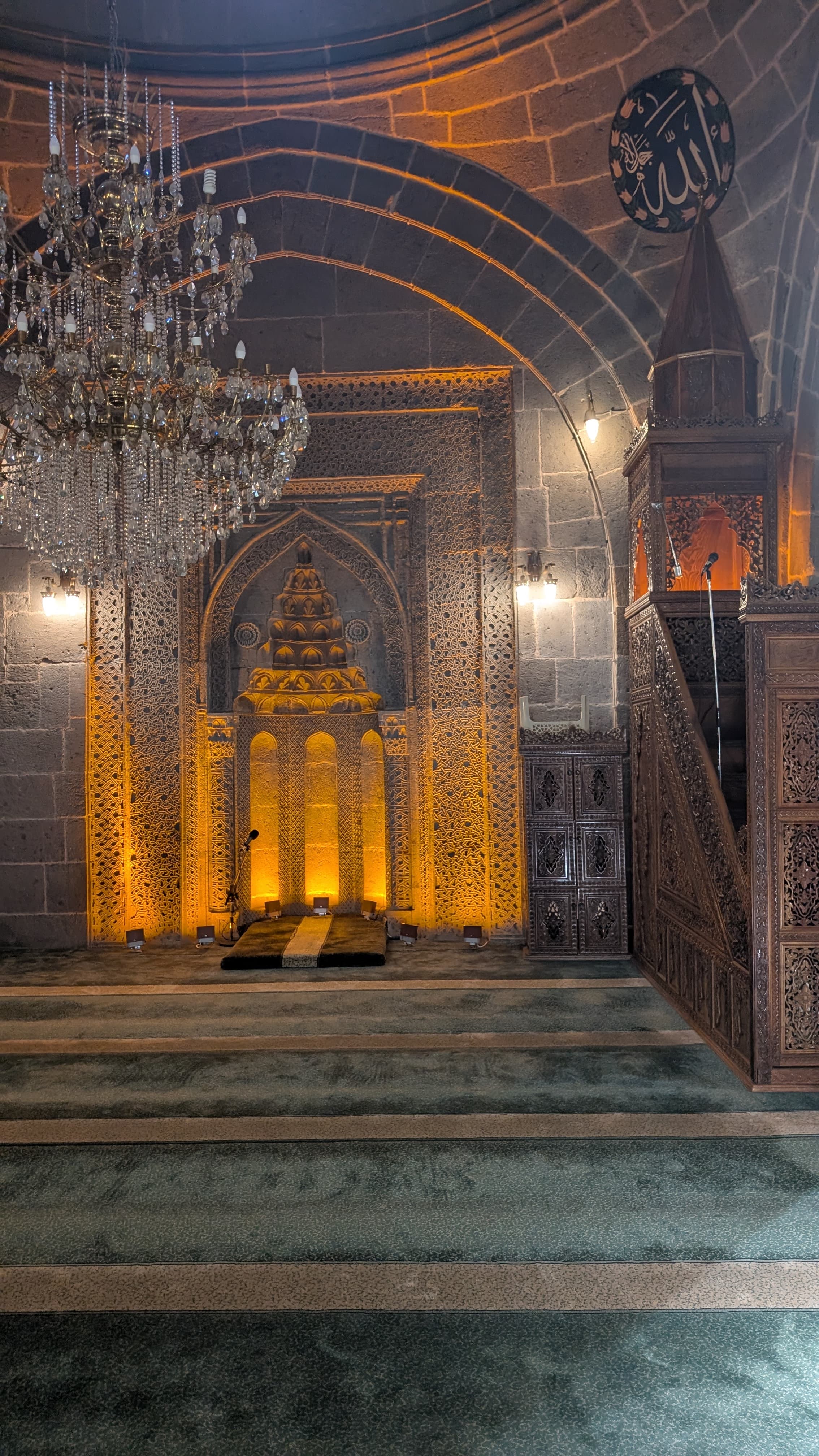
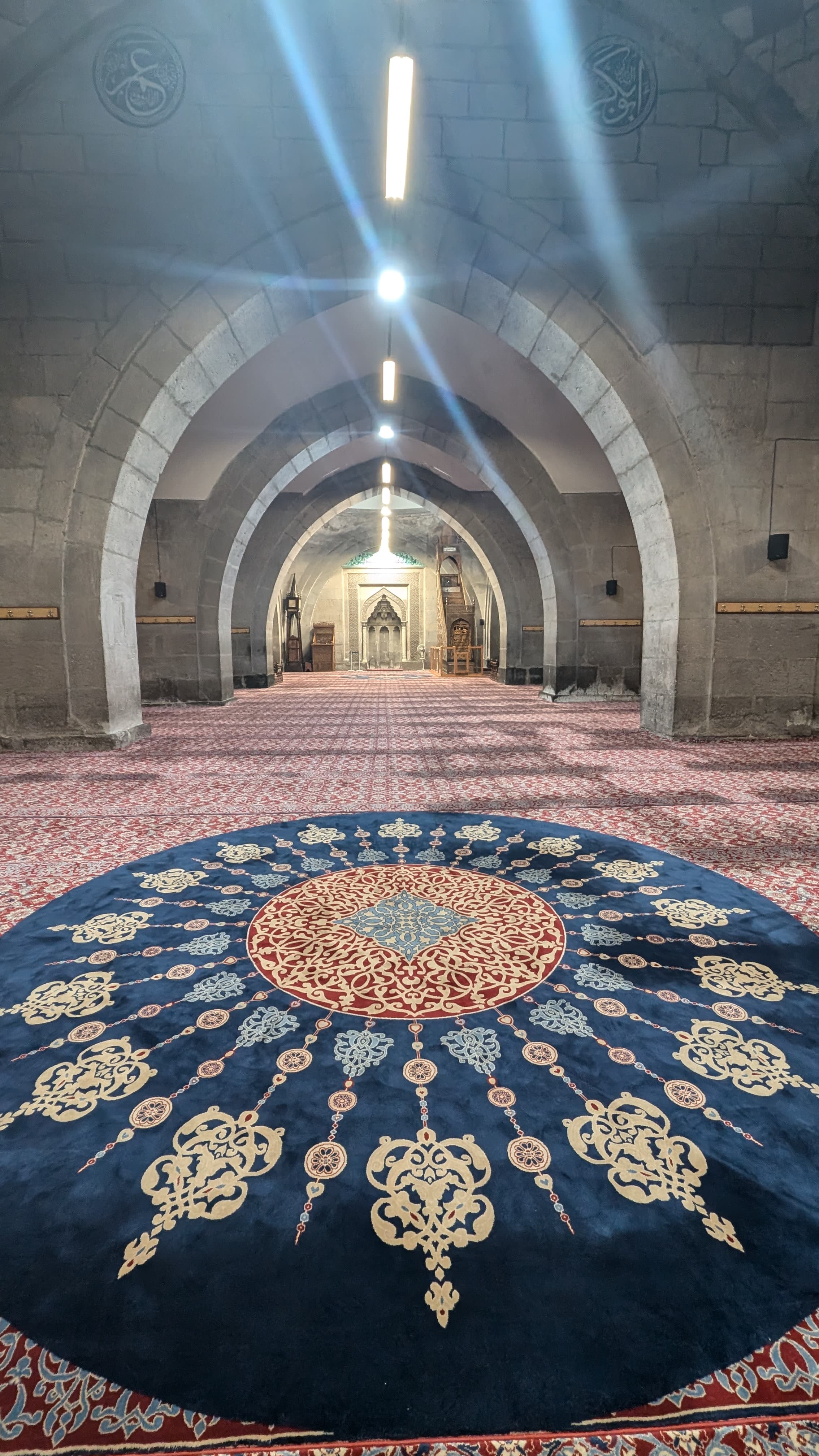
The Döner Kümbet — a twelfth-century Seljuk mausoleum, its name from the cone-shaped roof that resembles a rotating structure — is one of the finest examples of Seljuk funerary architecture in Anatolia. The Hunat Hatun complex, built in 1237 by the wife of a Seljuk sultan, includes a mosque, a medrese, and a türbe, all still standing and still in use. The old bazaar district around the covered bedesten predates the Ottoman period; the current structure is fifteenth century but the commercial tradition it continues is much older.
Pastırma and the Food Culture
Eating well in Kayseri requires only moderate effort. The city's food reputation rests on pastırma and sucuk (spiced sausage), both of which appear on every breakfast table and in every market. The Kapalı Çarşı (covered bazaar) has pastırma shops where the cured meat hangs in dense, fragrant rows; buying a few hundred grams to take home is the only correct response. The manti — tiny Kayseri dumplings served with yogurt and butter — are a regional speciality that the rest of Turkiye acknowledges as better here than anywhere else.
Gateway to Cappadocia
Kayseri airport is the main entry point for Cappadocia, and most visitors transit straight to Göreme or Ürgüp without stopping. This is a mistake. The city deserves a day at minimum, and its position at the edge of the volcanic landscape that created Cappadocia means the terrain is already beginning to shift as you drive west — tuff formations, volcanic rock, the particular dry emptiness of the plateau. Kayseri is the threshold you should cross slowly.
Kayseri