Istanbul Doesn't Wait for You
Mosques, minarets, and a city that sits on two continents without making a fuss about it
The flight into Istanbul comes in over the Bosphorus. You can see it from the window — a grey-blue strait cutting through the city, impossibly wide, dotted with tankers and ferries, the European shore on one side and the Asian shore on the other. The minarets of the mosques rise above both. When the taxi takes you from the airport into the city, you understand something you didn't before: Istanbul doesn't announce itself so much as simply appear, confident, already in the middle of being itself.
I had two weeks. It wasn't enough. It never is.
Arriving in Sultanahmet
Sultanahmet is the old city — the historic peninsula where the Ottoman and Byzantine layers sit on top of each other. The Blue Mosque and Hagia Sophia face each other across a plaza that was once the Byzantine Hippodrome, where chariot races ran for a thousand years. You can walk from one to the other in three minutes. The Hippodrome's surviving monuments — an Egyptian obelisk, a Byzantine column, a serpent column brought from Delphi — stand in a long line in the middle of what is now a pedestrian park.
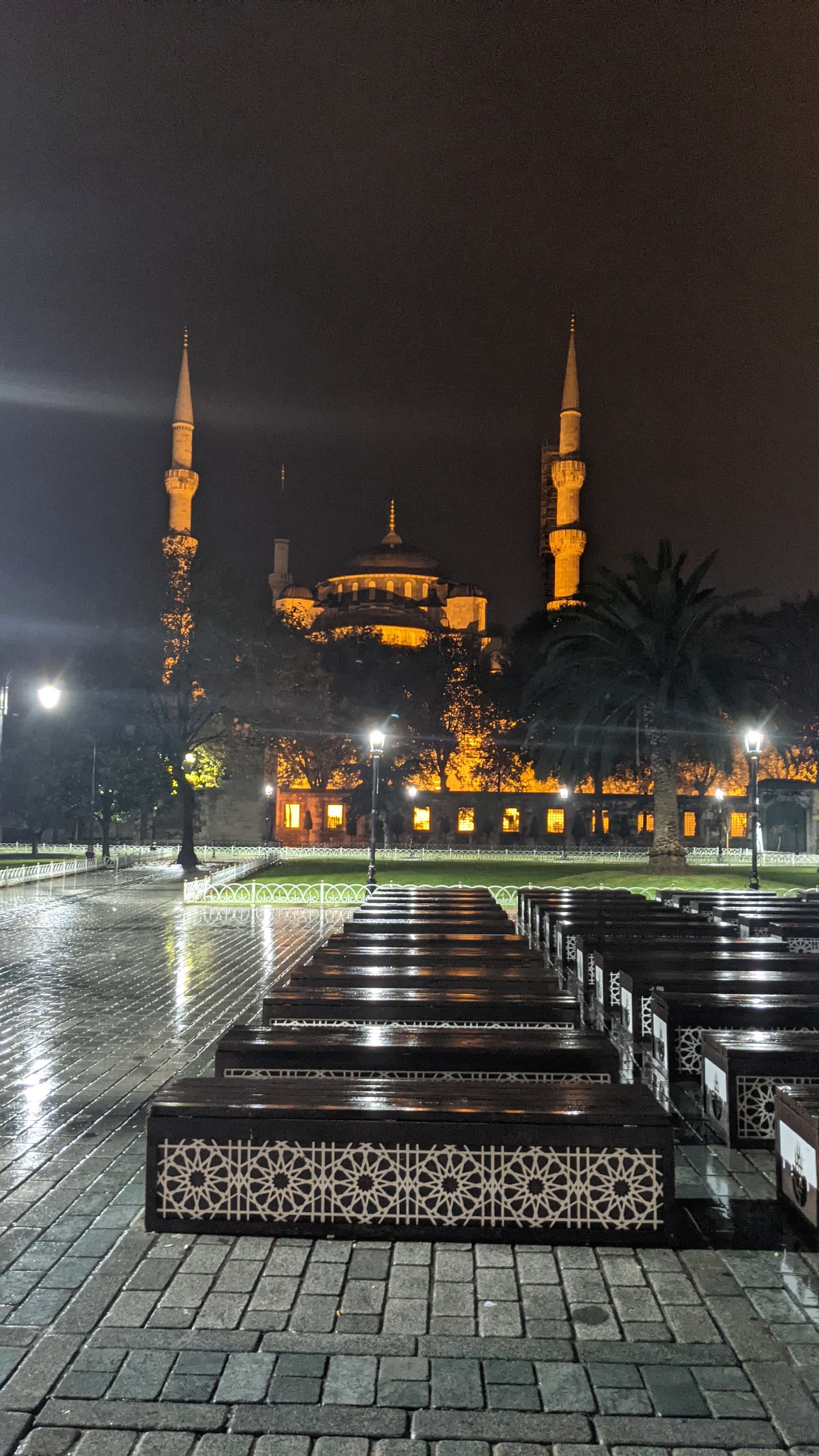
The tour groups arrive by nine in the morning. The trick is to be there at seven, when the light is low and clean and the plaza is nearly empty. At that hour, the six minarets of the Blue Mosque are lit against a pale sky and the geometry of the thing — the cascade of domes and semi-domes, the pencil minarets, the perfect proportion — is available to you without anyone blocking the view.
The Blue Mosque and Hagia Sophia
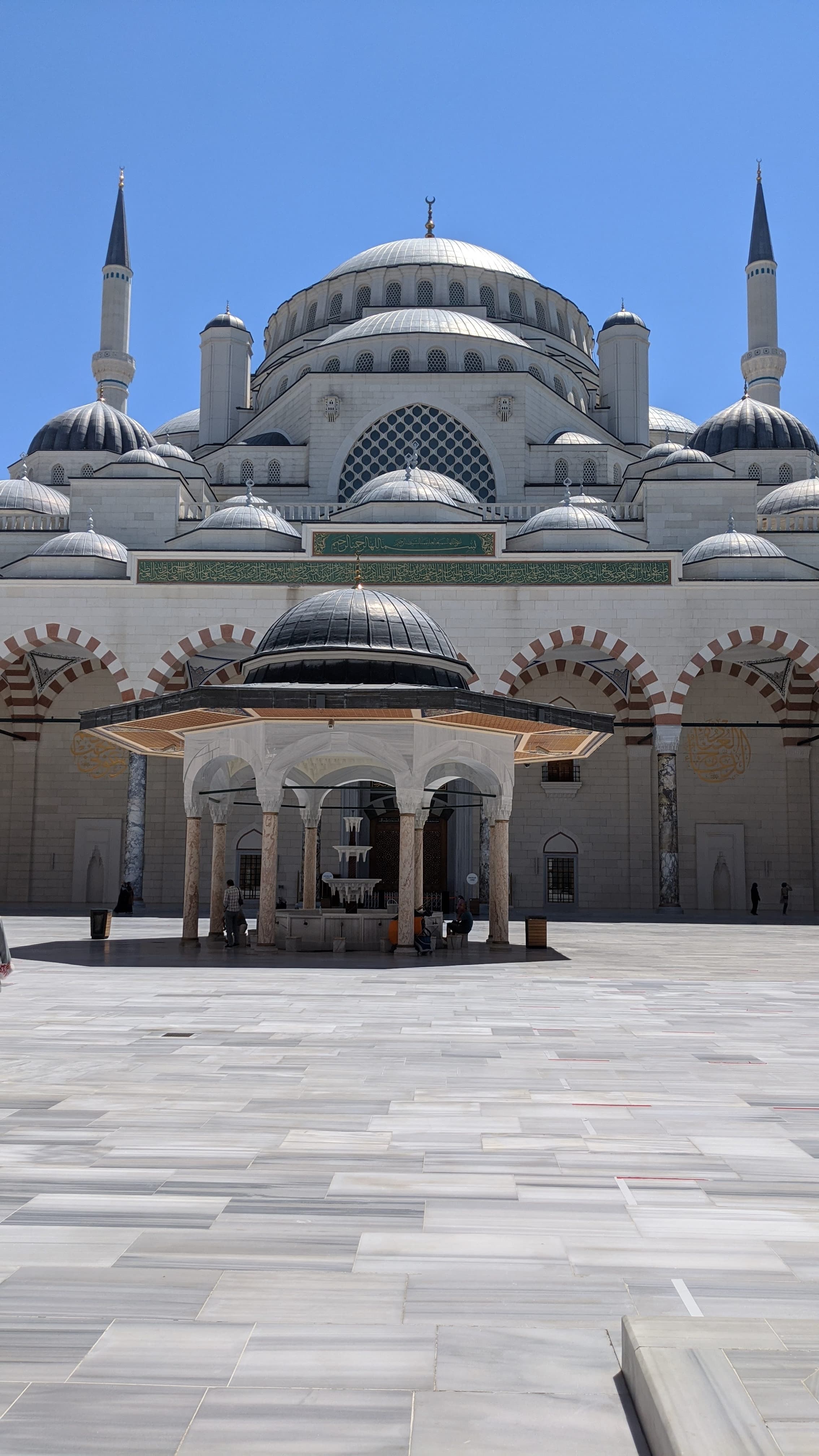
The Blue Mosque earns its name from the inside, not the outside. The exterior is Ottoman classical — the cascade of domes, the six minarets, the courtyard with its ablution fountain — but once you're through the entrance and your eyes adjust, the walls are covered floor to gallery level in more than twenty thousand Iznik tiles. Blue-green, white, red. Tulip and carnation motifs in over fifty different designs. The light comes in through two hundred and sixty windows and the whole space goes luminous. At prayer time the chandeliers come on and the carpet stretches corner to corner and the call to prayer does something to the acoustics that makes the space feel twice as large. Sultan Ahmed I had it built between 1609 and 1617. He was nineteen when construction started. He died at twenty-seven before seeing it fully finished.
Hagia Sophia is directly across the plaza and is a different kind of encounter.
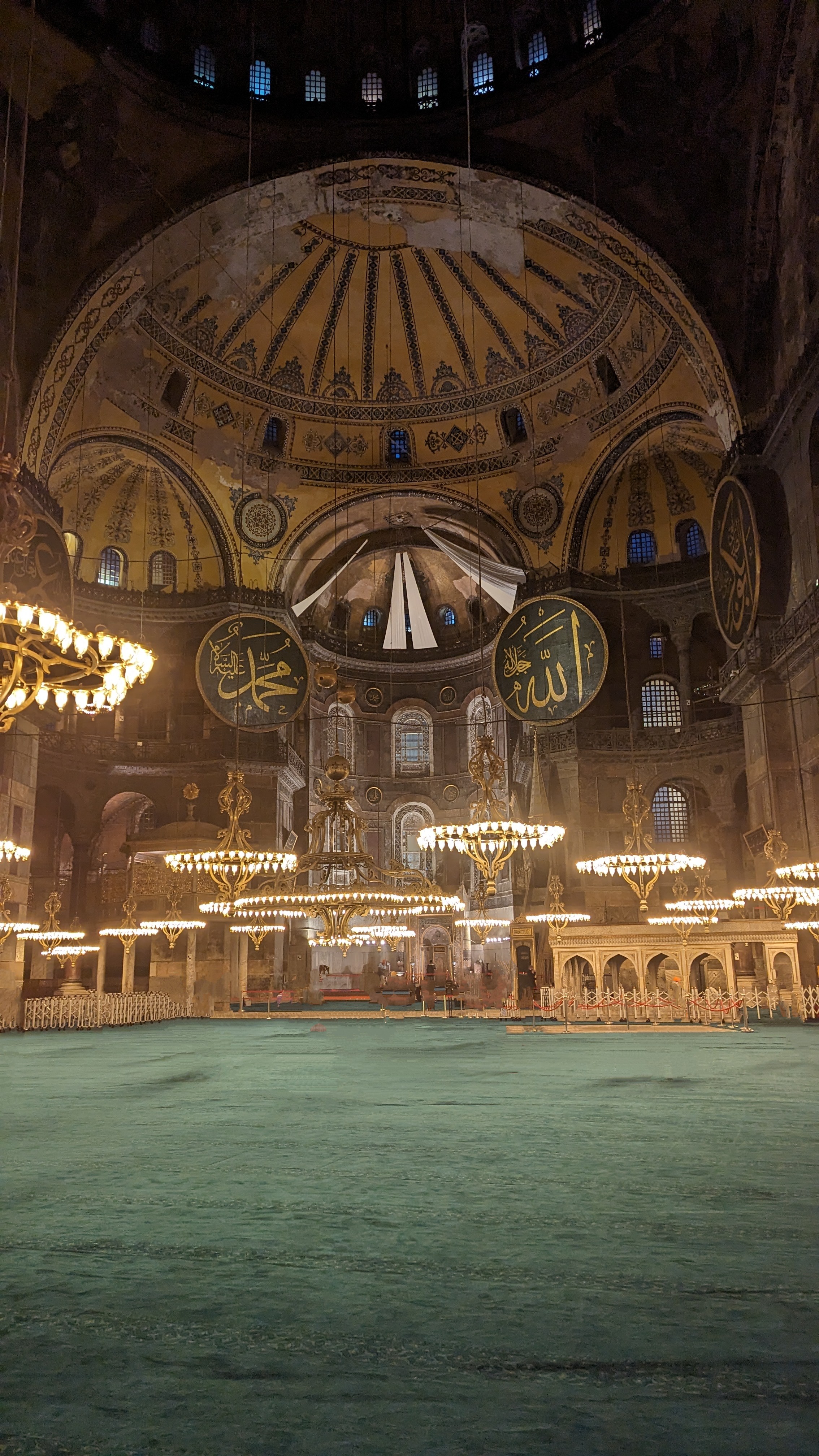
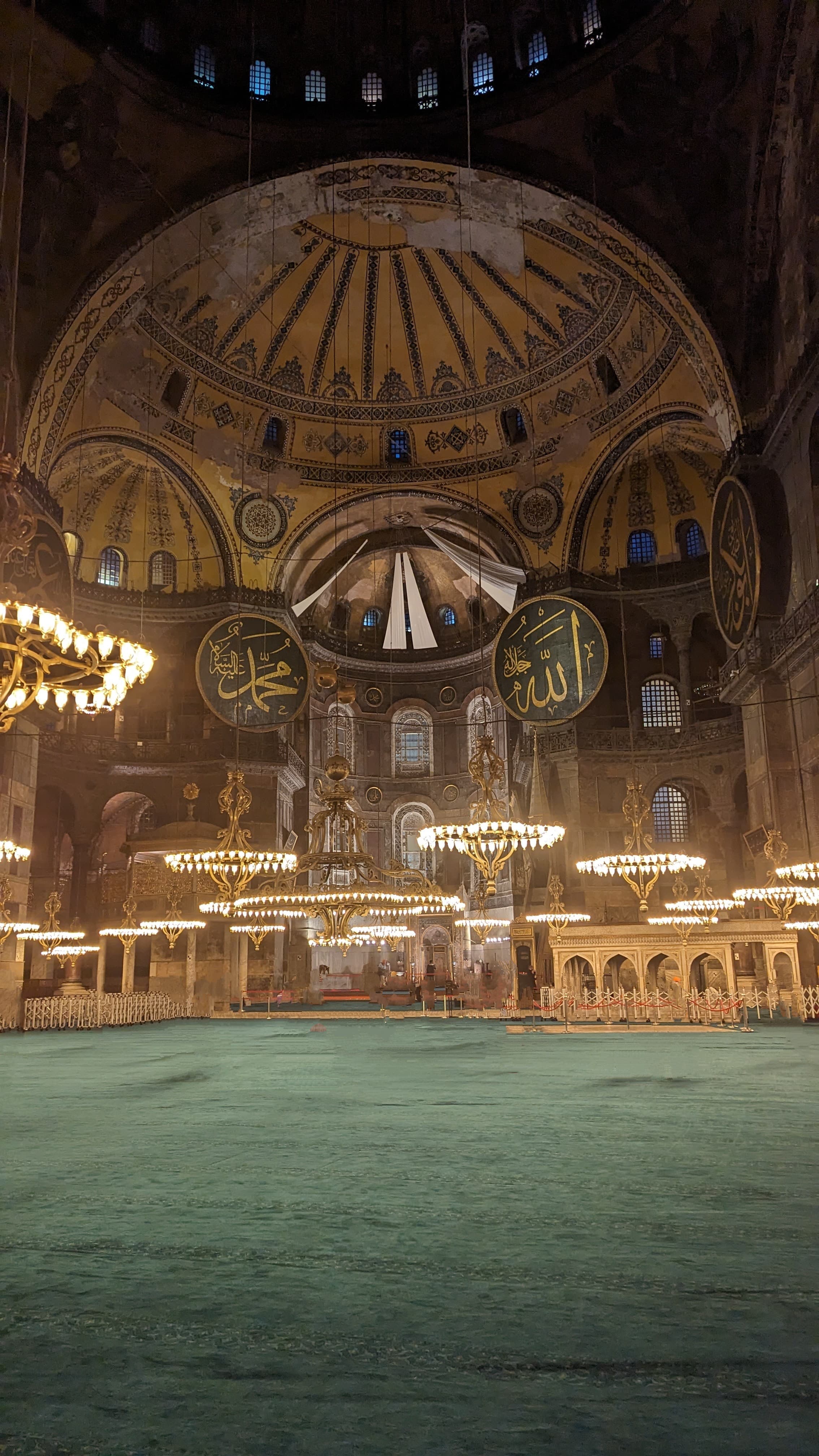
Hagia Sophia has been a cathedral, a mosque, a museum, and a mosque again. It has survived fifteen centuries and the ambitions of a dozen different empires. You walk in and the dome opens above you — the kind of space that makes you stop mid-stride and look up. The Ottoman calligraphic roundels hang in gold against the dim interior. The chandeliers glow low over the prayer carpet. Light comes in from every angle and the building just holds it all — Byzantine, Ottoman, ancient, present — without trying to explain itself. Some buildings make you feel small. Hagia Sophia makes you feel lucky to be standing in it.
The Bosphorus
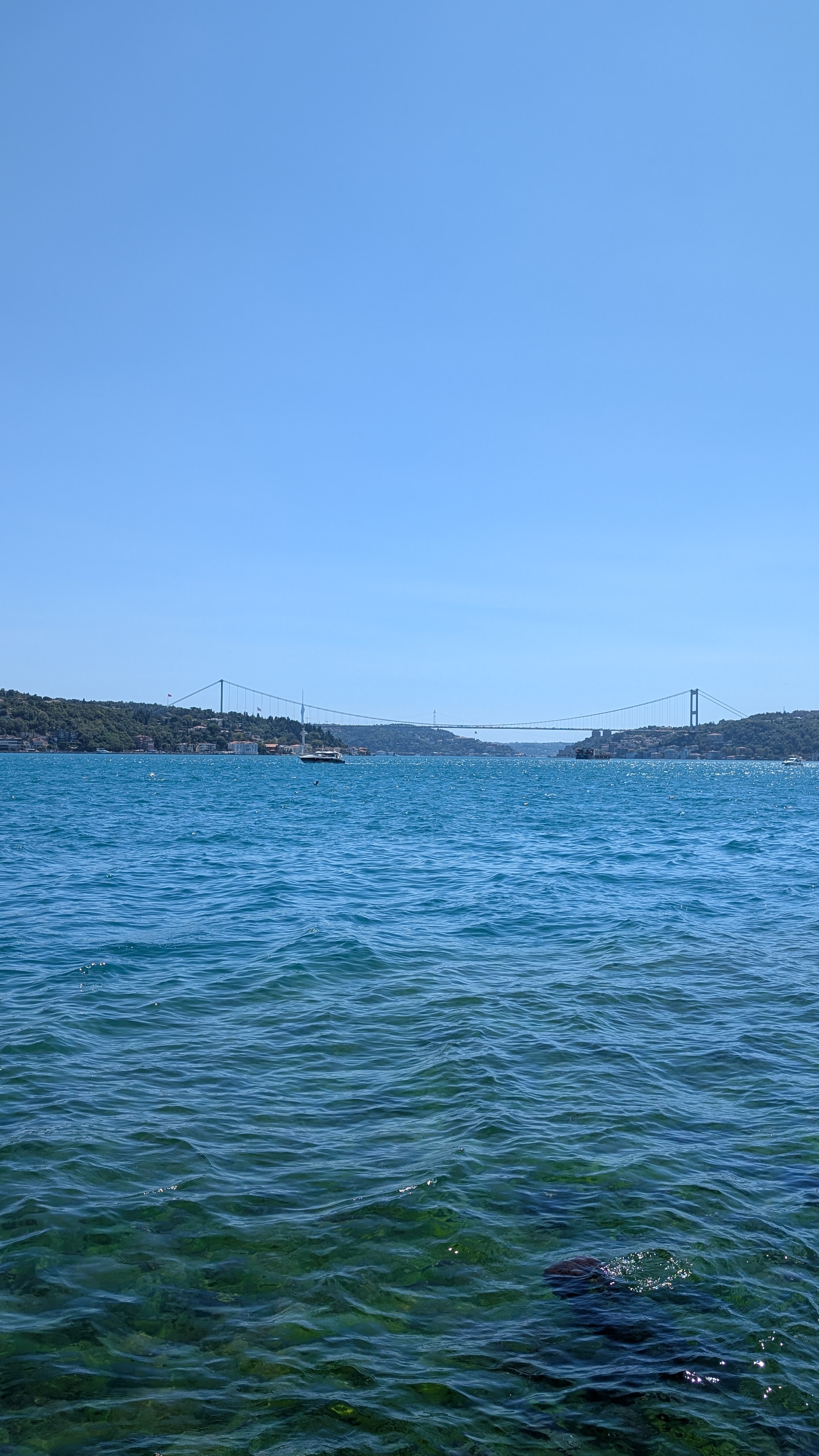
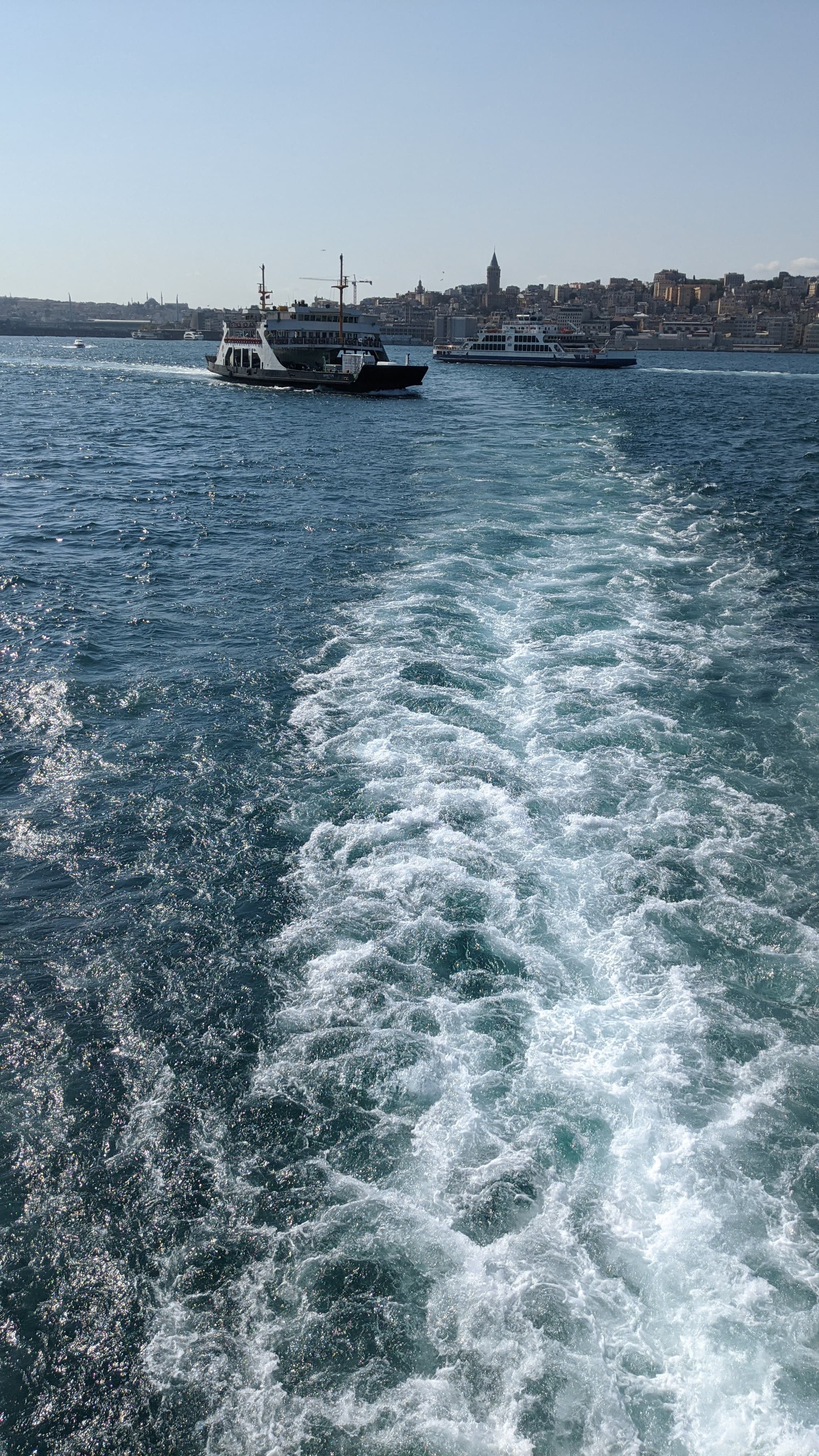
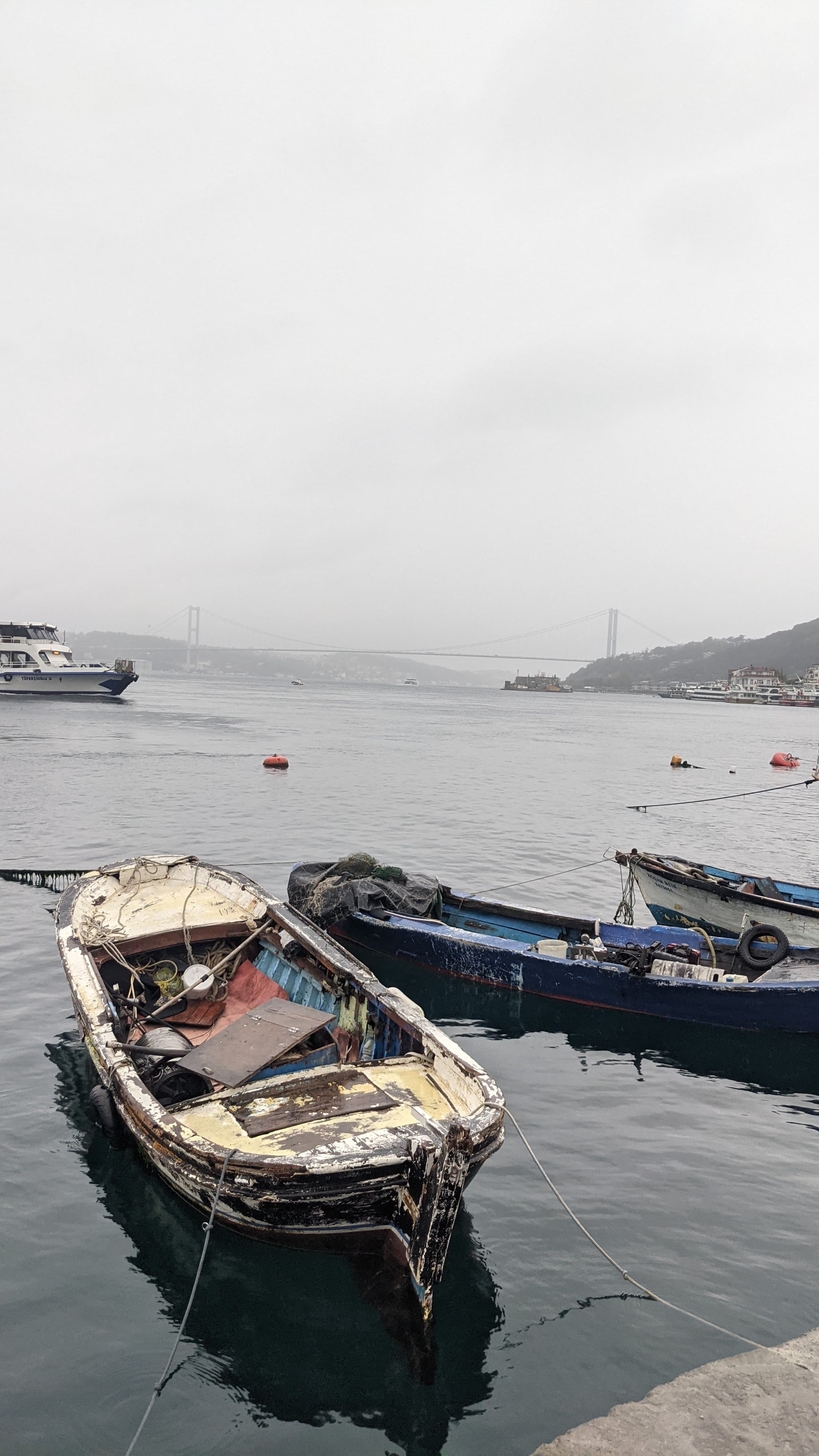
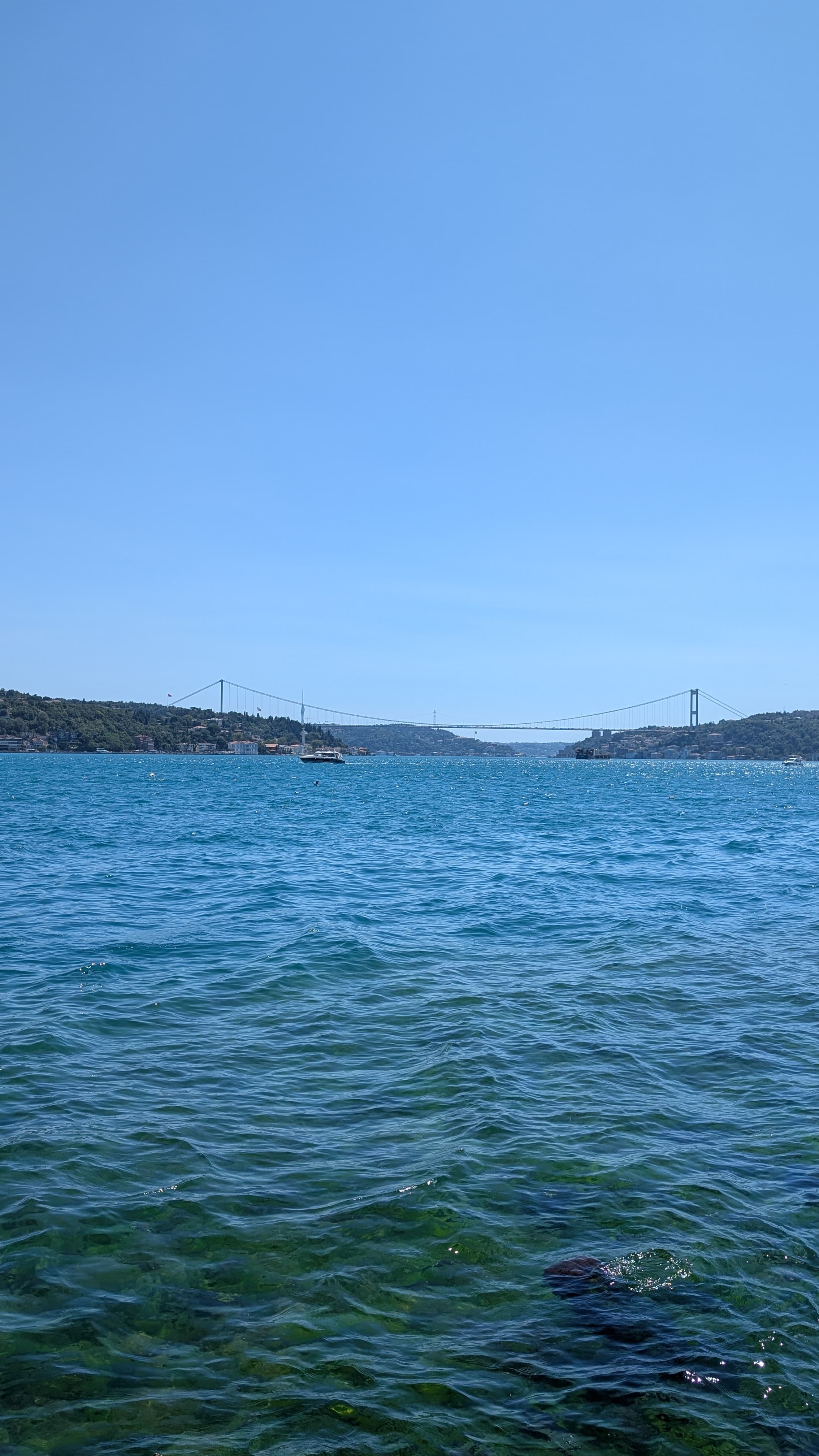
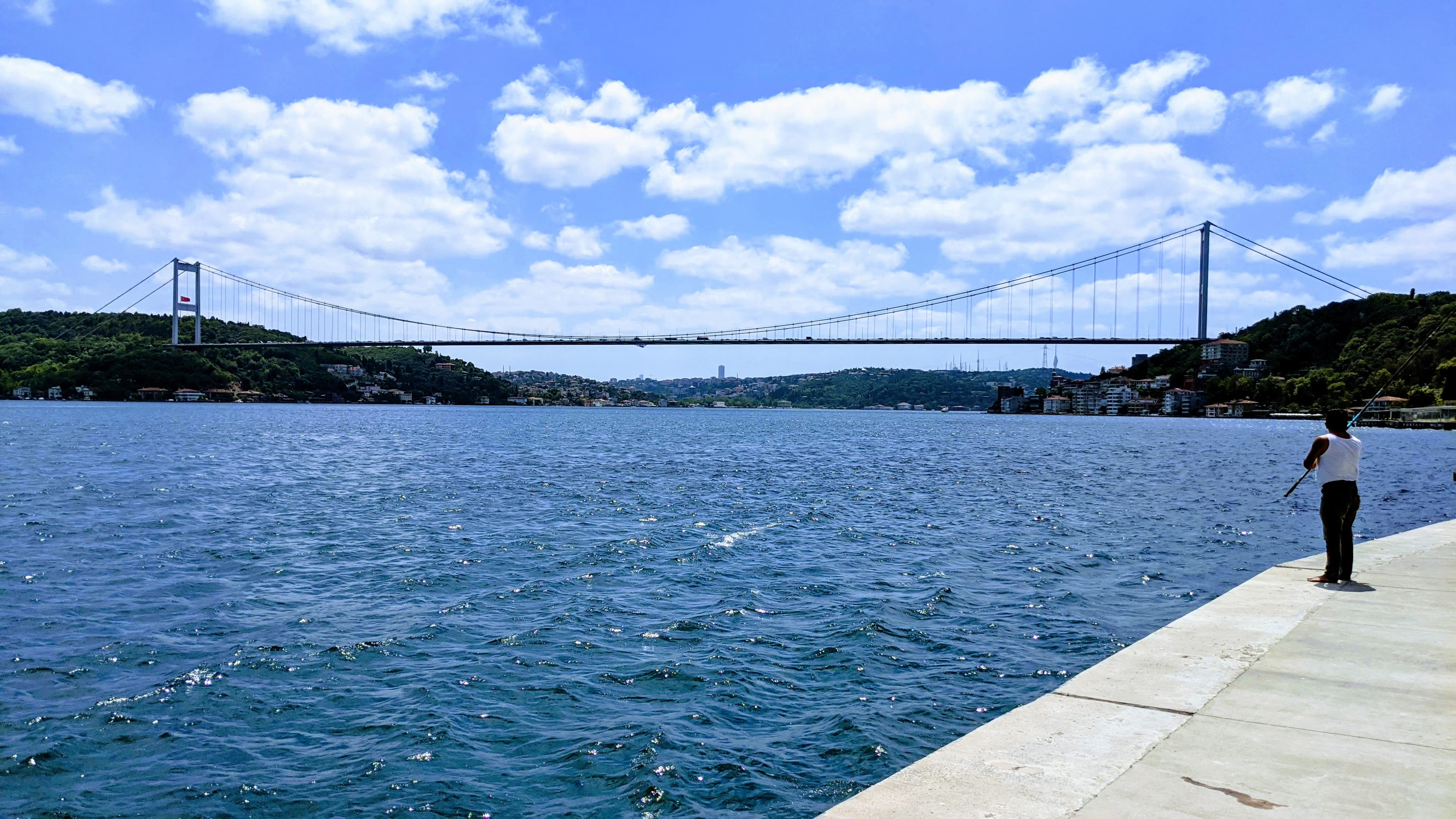
The public ferry is the best way to understand Istanbul. You board on the European side, pay almost nothing, and cross the strait in twenty minutes. The city opens up on both sides: the historic peninsula receding on one bank, the Asian shore of Kadıköy approaching on the other. The Bosphorus Bridge spans the gap — the first one, opened in 1973, connecting the two continents by road for the first time in history. The ferries make the crossing feel ordinary. That ordinariness is the point.
Kadıköy on the Asian shore is less touristy and more lived-in than the European old city. A market neighbourhood, a fish market, a street famous for its mussels stuffed with rice and lemon. The tea gardens along the waterfront stay full until midnight. I crossed three times in different directions — just to feel the water moving, to watch the tankers pass, to understand the geography from the middle of it.
The City at Night
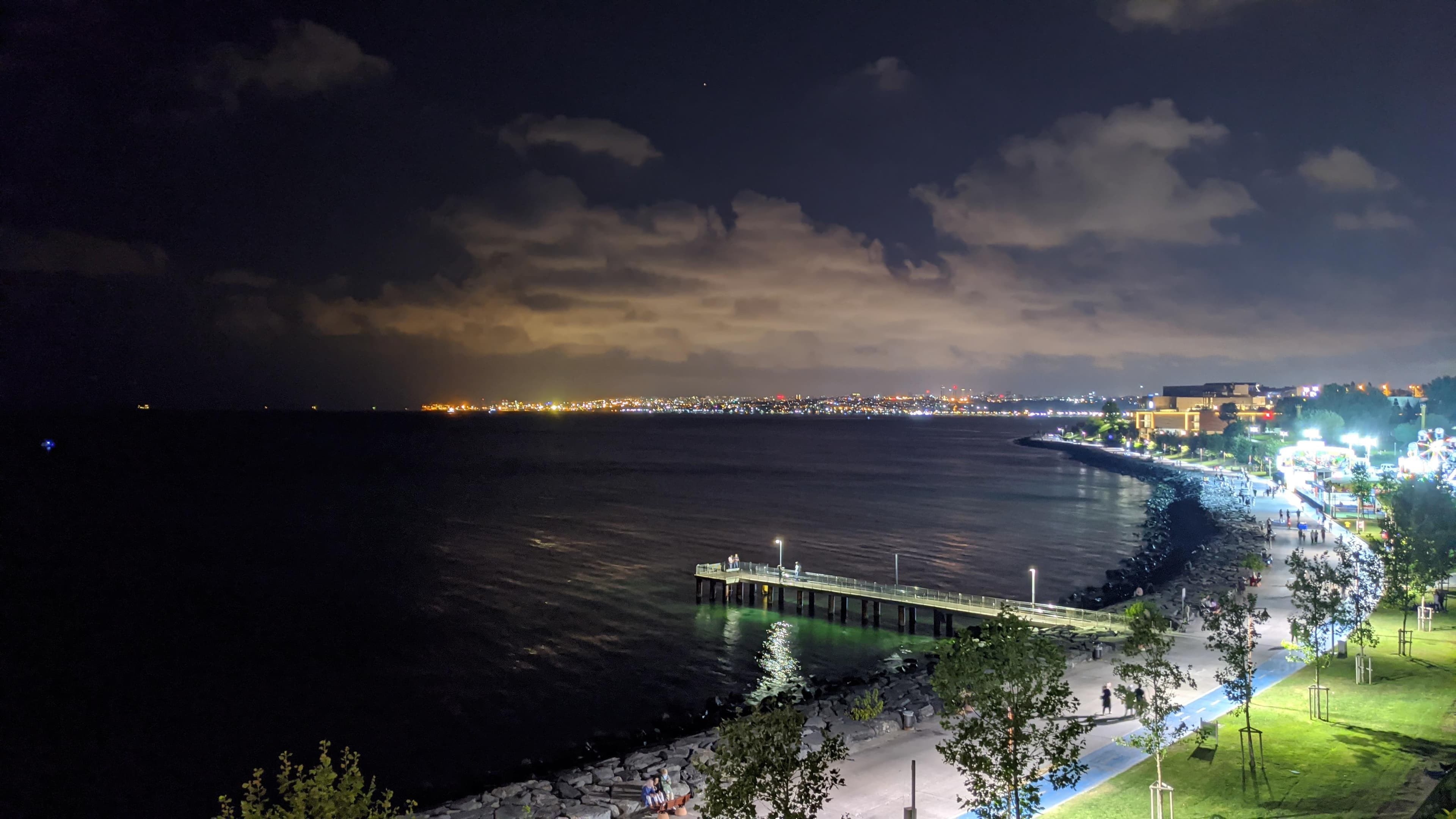
Istanbul at night is different from Istanbul in daylight. The mosques are illuminated from below, the minarets glowing against a dark sky, the geometric lanterns along the old walls lit in warm orange. The waterfront restaurants fill up after ten. Fish comes grilled, in newspaper, with bread. The tea glasses are small and very hot. The Bosphorus is black and moving and full of lights from the tankers passing through.
I found a spot on the Galata Bridge — the bridge across the Golden Horn, always full of fishermen — at around eleven at night. The skyline behind me: Süleymaniye Mosque on its hill, the minarets of the old city, the lit cranes of the port in the distance. In front: the fish restaurants along the bridge, the sound of the water, the slow lights of a ferry crossing. Istanbul does not go quiet. It just changes register.
Food and Drink
Turkish breakfast is the meal to organise your days around. A proper one — at a good lokanta or a hotel that does it correctly — is a spread: white cheese, olives, tomatoes, cucumbers, eggs prepared several ways, honey and clotted cream, bread warm from the oven, tea in a tulip glass. It takes an hour. This is intentional. Start slow and the rest of the day makes more sense.
Simit — the sesame-crusted ring bread sold from carts — is the street food that earns its reputation. Eat it warm from the cart, not from a packet. Baklava: avoid the tourist shops on Divan Yolu and go to a pastanesi in Karaköy that sells it by weight. The pistachio baklava from the southeastern tradition, drenched in syrup, is nothing like what arrives at most restaurants in Europe claiming to be baklava.
Istanbul's food is as layered as the city itself. A döner carved fresh off the spit and folded into bread — simple, perfect, eaten standing on the pavement. Lahmacun rolled with parsley and lemon, a thing so good it barely needs explaining. Kebap in its dozen regional forms, each neighbourhood seeming to have its own allegiance. You could eat your way through Istanbul for a week and not repeat yourself once. The city is a crossroads of every culture that ever passed through it, and the food is where you taste that most directly.
Photography Notes
The Blue Mosque at seven in the morning, before the groups arrive. The ferry light — soft, directional, the kind that falls on faces in ways that make photographs look like paintings. The interior of the mosques is challenging: no tripods, limited light, other visitors. A fast prime lens and patience with the existing light works better than anything else.
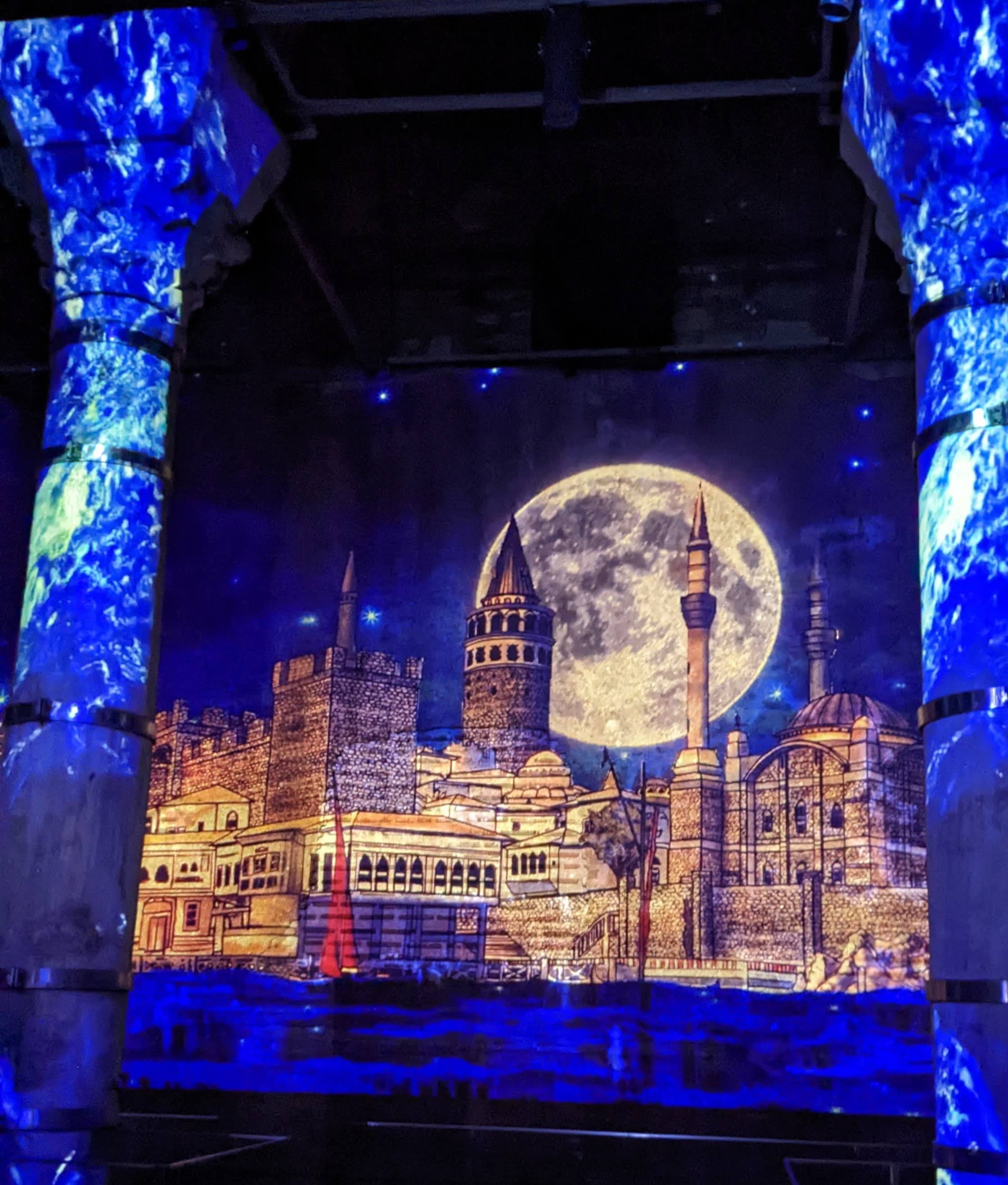
The Galata Tower gives a view over the Golden Horn and the old city that explains the layout of everything. Go late afternoon, when the light comes from the west and the minarets cast long shadows. The Bosphorus from the ferry is a different shot entirely: moving water, two shores, the bridges in the background. Shoot toward the bridges from the water and you get the geography in a single frame.
Between Two Continents