Granada: The Alhambra at First Light
Nasrid palaces, the Sierra Nevada behind, and a hilltop neighbourhood that has watched the palace for five hundred years
You book the Alhambra months in advance or you don't see the Nasrid Palaces. This is the fact around which every visit to Granada must organise itself. Timed entry to the palaces is strict — you must arrive within your thirty-minute window and your ticket is non-transferable — and the morning slots sell out within hours of becoming available. I booked three months before, got the first morning entry at 8:30, and it was worth every complication of planning.
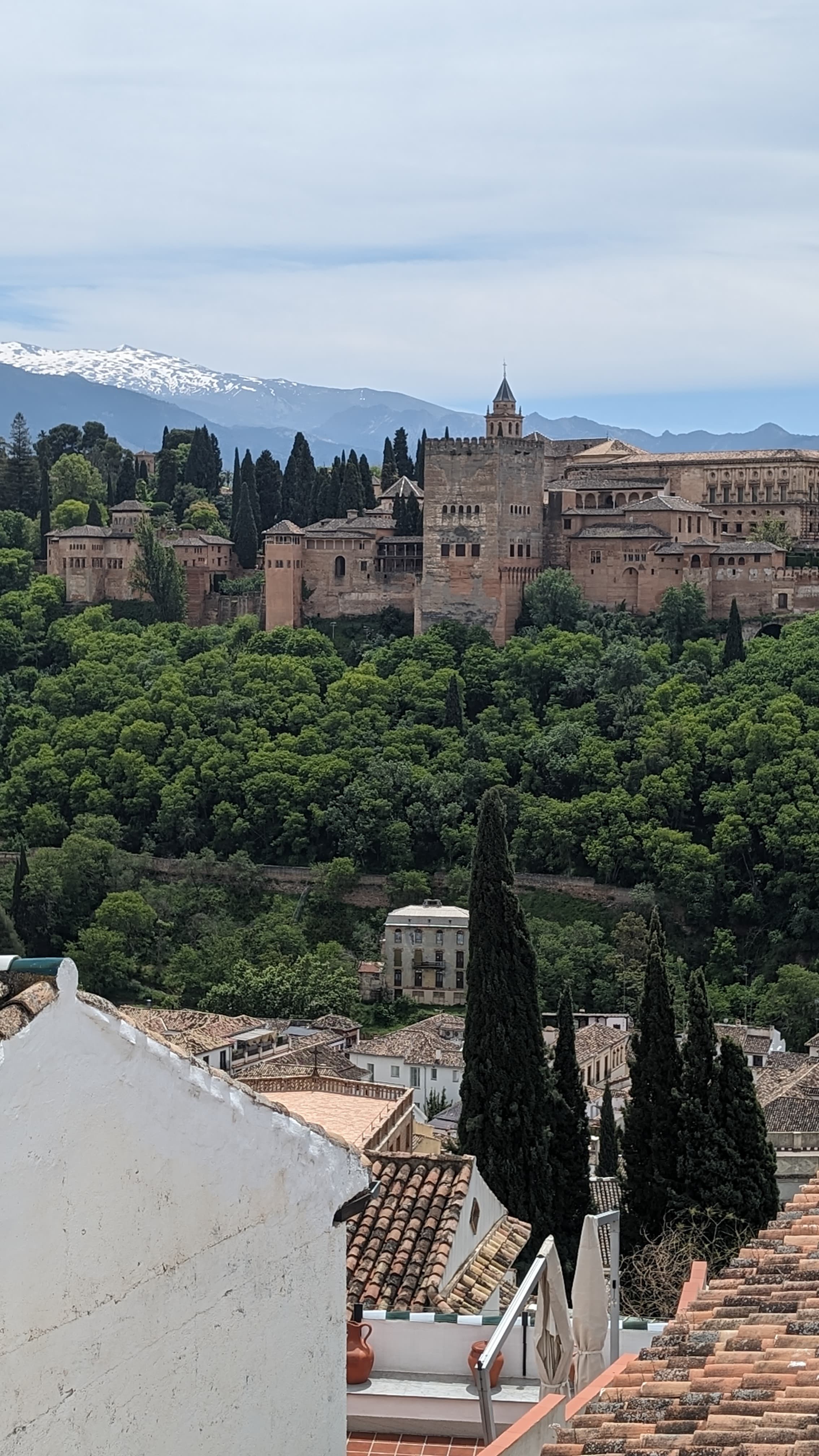
The palace complex at eight-thirty in the morning: cool air coming down from the Sierra Nevada, which rises directly above and still has snow in April, the gardens not yet warm, the light at a low angle that makes the carved plaster surfaces read with extraordinary depth. The Alhambra is built on a plateau above Granada, and from its gardens the city is spread below, and to the south the snow-covered peaks of the Sierra Nevada close the view. The setting is exceptional. The building earns it.
The Nasrid Palaces
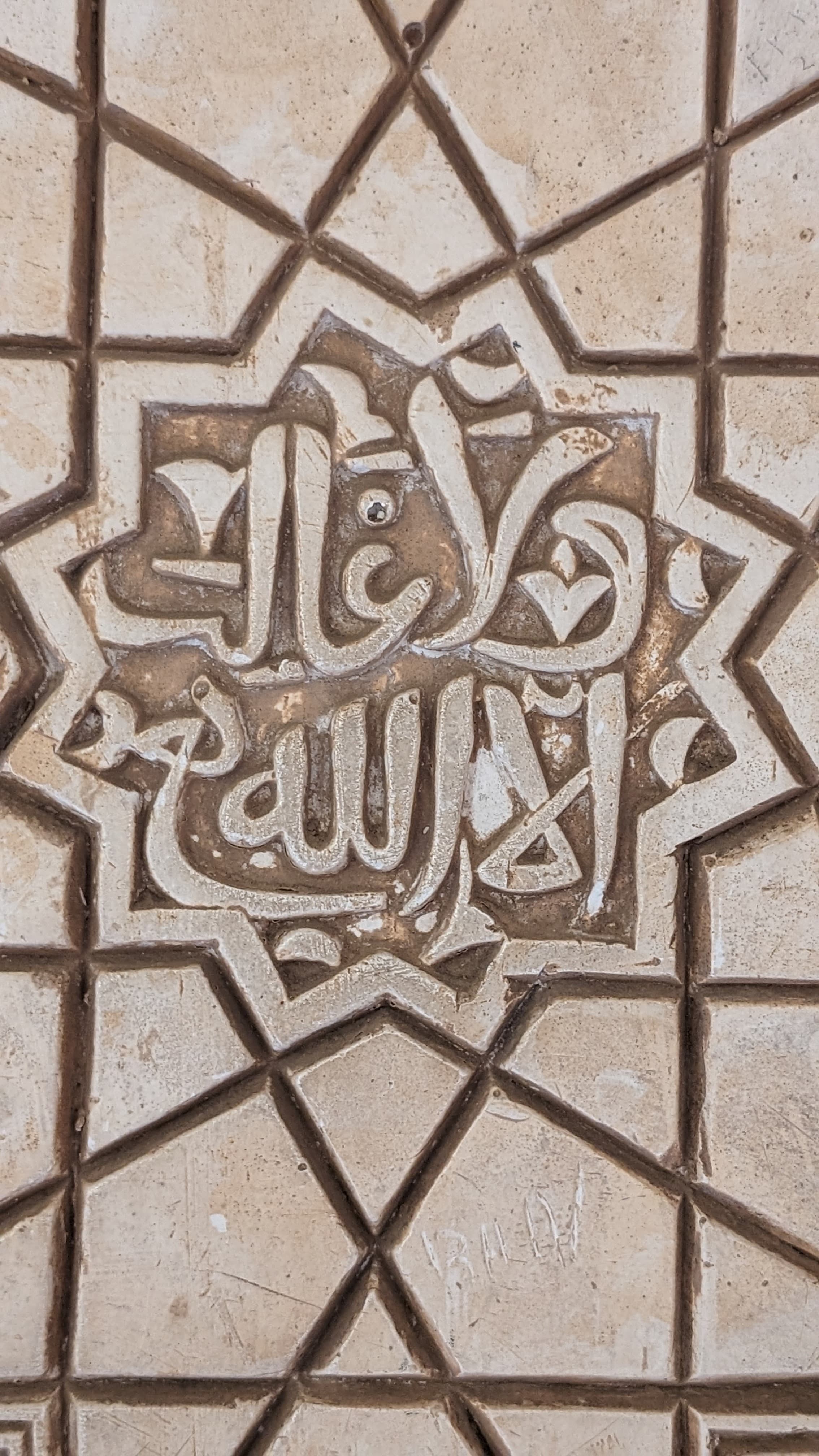
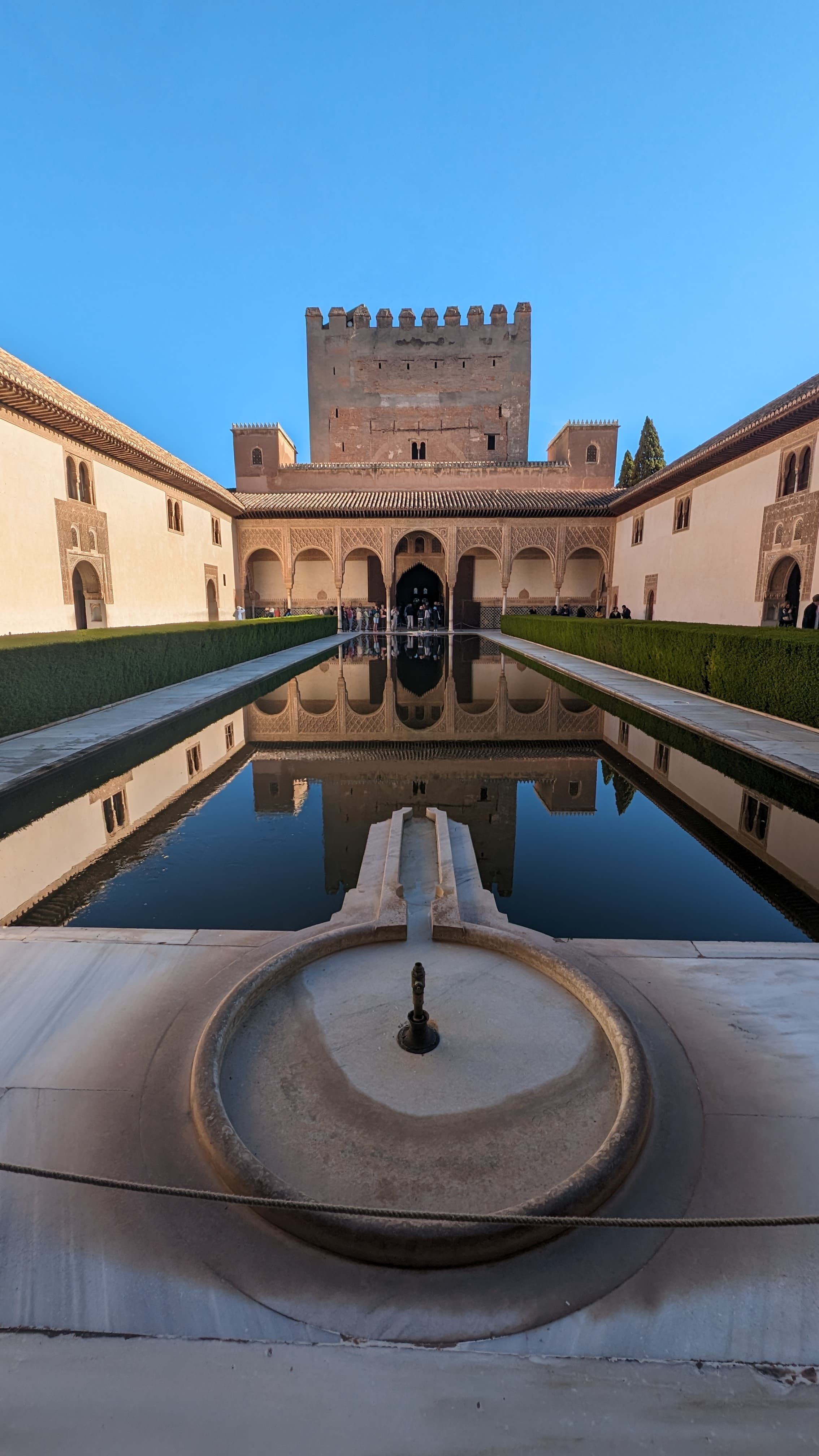
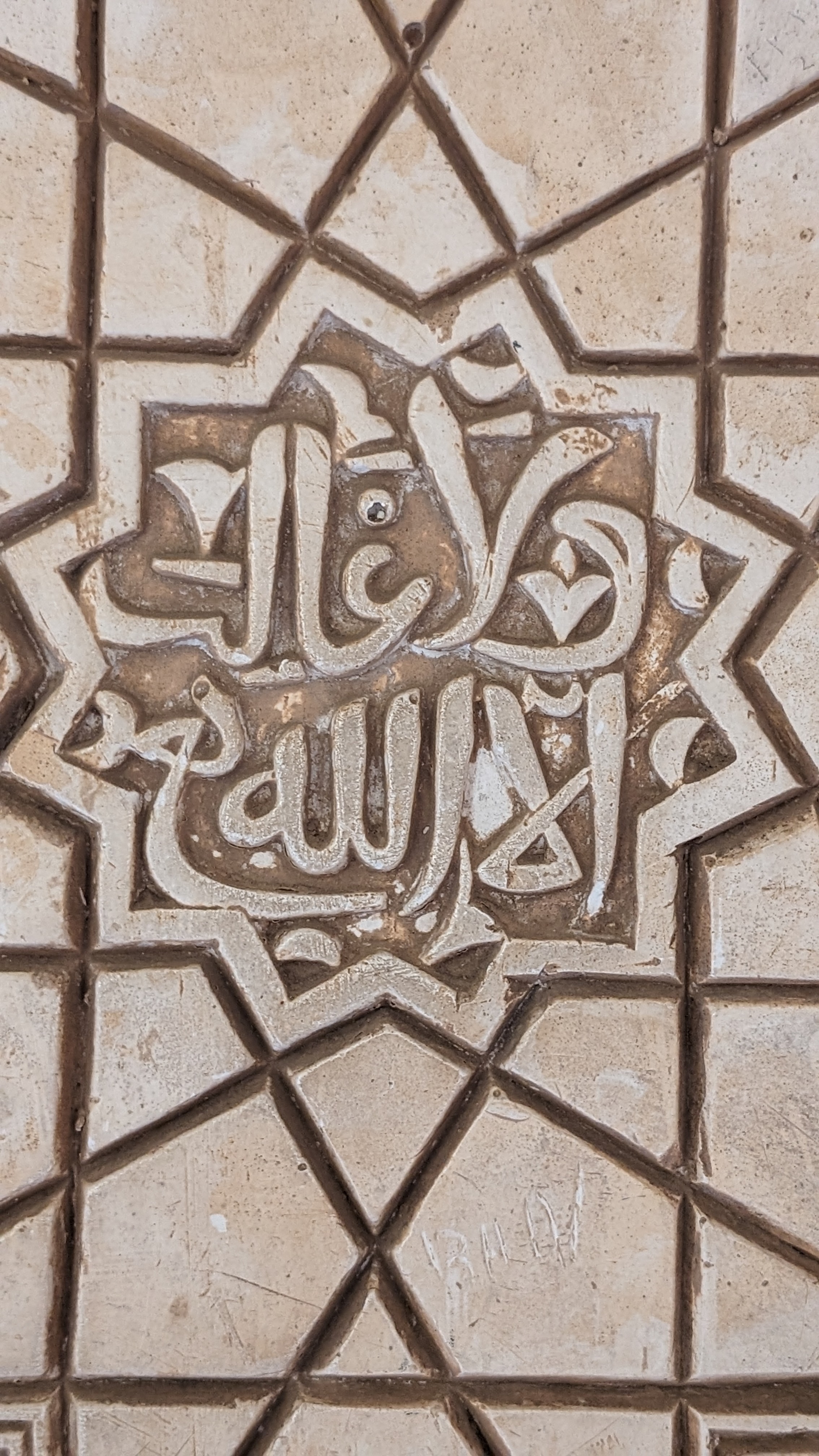
The Nasrid Palaces were built by the Nasrid dynasty — the last Moorish rulers of Granada — between the thirteenth and fifteenth centuries. They are not large palaces by the standards of European royalty. They are instead palaces of extraordinary interiority: rooms whose walls are covered floor-to-ceiling in carved stucco arabesques, calligraphy, and geometric tilework, with carved wooden ceilings above and marble floors below, arranged around courtyards where water runs in narrow channels to pools that reflect the architecture above.
The Hall of the Ambassadors — the throne room — has a wooden ceiling with 8,017 individual pieces forming a geometric pattern that represents the seven heavens of Islamic cosmology. The muqarnas (honeycomb vaulting) in the Hall of the Abencerrajes appears to dissolve the ceiling into geometry. The Court of the Lions — the central courtyard of the royal harem, with its famous twelve-lion fountain — is smaller than photographs suggest but more intricate, the arcades of slender columns supporting stucco screens of a delicacy that seems structural impossibility.
The Albaicín
The Albaicín is the old Moorish quarter of Granada, across a ravine from the Alhambra, a tangle of white-walled lanes climbing a hill above the city. From the Mirador de San Nicolás — a small square at the top with a view back across the ravine to the Alhambra — the palace complex is seen against the Sierra Nevada, the white walls and red towers and the snowy peaks behind. It is one of the great urban views of Europe. The mirador fills with people at sunset. Arrive an hour before and wait. It gets better as the light changes.
The neighbourhood itself is quieter than the Alhambra side: small squares, cave houses in the hills above the main lanes, old Arabic baths (hammams), tea houses. The tea houses are holdovers from the North African immigrant community that settled the Albaicín in the twentieth century and they make excellent mint tea and mediocre pastries. The mint tea is the reason.
Flamenco
Granada has a flamenco tradition connected to the gitano community of the Sacromonte neighbourhood — the cave district above the Albaicín where gitano families have lived for centuries. The cave flamenco shows (zambras) are commercial and designed for tourists and also sometimes genuinely extraordinary. The singers especially. Ask at your accommodation for a recommendation rather than booking the first one on a booking platform. The variation in quality is significant.
The Last Kingdom