Erzurum: High and Cold and Completely Itself
Seljuk architecture on the Anatolian plateau, the original döner, and a city that does not perform for tourists
The altitude hits you first. Erzurum is one of the highest cities in Turkey — 1,860 metres — and the plateau it sits on is genuinely vast: flat land stretching to distant mountains in every direction, a sky that seems wider than usual, air that is thinner and cleaner than the coast and carries a cold edge even in summer. In winter the snowfall is deep and the temperature drops far below zero. The city has been shaped by this environment for centuries into something hard and self-sufficient.
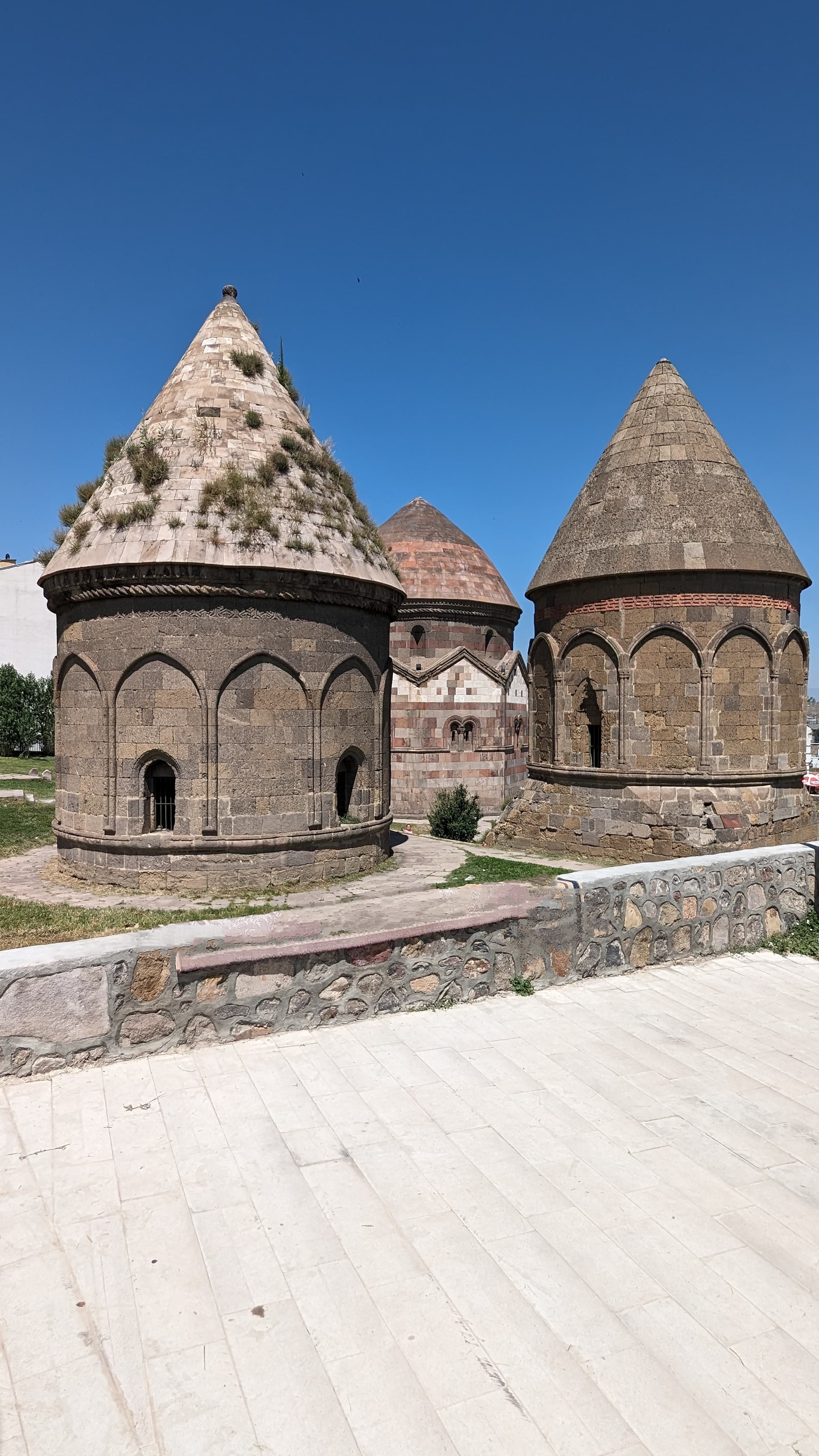
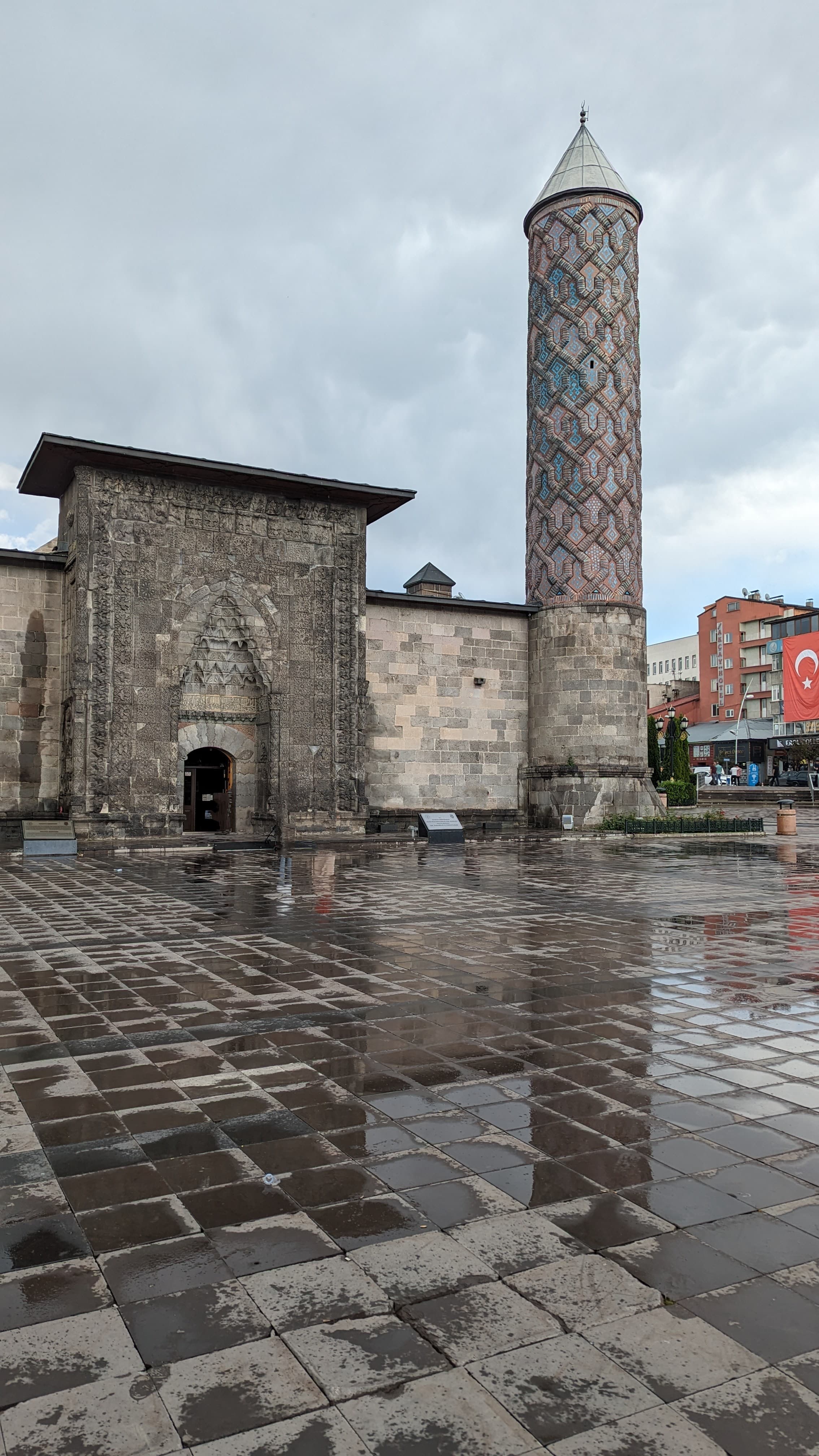
It is not a tourist city. There is no bazaar designed for visitors, no rooftop bar with a view. What there is: some of the finest Seljuk architecture in Anatolia, a food culture that is unique and unapologetic, and a quality of everyday life — the tea houses, the craftsmen's workshops, the markets — that feels completely undiluted by outside influence.
The Çifte Minareli Medrese
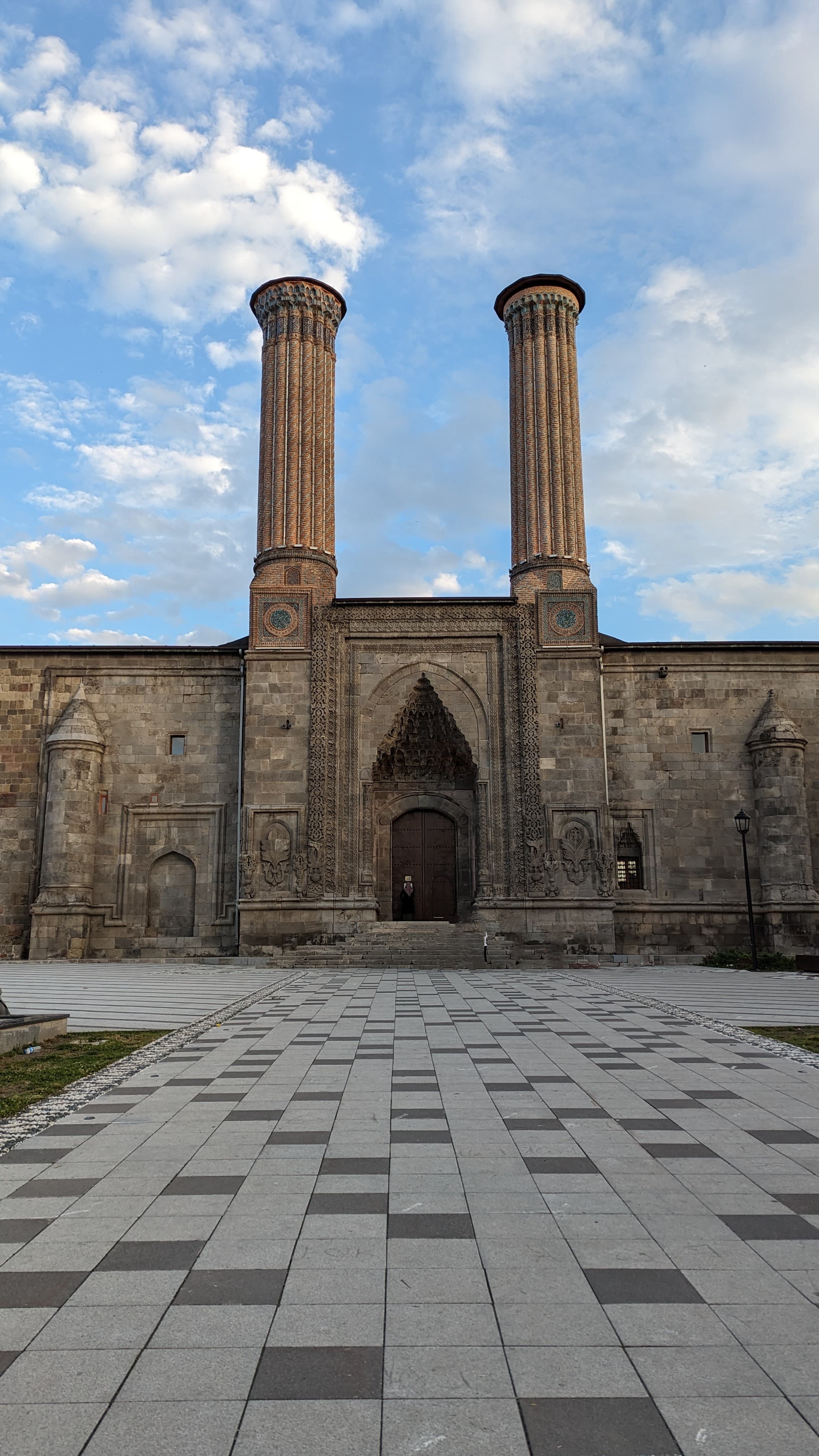
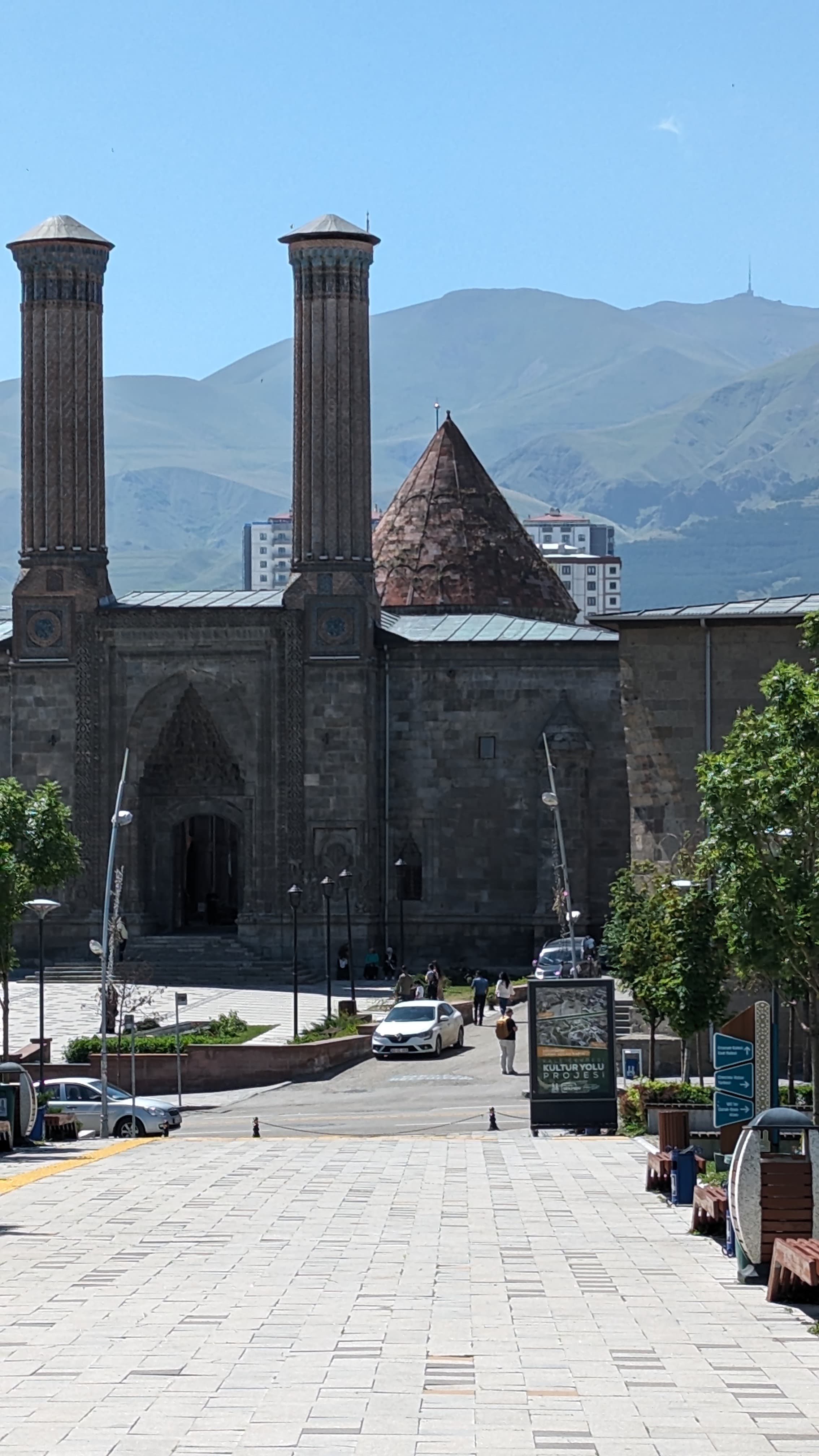
The Çifte Minareli Medrese (Twin Minaret Medrese) was built in 1253, during the height of Seljuk power in Anatolia. The portal is the thing: a monumental stone gateway carved with an intensity of geometric and vegetal ornament that is difficult to process all at once. Muqarnas, knotwork, arabesque, calligraphy — all compressed into a facade that is somehow both overwhelming and perfectly composed. The twin minarets rise above, their turquoise tile decoration mostly intact after eight centuries.
The medrese itself is now a museum of Anatolian crafts. The courtyard is open to the sky and the proportions are simple and satisfying after the extravagance of the portal. The carved details in the courtyard arcade repay close inspection: the craftsmen who made this were working at the peak of a tradition and they knew it.
Cağ Kebabı
Cağ kebabı is the argument for coming to Erzurum regardless of the architecture. It is, arguably, the original döner kebab — marinated lamb on a horizontal spit, cooked over wood fire, sliced to order and brought to the table on a skewer with flatbread and onion. The horizontal spit means the meat is cooked differently from a vertical döner: the fat runs across rather than down, the smoke is more direct, and the flavour is smokier, more intense, more lamb-forward than anything you will eat anywhere else.
The best places to eat it are the specialised cağcı restaurants in the old city. Order by skewer. The bread is freshly baked, the onions are finely sliced with sumac, and there will be an ayran so thick it arrives in a bowl rather than a glass. This is a serious meal for serious weather.
Oltu Taşı
Erzurum has its own gemstone, in a manner of speaking: oltu taşı, a black lignite coal that polishes to a deep lustrous black and has been carved here into jewellery and prayer beads for centuries. The workshops are mostly in the bazaar area and you can watch the craftsmen at work — grinding, shaping, polishing the dark stone into rings, tesbih (prayer beads), and brooches. The finished pieces are inexpensive and genuinely beautiful and are not available anywhere else.
The Plateau in Winter
Palandöken, the ski resort directly above the city, is one of the best in Turkey — high, reliable snow, long runs, relatively uncrowded by European standards. But the plateau in winter is also just striking as landscape: the road east from Erzurum, the fields white, the mountains blue in the middle distance, the sky an immense cold clear blue above. The scale of it doesn't feel Turkish. It feels like the edge of Central Asia, which geographically and historically it more or less is.
The High Plateau