Diyarbakır: The Basalt City on the Tigris
Black walls, an ancient Kurdish city, and a bend in the Tigris that has been a crossing point for five thousand years
The walls are the first thing. They encircle the old city for six kilometres, built from the black volcanic basalt that the Romans quarried from the plateau, and they are in a state of preservation that seems improbable for a fortification this old. UNESCO added them to the World Heritage List in 2015. But the walls are not a monument in the sense of being apart from the city: people live against them, shops open in their base, children play on the earthworks. The ancient and the present are here in the same frame, as they always are in Diyarbakır.
The city sits on a basalt plateau above a bend in the Tigris. The river has been the reason for the city since the Hurrians settled here in the second millennium BC, and the view from the old city walls to the river below — the Tigris running brown and wide through the valley, the Hevsel Gardens green in the floodplain — is one of the defining views of eastern Turkey.
The Old City
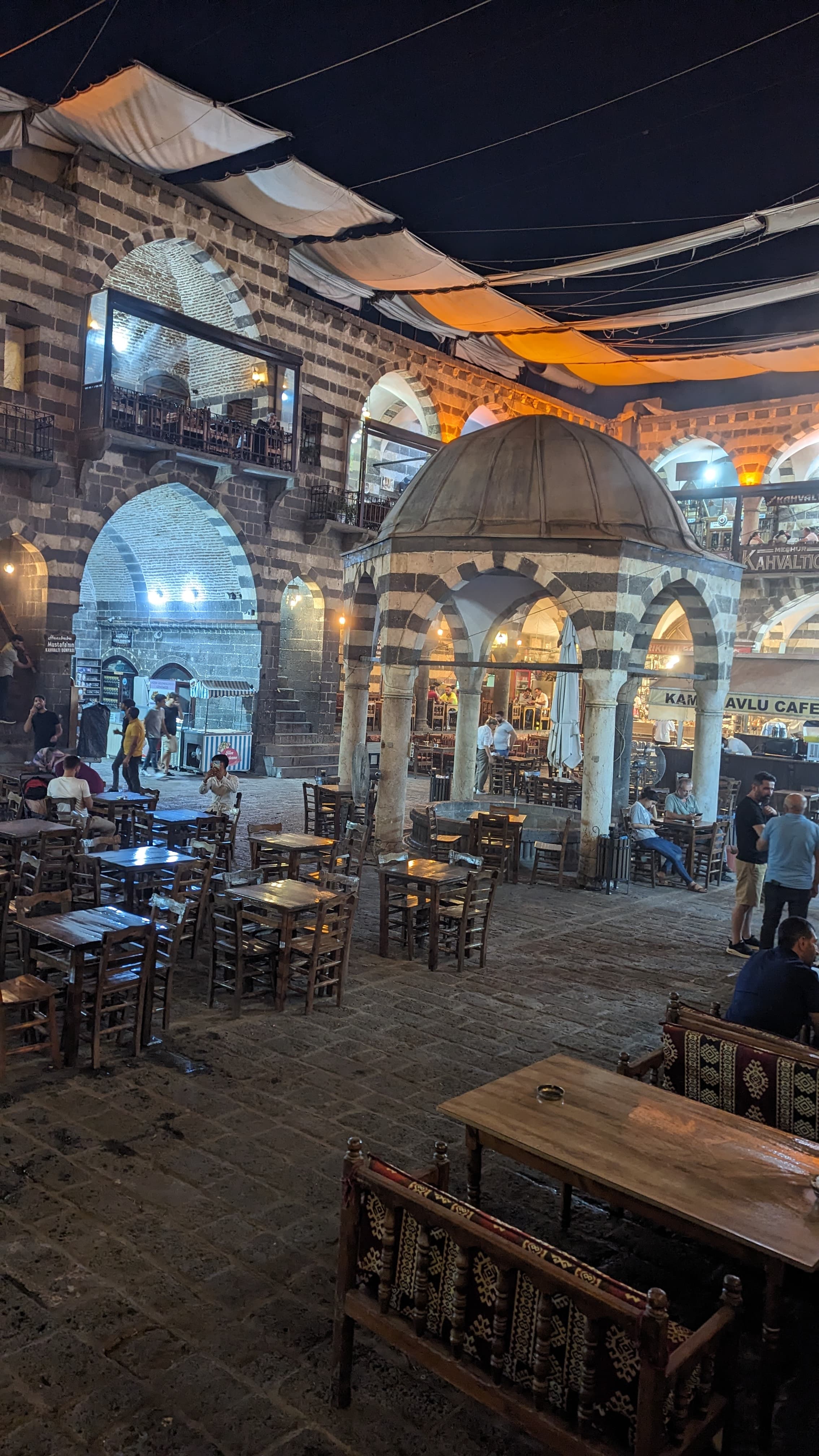
Inside the walls, the old city is a labyrinth of narrow basalt-paved lanes, courtyard houses, mosques, churches, and hans (caravanserais). The stone is black everywhere — the walls, the paving, the house facades — and in full sun the heat it absorbs and radiates is considerable. But in the shade of a courtyard, at the centre of one of the old hans, you find a coolness and a quiet that is architectural: the high walls block the wind, the stone holds the cold of the night, the fountain (where there is one) moderates the air.
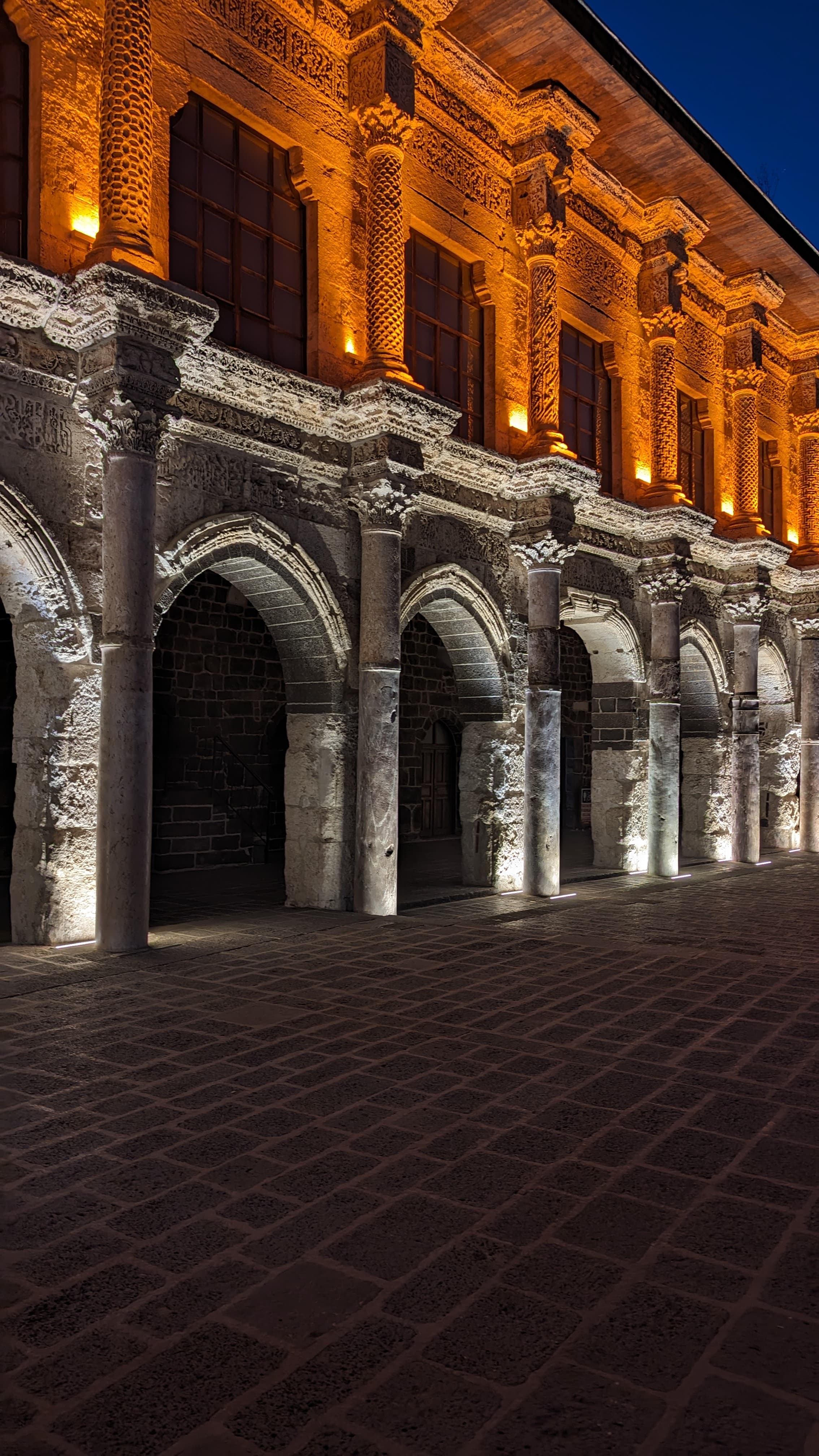
The Ulu Cami (Grand Mosque) is the oldest mosque in Anatolia, converted from a Byzantine basilica in the eleventh century. The courtyard is large and calm. The colonnaded arcade uses columns from much older buildings — Roman, possibly older — and the effect is of a building assembled across centuries from whatever was available, which is exactly what it is.
Syriac Christianity
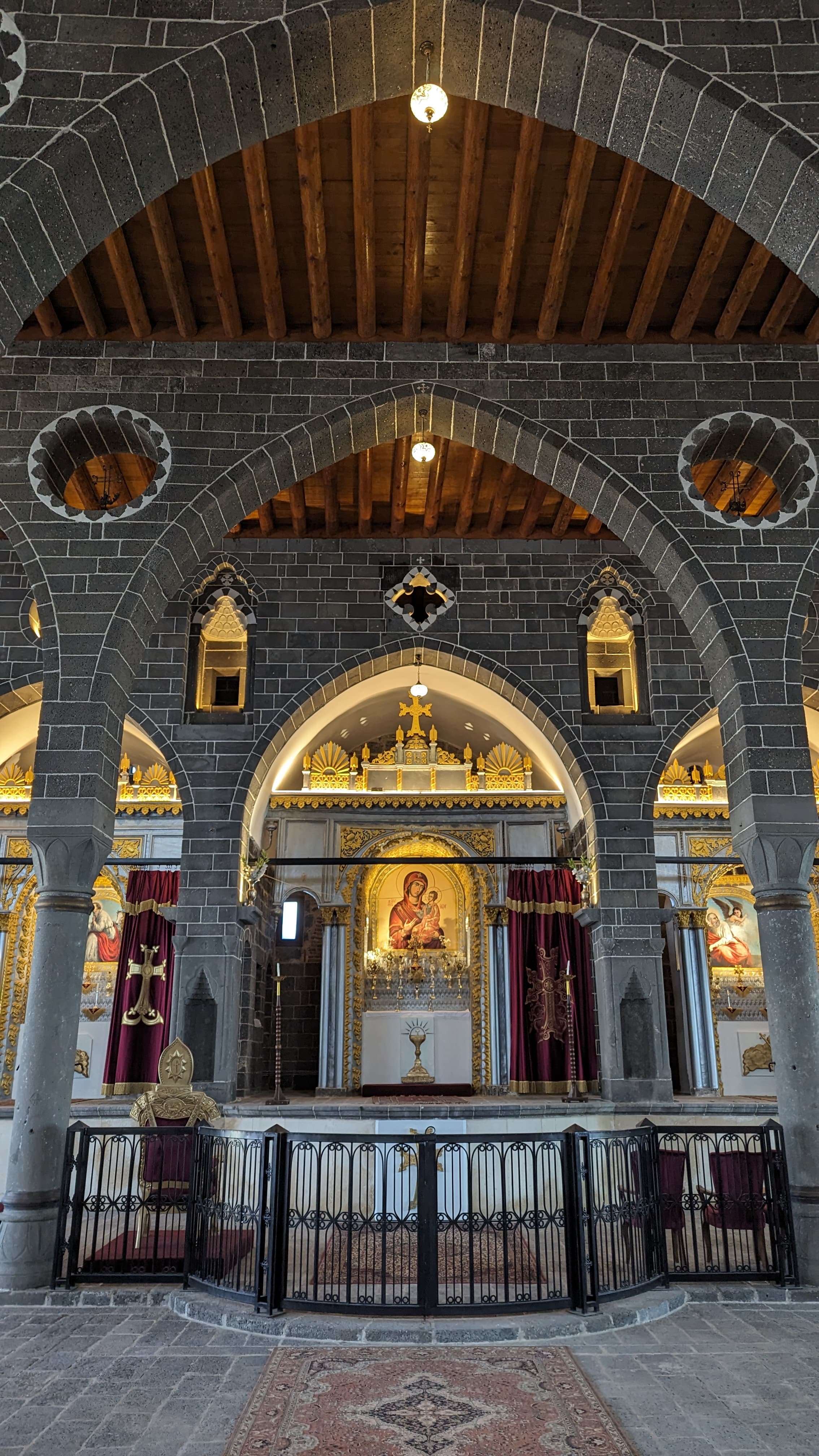
Diyarbakır has been home to a Syriac Christian community since the earliest centuries of Christianity, and several old churches survive in the old city. The Surp Giragos Armenian Church — the largest Armenian church in the Middle East — was heavily damaged in 2015–16 but has been partially restored. The Syriac Orthodox Mor Petyun church is smaller and quieter and still holds services.
To visit these churches is to understand something about the layering of this city: Kurdish, Arab, Syriac Christian, Turkish, Armenian — the identities have coexisted, sometimes violently, and the buildings are the evidence of the long periods when coexistence was the norm rather than the exception.
The Food
Diyarbakır watermelons are famous throughout Turkey — the soil and climate of the Tigris plain produce a fruit with an intensity of sweetness that has made them a point of regional pride for centuries. They are sold from the back of trucks in season and eaten communally, in large slices, with no ceremony.
İçli köfte — cracked wheat shells stuffed with spiced minced lamb and walnuts, fried until crisp — are excellent in Diyarbakır. Kaburga is the city's great feast dish: a whole ribcage of lamb stuffed with rice, herbs, and spices, slow-cooked until the meat falls from the bone. It requires advance ordering and a group of four or more people and is one of the best things you can eat in Turkey if you plan ahead.
The Hevsel Gardens
Below the walls on the Tigris side, the Hevsel Gardens are a strip of agricultural land that has been continuously farmed for eight thousand years — one of the oldest agricultural sites in the world. They were added to the UNESCO listing alongside the walls. Walking down to them from the city walls, through the orchards and vegetable plots where families still grow food as their ancestors did, is the best way to understand the relationship between this city and its river.
The Black City