Bodrum: Aegean Light, Ottoman Castle
Whitewashed lanes, a crusader fortress rising from the harbour, and the Aegean in every direction
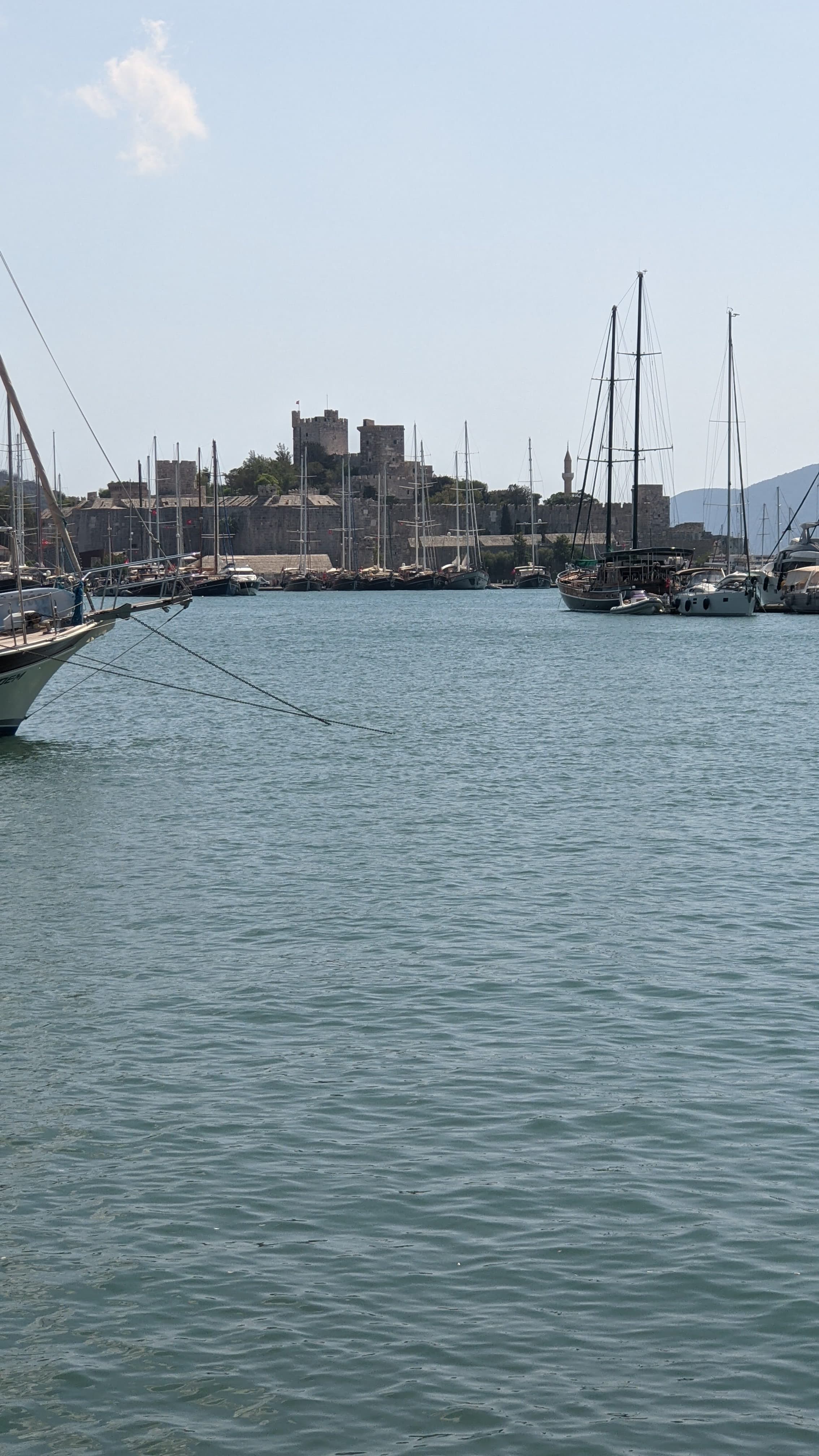
Bodrum's reputation is summer nightlife and package holidays, which is accurate as far as it goes and also somewhat beside the point. The city has been here in various forms since the fifth century BC — as Halicarnassus, birthplace of Herodotus, site of one of the Seven Wonders of the Ancient World. The Mausoleum of Halicarnassus — the original mausoleum, from which all subsequent mausoleums take their name — stood here until the medieval period. The castle of St Peter, built by the Knights Hospitaller from its stones, still stands on the harbour headland.
I arrived in September 2021, just past peak season when the prices drop and the crowds thin but the sea is still warm. The whitewashed houses with their bougainvillea and blue shutters are not an affectation — they're the actual building tradition of this part of the Aegean, and against the blue of the sea and sky they look exactly like they're supposed to look.
The Castle of St Peter
The castle is the reason to come, or at least one of them. Built by the Knights Hospitaller from 1402 onwards using stones from the Mausoleum of Halicarnassus, it's architecturally interesting as a crusader fortress and also houses the Museum of Underwater Archaeology — one of the finest of its kind in the world, with wrecks spanning 3,500 years of Aegean seafaring, including the oldest known shipwreck ever excavated. The bronze-age Uluburun wreck, discovered off the Bodrum coast in 1982, is here: cargo from Egypt, Cyprus, Canaan, a world of Bronze Age trade visible in a single hold.
The Town and the Harbour
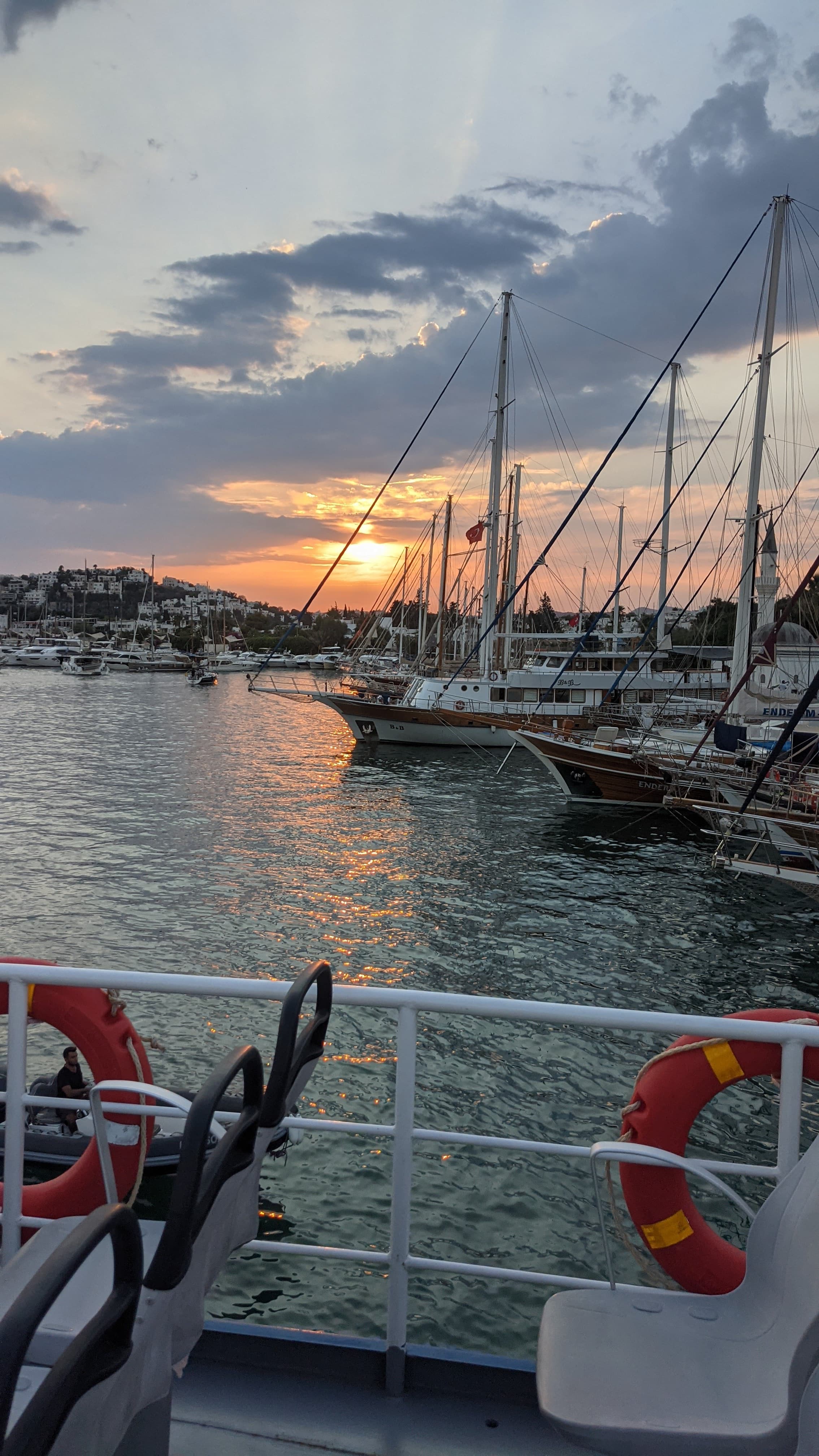
The old bazaar around Neyzen Tevfik Street is worth a morning — dried fruits, spices, local olive oil, the usual excellent Turkish breakfast supplies. The waterfront at dusk fills with people regardless of season. The gulet boats — traditional Turkish wooden sailing vessels — line the marina, some available for day trips to the nearby coves and peninsulas. The sea is genuinely turquoise close to shore and deepens to a dark blue offshore that rewards any amount of staring.
Bodrum