Berlin Is Still Becoming
History, reinvention, and a city that refuses to be finished
Berlin is the only city I've been to where the history is not in museums or designated heritage zones — it's in the pavement, in the layout of the streets, in the empty lots that have been empty since 1945. You don't go to a specific building to understand what happened here. You just walk, and the city tells you.
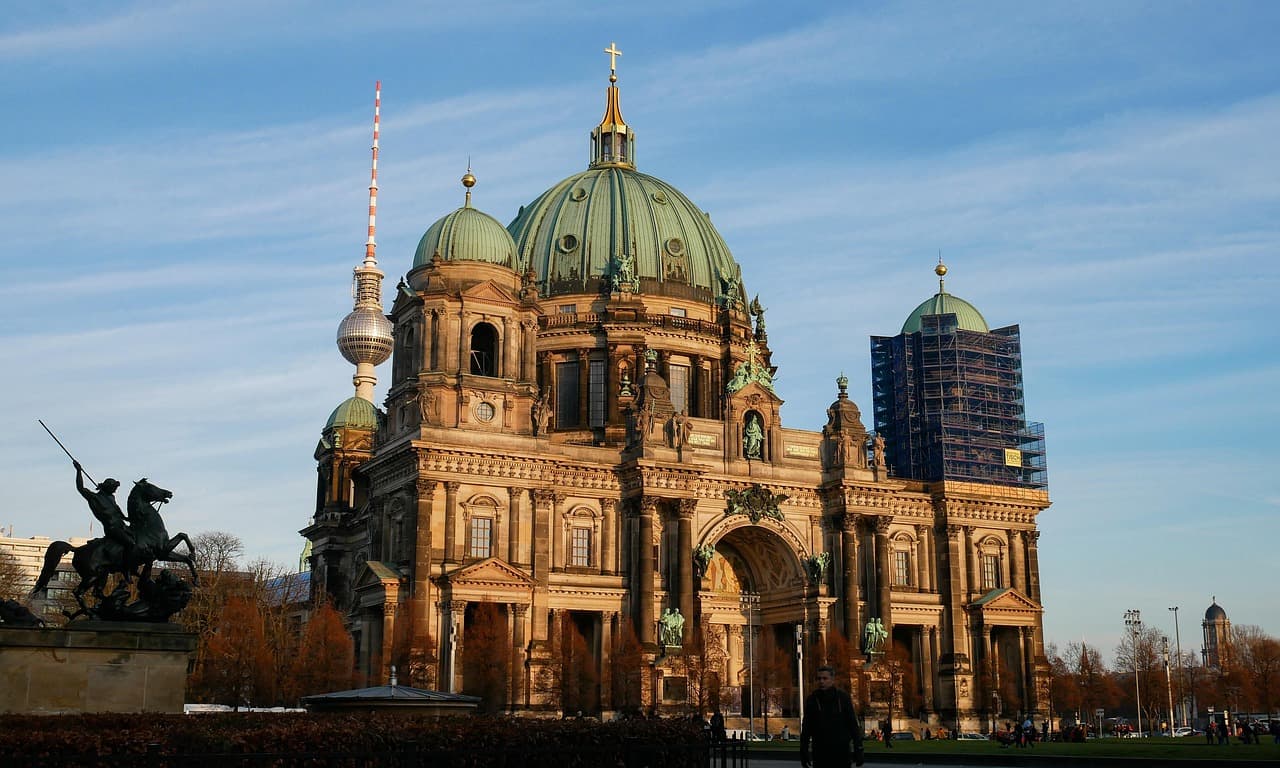
I arrived in early October, which turned out to be perfect. The trees along Unter den Linden were turning gold, the tourist numbers had dropped from summer peaks, and the city had settled into the working rhythm that feels more honest than the festival-season version. Berlin in October is a city going about its life, and going about its life is what Berlin does better than almost anywhere.
The Wall and What Came After
The Berlin Wall fell in November 1989. In the years that followed, most of it was demolished — people wanted it gone. What remains exists mostly as memorial and museum. The East Side Gallery on the Mühlenstraße is the longest surviving section: 1.3 kilometres of the original Wall, painted by artists from around the world in 1990. The images have faded over thirty years, repainted and repainted again, and there is something about the fading that is more honest than if they'd been preserved perfectly.
The Memorial to the Murdered Jews of Europe, near the Brandenburg Gate, is one of the most effective pieces of memorial architecture I've encountered. It's not a building or a plaque — it's a field of 2,711 concrete stelae of different heights, arranged on gently undulating ground. You enter from the perimeter and the stelae rise around you. The effect is disorienting and then settling. There is nothing to read. You are just there, with the space.
Museum Island and the Collections
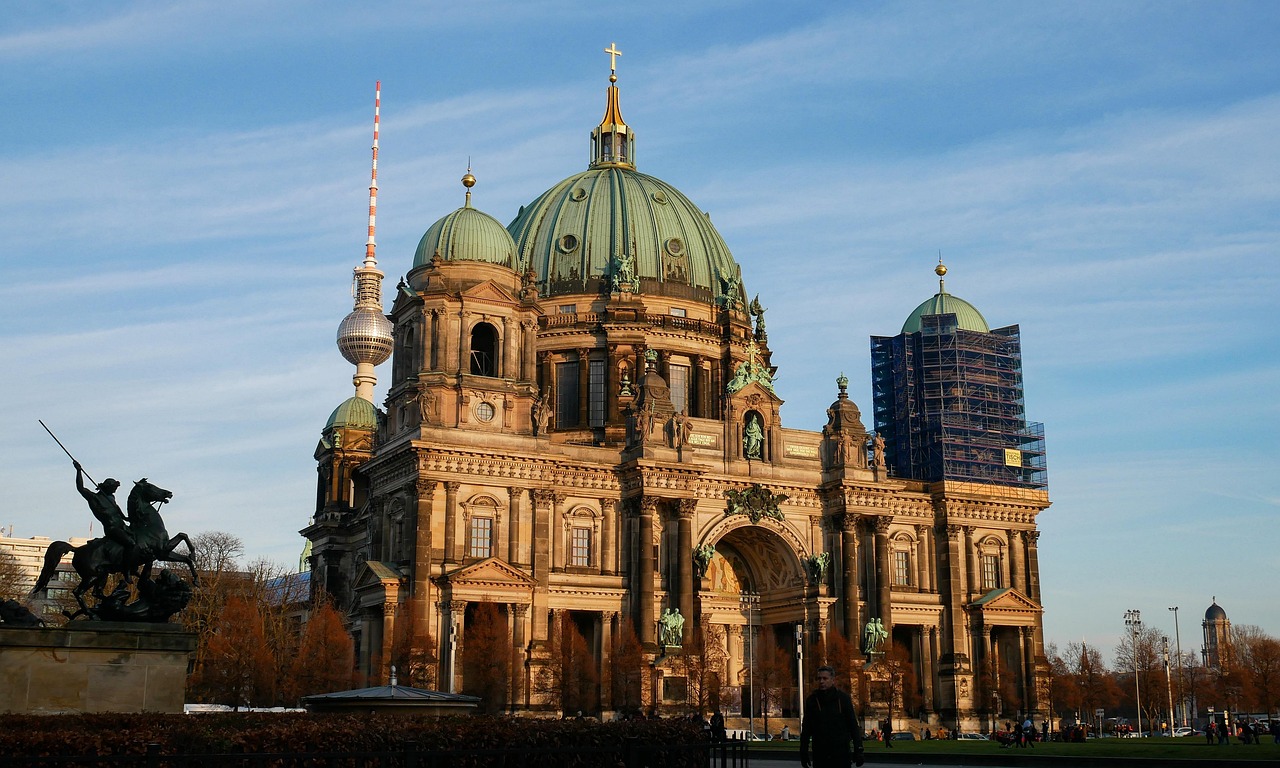
Museum Island is a UNESCO site — five museums on an island in the Spree, containing some of the most significant archaeological collections in the world. The Pergamon Museum holds the Pergamon Altar (partially closed for renovation) and the Ishtar Gate of Babylon, reconstructed from the original glazed bricks excavated in Iraq in the early twentieth century. The gate is blue — a deep lapis blue — and walking through it is the closest you'll get to ancient Mesopotamia outside the region.
The Neues Museum has the bust of Nefertiti, which is smaller than you imagine and more arresting than any photograph has ever communicated. The left eye is the original inlaid eye. The right eye was never filled in — no one knows why — and the asymmetry gives her a living quality that makes the 3,300 years between her and you briefly irrelevant.
The Neighbourhoods
Prenzlauer Berg was East Berlin's bohemian quarter; it's now heavily gentrified, all coffee shops and playgrounds, but still beautiful in the way that tree-lined streets and late-19th-century apartment buildings are reliably beautiful. Kreuzberg is where the counterculture went — the Turkish market along the Landwehrkanal on Tuesdays and Fridays, the independent music venues, the street art. Mitte is the historic centre. Friedrichshain has the East Side Gallery and a lot of clubs you need a specific invitation to enter.
Berlin contains all of them at once. That's the thing about it: it has room. The city is twice the size of Paris by area, with a third of the population. There is space to breathe, space to experiment, space to fail and try again. That spatial generosity is what allows the reinvention to keep happening.
Berlin