Barcelona: The City That Built Its Own Language
From the spires of the Sagrada Família to the narrow lanes of the Gothic Quarter — a city that insists on being itself
You land expecting Gaudí. You leave thinking about everything else.
Not that the Sagrada Família doesn't deserve its reputation — it does, and then some. But Barcelona has a habit of upstaging its own landmarks. You turn down a side street in the Gothic Quarter and find a Roman wall from the second century, half-absorbed into the back of a pharmacy. You sit down for lunch at a bar that's been there since the Civil War and realise the anchovies are among the best things you've ever eaten. The city keeps pulling focus.
I arrived in February, when the tourists have mostly left and the light goes golden by four in the afternoon. The Ramblas were nearly empty, which is the only way to walk them — without the luggage thieves and the human statues, it's actually a pleasant boulevard. Wide, plane-tree-lined, leading inevitably to the sea. Columbus points toward it from his column, though famously in the wrong direction. Barcelona would rather look outward than be corrected.
The Gothic Quarter on Foot
The Barri Gòtic is dense and disorienting in the best way. Streets that were laid down before maps fold back on themselves; you plan a route and abandon it within five minutes. The Plaça de Sant Jaume sits at the ancient crossroads of the Roman city, now flanked by the Generalitat and the city hall, two institutions that have been arguing about Catalan independence for most of living memory. The tension is part of the texture of the place.
I walked the quarter for two mornings. The first morning I got lost constantly. The second morning I got lost intentionally. There's a difference — by the second day you trust the city to put something interesting around every corner, and it always does. A courtyard with an orange tree, a medieval bridge overhead, a bookshop so small there's only room for one customer at a time.
Eixample and the Modernisme Trail
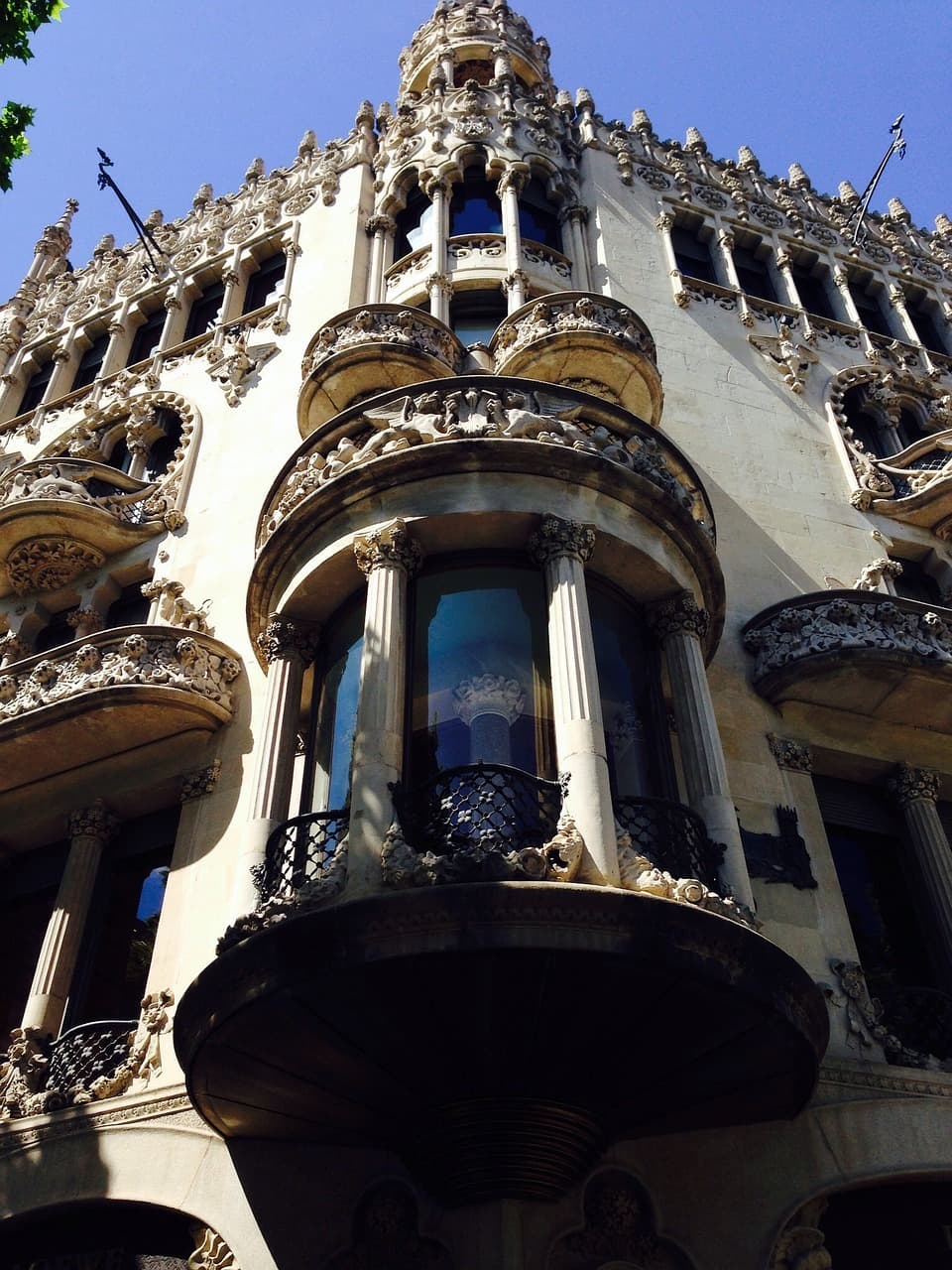
The Eixample district — the grid built when Barcelona expanded beyond its medieval walls in the 1860s — is where modernisme lives. Not just Gaudí, though the Sagrada Família stands at its northeast corner like a thesis statement. Casa Batlló and Casa Milà face each other along Passeig de Gràcia; walking that stretch is like watching two architects have a very polite competition to see who could make stone look most alive.
The Sagrada Família is worth every cliché written about it. Gaudí died in 1926 with the building unfinished; construction continues today using his plans and models, now supplemented by computer modelling. The interior is extraordinary — sixteen columns that branch at the top like stone trees, the nave flooded with coloured light from the stained glass, a space designed to feel like a forest. It does. I sat inside for forty minutes and didn't want to leave.
Barceloneta and the Waterfront
The beach neighbourhood of Barceloneta was built in the 18th century to house people displaced when the Ciutadella fortress was constructed. It retained its working-class character until well into the 20th century, and then the 1992 Olympics happened and the waterfront was remade. The result is a curious blend: older residents in narrow buildings on streets barely wide enough for two people, and a long beachfront promenade that now draws most of the city's tourism.
In February the beach was nearly deserted. A few joggers, a few dog walkers, an elderly man reading the newspaper in a folding chair with his shoes off. The water was too cold to swim but very blue. The Frank Gehry fish sculpture caught the afternoon light. I ate a plate of gambas al ajillo at a restaurant on the beach and watched a cargo ship move slowly toward the port. Barcelona felt, in that moment, like a city that had nothing to prove.
Food, Slowly
Barcelona eating is not fast. It can't be. Lunch is the main meal, taken from two to four in the afternoon; dinner doesn't start until nine and is usually still going at eleven. The rhythm requires adjustment for anyone used to eating on a timetable. Once you adjust, you understand why Barcelonans seem so relaxed — their days are built around the pleasure of slowing down.
I ate at the Boqueria market twice: once for breakfast (a tortilla slice and a coffee standing at the bar) and once to buy ingredients that I never ended up cooking because I kept stopping to eat at bars instead. Pa amb tomàquet — bread rubbed with tomato and olive oil — came with everything and made everything better. The cava was cheap and very good. The local vermouth, served with an olive and a slice of orange, became a daily ritual by day two.
Barcelona doesn't let you stay neutral either. You arrive expecting monuments and leave with a specific sense of a city that has decided, over a very long time, exactly what it wants to be — and kept choosing it again.
Barcelona