Ankara: The Capital That Means Business
A purposeful city in central Anatolia, where the Museum of Anatolian Civilizations holds more ancient history than most countries can claim
Ankara is misunderstood from the outside and appreciated from within. Most people pass through expecting a grey administrative capital — wide roads, government buildings, nowhere to linger. What they find instead is a city that rewards slowness: a 3,000-year-old citadel on a basalt hill, one of the world's great archaeology museums, a restored Ottoman quarter that somehow stayed quiet, and a café culture driven by the largest student population in Turkiye. It moves differently from Istanbul. More purposeful, less performative. That is not a flaw.
I arrived in September 2021, in weather that was still warm enough to walk without a jacket. The city sits on the central Anatolian plateau at about 850 metres elevation, which means summers are hot and dry and winters are genuinely cold. In that shoulder season, the parks were full of families and the outdoor cafés were still serving well into the evening.
The Museum of Anatolian Civilizations
If you go nowhere else in Ankara, go here. The Museum of Anatolian Civilizations occupies a restored Ottoman bedesten and caravanserai in the old citadel district, and inside it contains one of the most important archaeological collections in the world. Not Turkey. The world. The Hittite collection alone — gold jewellery, ceremonial vessels, carved reliefs from the Bronze Age civilisation that ruled much of Anatolia from roughly 1750 to 1200 BC — would be the centrepiece of any European museum. Add the Phrygian artefacts, the Urartian metalwork, the Neolithic figurines from Çatalhöyük, and you have a coherent 10,000-year story of human settlement on this particular piece of land.
The building itself helps. The stone vaulting and the natural light create a meditative quality that modern concrete museum boxes rarely achieve. I spent three hours and still felt I was rushing.
The Citadel, Hamamönü, and the Roman Column
The old citadel district (Kaleiçi) sits on the same basalt outcrop it has occupied for millennia. The walls are partly Byzantine, partly Seljuk, partly Ottoman — a layered record of everyone who ever decided this particular hill was worth holding. Inside the walls, narrow lanes of timber-framed houses run between tea houses where backgammon sets are always in play and the plateau stretches out to the horizon below. It is one of the most unhurried places in any Turkish capital I have visited.
Below the citadel, Hamamönü is a single neighbourhood that could easily fill a morning. The Ottomanera houses along its sloping streets have been meticulously restored, their ground floors turned into cafés, artisan workshops, and small antique dealers. There is nothing forced about it — people actually live here, and the produce sellers and hardware shops coexist with the tourists without tension. A few minutes' walk away, the Column of Julian — a 15-metre Roman pillar erected in 362 AD for the Emperor's visit — stands in a small square as if someone simply forgot to move it. No barrier, no entrance fee, no tour group required.
Eating and the Kızılay Quarter
Ankara has its own food identity, which surprises people who assume all Turkish food tastes the same once you leave Istanbul. Ankara tava — slow-braised lamb with tomatoes and onions, served in the clay dish it cooked in — is the dish to order here. The city also has an unusually strong döner culture: the döner of central Anatolia is drier and more intensely spiced than the coastal versions, and the best versions are served on freshly baked bread with nothing added. Kızılay, the central commercial district, is where the university crowd congregates in the evenings. The streets between Sakarya Avenue and Olgunlar are dense with coffee shops, wine bars, and bookshops that stay open late. It is not a neighbourhood you photograph — it is a neighbourhood you sit in.
The Külliye: Presidential Complex and National Library
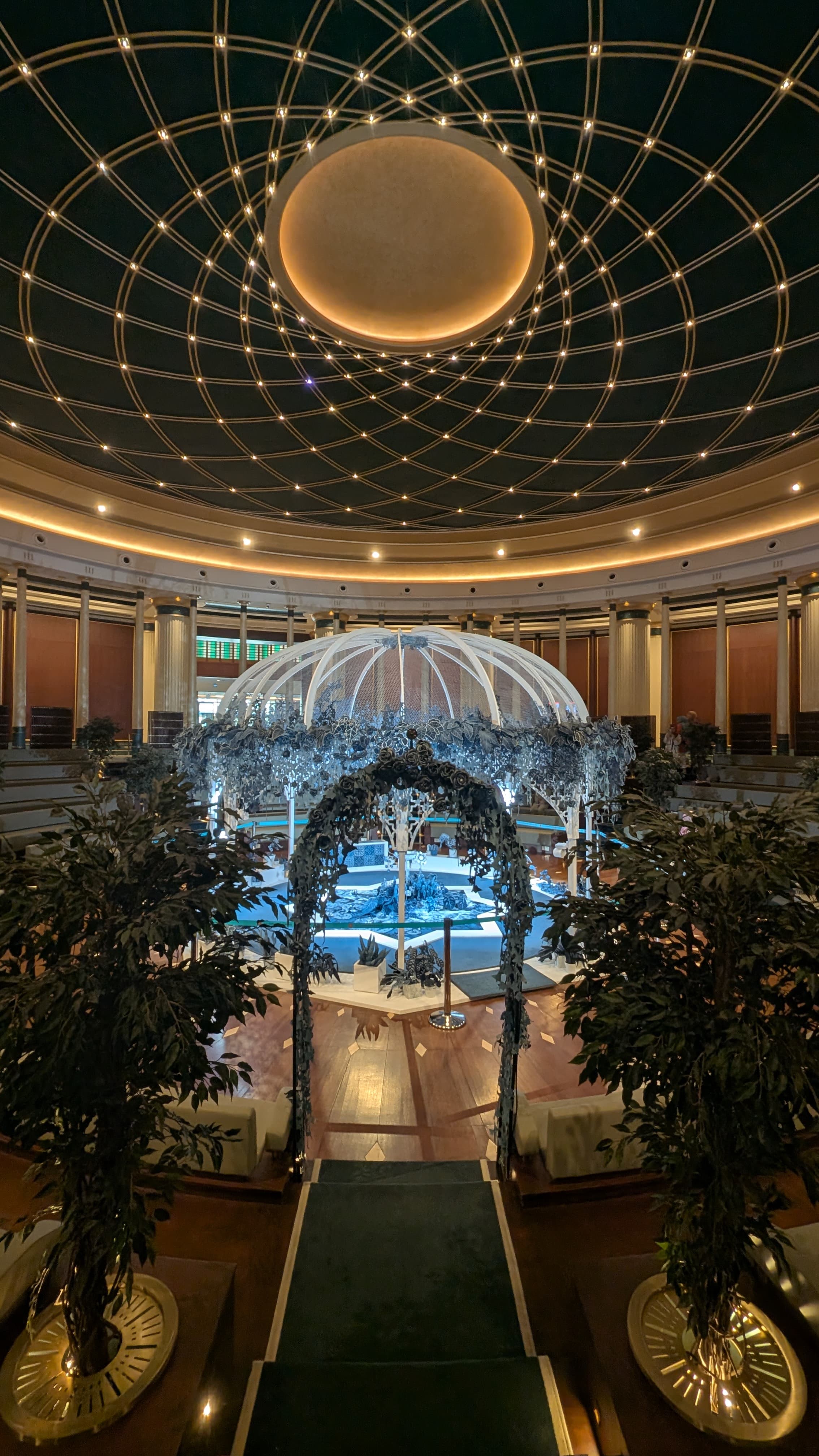
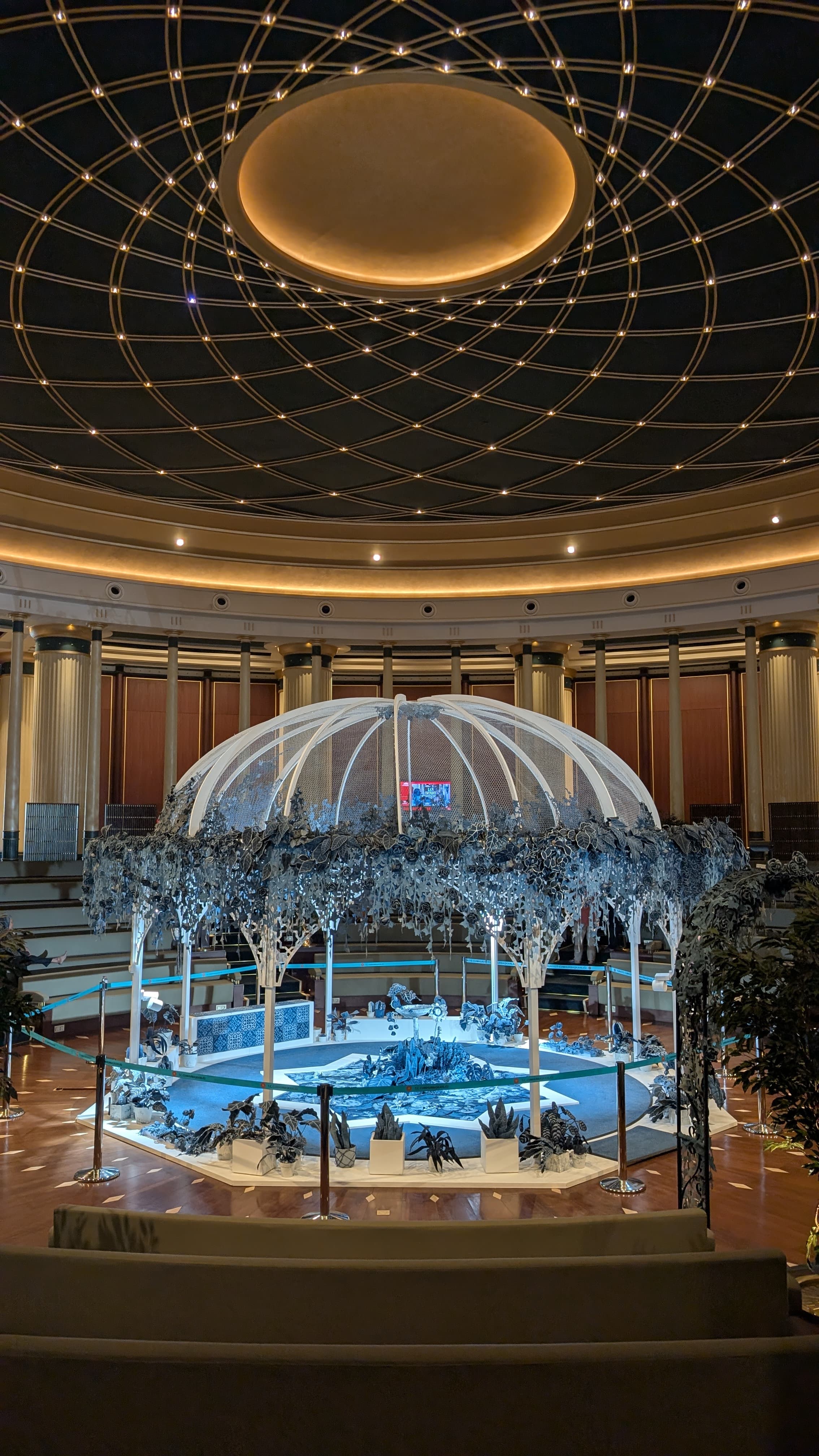
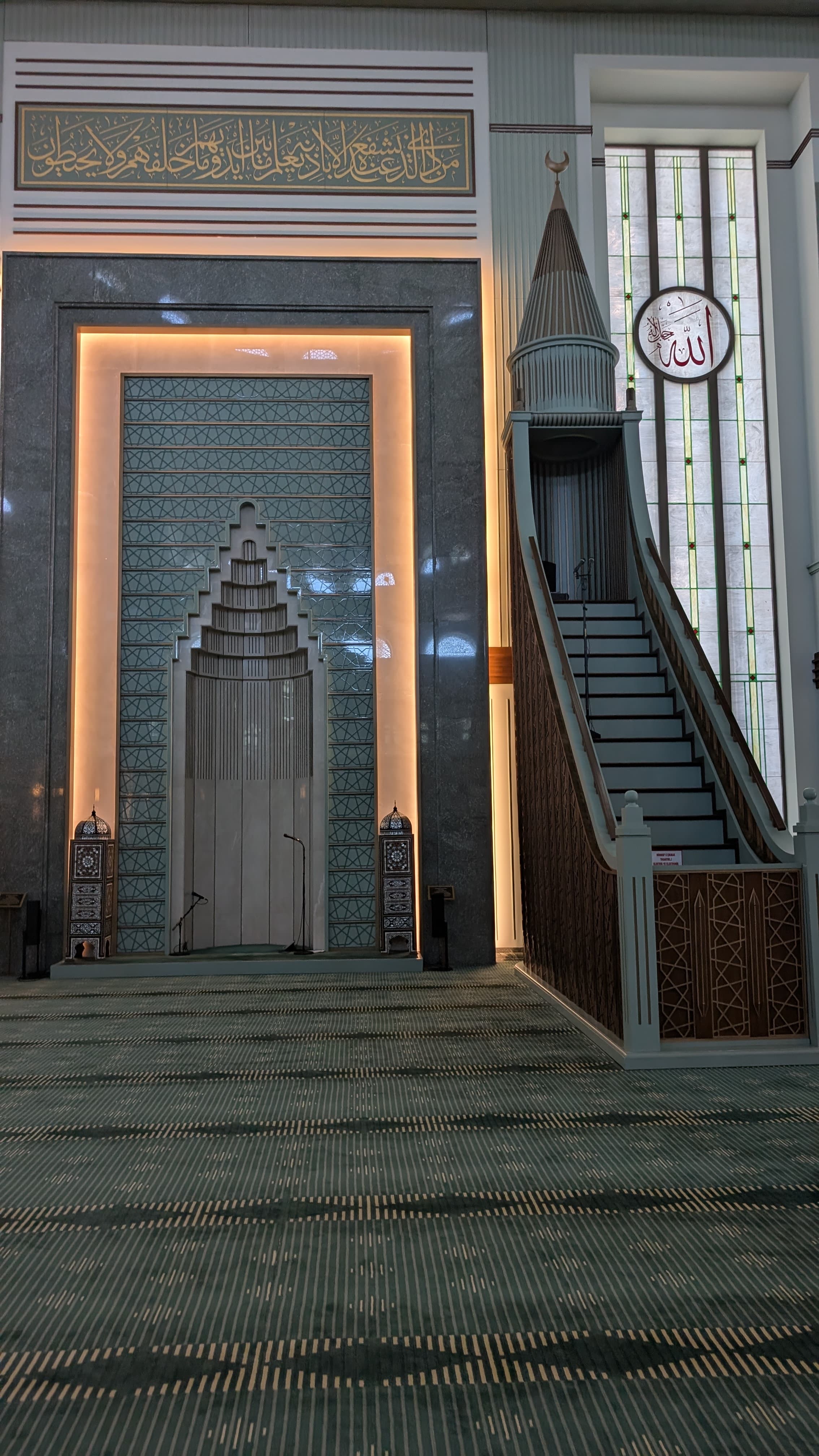
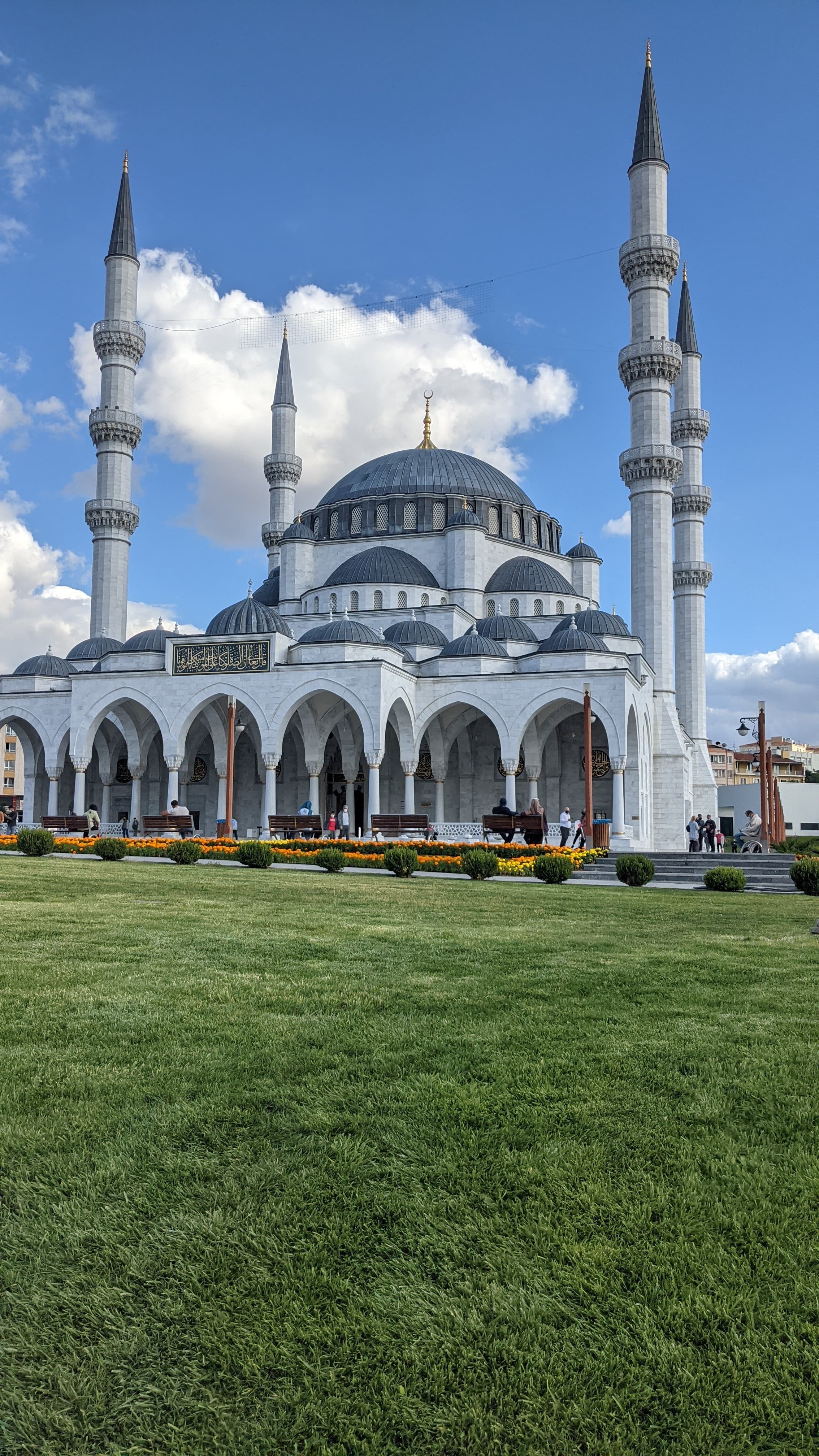
On the western edge of the city, the Cumhurbaşkanlığı Külliyesi — the presidential complex — is worth the detour if you are interested in contemporary Turkish architecture at its most ambitious. Opened in stages from 2014 onwards, the complex draws on Seljuk and Ottoman forms in a scale that is impossible to miss. The mosque at its centre, Beştepe Millet Camii, opened in 2015: four minarets, a main dome 33 metres across, and capacity for 3,000 worshippers. The interior is quieter than the exterior suggests — calligraphy panels, restrained colour, good light through high windows.
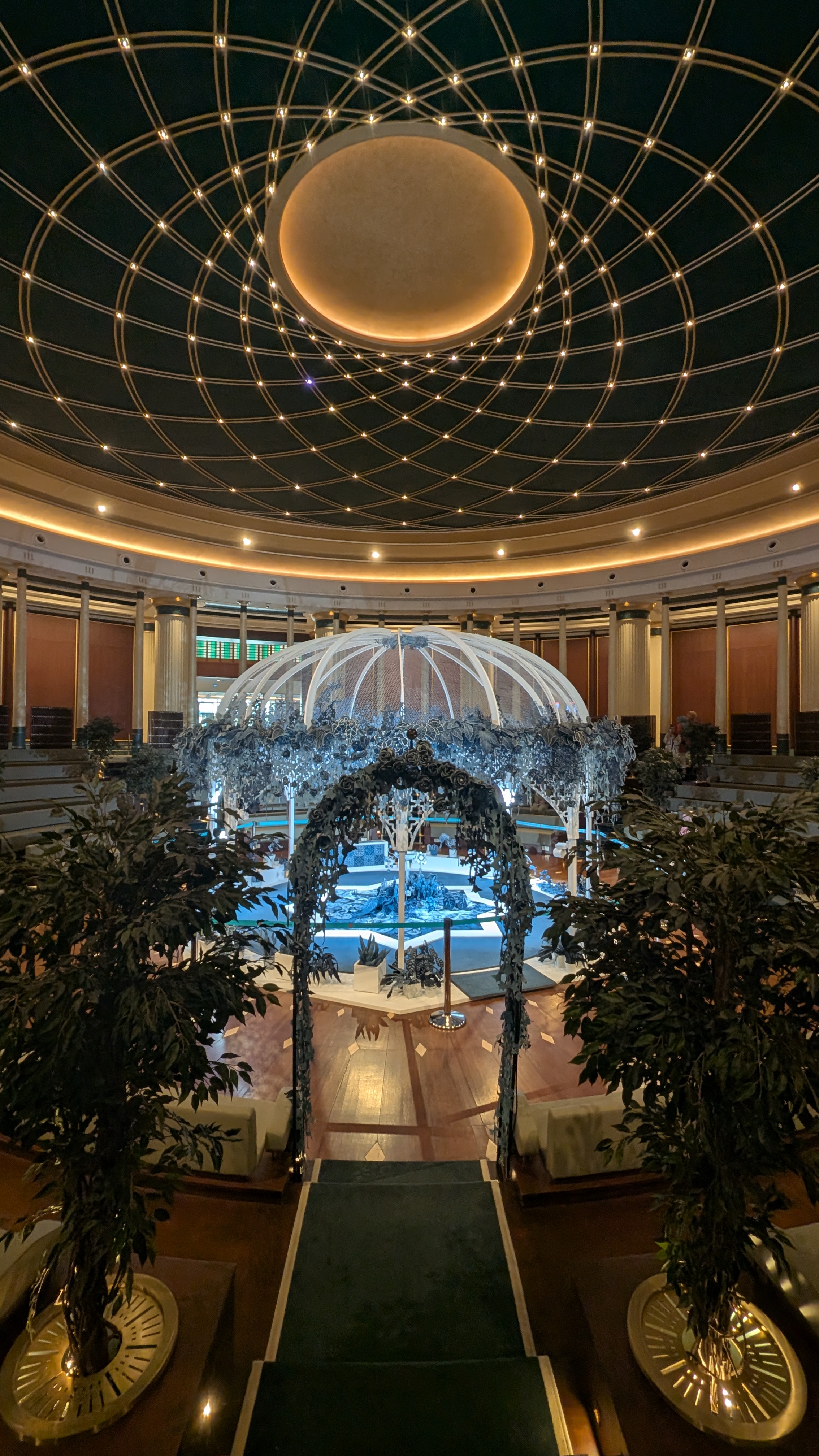
The Cumhurbaşkanlığı Millet Kütüphanesi — the National Library — opened inside the complex in February 2020, and it is something else entirely. At 125,000 square metres, it is the largest single library project in the history of the Turkish Republic. The central reading hall, the Cihannüma, rises under a dome 33 metres high. The collection runs to over five million printed volumes in 134 languages. It is open to the public and free to enter, which surprised me. Most people still don't know it exists.
A City Worth More Than a Stopover
Most visitors treat Ankara as a transfer point — change trains here, stop overnight, move on. The Museum of Anatolian Civilizations alone makes that a mistake. Add the citadel, Hamamönü, the Roman Column, and the Kızılay neighbourhood's café culture, and you have a city that deserves two full days. It will not be the most dramatic city you visit in Turkiye — Istanbul and the coastal towns are too strong for that — but it will be the one that teaches you the most about what was here long before any of those places existed.
Ankara